images_Page_82_Image_0002

SwissBorg Review

Research summary:

This research report is focused on “SwissBorg”. We will focus on how the project works, what value it adds, and review its pros and cons.

The CMP is $0.598 as of 9th July 2021.


What is SwissBorg?

SwissBorg is a wealth management mobile application that allows for a smooth transition from 16 different fiat currencies to select cryptocurrencies. SwissBorg gives investors an option to make their crypto make money for them. SwissBorg gives investors the option to grow their money using crypto.

The organization has 420,000 verified users, with a total user asset value of $1.17 billion, and is currently ranked at #95 (as per Mcap) in the crypto market.

There is a maximum supply of 1 billion CHSB tokens out of which approximately 70% is in circulation. CHSB is currently listed on HitBTC, Kucoin, and Uniswap.

What value does SwissBorg bring to the table?

SwissBorg allows investors to invest and earn and boasts the following features:
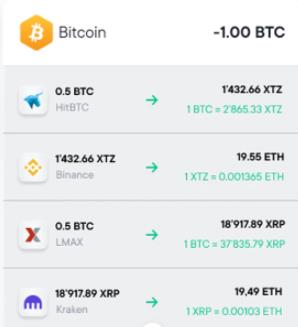
Liquidity Aggregator: SwissBorg has a smart engine that finds the best prices and liquidity from exchanges such as Binance, HitBTC, LMAX, and Kraken. For example, if you want to buy 5 BTC through SwissBorg, you receive a detailed report of the location of each portion of BTC along with prices.

Additionally, transaction fees are disclosed in advance, increasing transparency.

Asset & Portfolio Analysis: SwissBorg currently supports 19 cryptos including popular coins such as BTC, ETH, and USDC – the only stablecoin which is approximately 1 to 1 USD. It provides a summarized short-term analysis of each token.
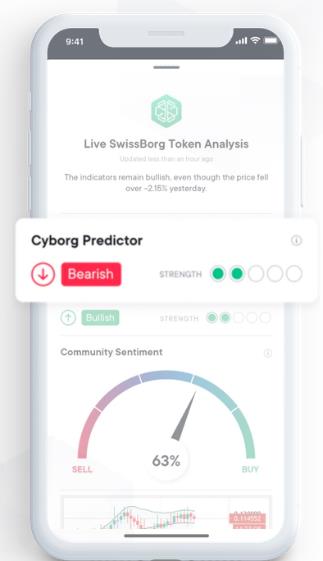
Cyborg Predictor: SwissBorg’s machine learning algorithm predicts asset moves over the next 24 hours.

SwissBorg Predictor: This brings together the most popular technical analysis indicators to indicate price trends.

Community Sentiment: This indicator focuses on public sentiment towards the token. This is derived from the buying and selling on the SwissBorg application.

Support & Resistance: This metric displays the support and the resistance levels of the token.

Yield Aggregator: SwissBorg has a delightful feature that puts your crypto to work and functions like a fixed deposit. You need to lock in your crypto, which in turn generates interest.

This is possible due to yield farming. Yield farming is the practice of staking, providing liquidity on exchanges, and lending crypto assets through DeFi protocols in order to generate high returns or rewards.

Yield farming is a risky activity, and if the underlying smart contract hasn’t been stress tested or is exploited then there is always a potential for a disaster. Billionaire Mark Cuban lost money on IRON Finance (A Defi Protocol) which returned a 4 million % APY (annual percentage yield). And then suddenly the price of IRON Finance went from $60 to nothing.

To tackle this, SwissBorg began a Safety Net Program where they set aside a percentage of the returns to limit risk. SwissBorg has funded this program with a starting capital of € 1’000’000.00.

What is it’s tokenomics & the utility of the token?

CHSB is the native token to SwissBorg. The token is deflationary in nature. 20% of the revenue from the SwissBorg ecosystem is used to buy back and burn CHSB tokens. This creates scarcity and value. The buyback and burn occur only when the price falls. The burn of tokens is also carried out in a transparent manner.

CHSB has 1 main utility i.e premium benefits which can be unlocked by the use of tokens. Staking a few tokens unlock benefits. If you stake 2000 CHSB you get access to community premium account (in picture in purple) and if you stake 50,000 CHSB you get access to the genesis premium account (green).
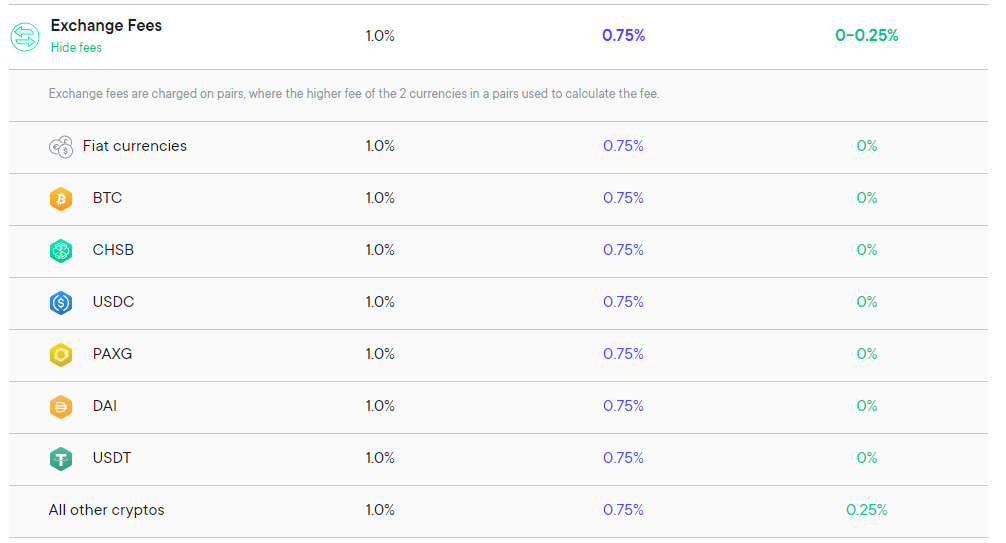
Lower fees: Fees are waived for investors irrespective of the quantity bought leading to savings. The table on the left indicates the fees structure based on different amounts of tokens staked.
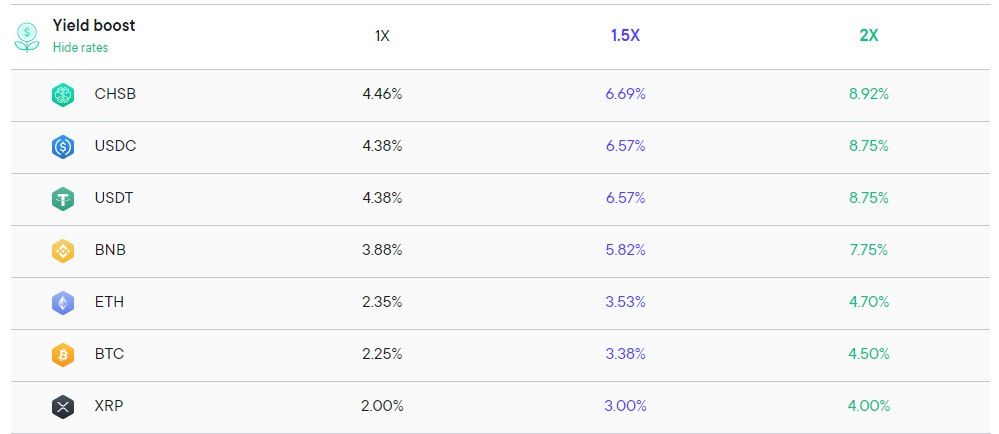
Yield Boost: If you stake 2000 CHSB, you get 1.5x the yield when compared to a normal account, and if you stake 50,000 CHSB you get a 2x more adding value to the CHSB token holder.

Who are SwissBorg’s competitors?

SwissBorg is a one-of-a-kind project. Based on its offerings, cryptocurrency exchanges are its main competitors. Let’s draw a comparison with Coinbase which has been listed on the Stock market.
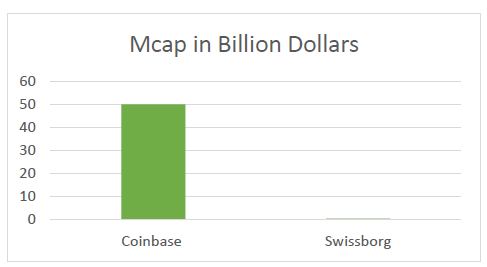
ProjectMcap in Dollars
Coinbase50 billion
SwissBorg0.5 billion

Based on the above chart, there is tremendous potential for SwissBorg.

Team, media, and community strength

The SwissBorg project is the brainchild of founders Anthony Lesoismer and Cyrus Fazel. The leadership team has vast experience in the fields of finance and technology and currently leads a team of 100+ across the world.

Although SwissBorg may lack media presence, they do have a YouTube channel where the founder discusses the market and share timely updates.

Their community strength is growing, with over 70,000 Twitter followers & 10,000 telegram followers. They are also backed by reputable YouTube influencers like Boxmining, ThatMartiniGuy, and Ivan on Tech.

Conclusion

Pros:

  1. SwissBorg provides direct monetary value without any major costs. It saves money by avoiding price slippage and provides complete transparency of the cost.
  2. Yield farming is a very complicated affair and requires time and effort to avoid scams and be watchful of risky protocols. SwissBorg makes yield farming super easy with a safety net.
  3. CHSB is deflationary and the tokens burn only when the prices start to drop.
  4. The utility of the token provides direct monetary value to the user in terms of reduced fees and increased yield on earnings.

Cons:

  1. The number of coins listed on SwissBorg is quite limited.
  2. The utility of the tokens kicks in if you hold at least 2000 CHSB.
  3. Swissborg does not have a web version. It is only available on the AppStore and the PlayStore.

MintingM rating for SwissBorg is 3.9/5

CriteriaScore
Industry3.5
Opportunity Size5
Competitive advantage3
Tokenomics4.75
Team3.33
Overall Score3.9

Get deeper insights into the crypto market’s weekly trends discussed on our Spotify podcast.

Start your Crypto Investments with XMINT Bots today

brave

Brave Browser Review

Brave Browser Review

Research summary:

This research report is focused on “Brave” which operates in the internet browser & digital ads industry. BAT or basic attention token is the ERC-20 native token to Brave browser. We will focus on how the project works, what problems it solves, and review its pros and cons.

The CMP is $0.55 as of 2nd July 2021.


What is Brave?

Brave is an internet browser that provides speed and privacy for its users when compared to other browsers and improves the efficiency of the existing digital advertising industry.

It is operational and has 33.8 million monthly active users and 11.7 million daily active users. This makes Brave an extremely popular application in the cryptocurrency space.

It is currently ranked at #74 (based on Mcap) in the cryptocurrency market. There is a maximum supply of 1.5 billion BAT tokens out of which almost 100% is in circulation. BAT is currently listed on Binance, Coinbase, and Huobi Global.


What problems is it solving?

Advertisement technology’s objective was to create an efficient marketplace for attention. The internet flourished and was expected to become the medium to provide the above-mentioned efficient marketplace for attention. It was hypothesized that along with the internet’s capabilities to identify and deliver the right message instantly, attention would be valued.

This did not happen, instead, the industry became littered with middlemen and complications.

This caused problems for three main participants.

Users: The type of people who are consuming the ads like you and I.


Publishers: These are platforms where the ads are displayed. This could be websites, YouTube channels, and more.


Advertisers: The type of people who make the ad and decide who they want to show it to, for instance, service providers.


Problem Advertisers face

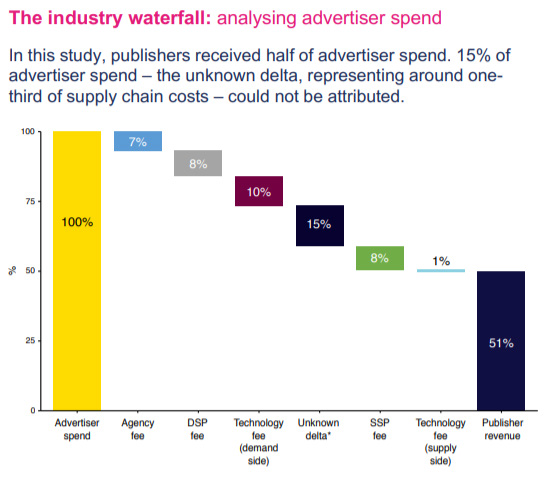
A study was conducted on Ad-Tech by Incorporated Society of British Advertisers (ISBA), the Association of Online Publishers (AOP), and PwC. This led to the shocking conclusion that only 51% of the amount spent by advertisers goes into the hands of the publisher while the remaining goes to intermediaries. A concerning 15% of the money was spent on non-traceable intermediaries.

Advertisers also face another problem namely fraud. Often hackers create a website with content copied from other legitimate websites and with the help of bots which are essentially remote-controlled compromised personal computers and cloud infrastructures, siphon billions of dollars from advertisers. So, a non-suspecting advertiser would pay money for essentially having his ads displayed for a computer program.

Approximately $34 billion were stolen from advertisers this year and is expected to go up to $87 billion by 2022. (Source – Ad Fraud Statistics – 2021)

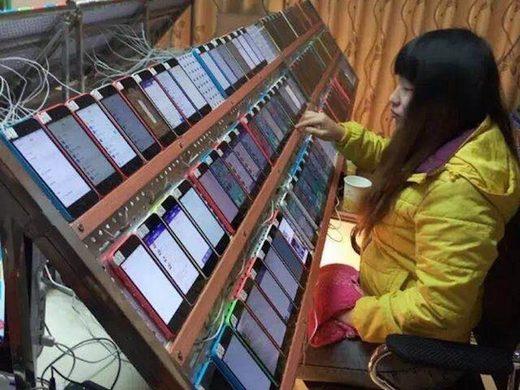
Click farms are another variant of advertisement fraud. A click farm essentially is a group of people who keep clicking on ads and also create fake traffic (people) for a website. So, ads are not reaching the target audience but rather reaching a click farm employees earning dollars on the click.

Problem Users Face

A target group for an advertisement could benefit from receiving the ad, however the ads often don’t reach the end audience.

If a publisher’s only source of revenue is advertisement, then there is a likelihood that he will bombard its users with ads making the user experience worse and can also potentially create strong negative emotions towards the advertiser.

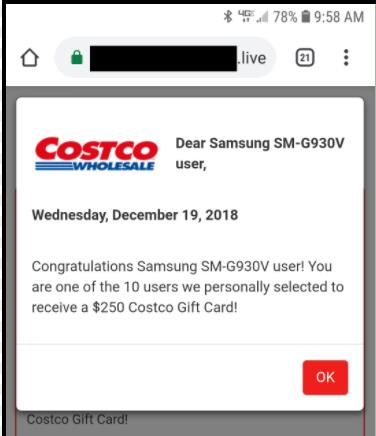
Another problem that you might not be aware of is that most ads are distributed via an advertisement network that changes the ad every time you reload the page.

For these ads to load, it requires bandwidth (it costs approximately $23 per month to load these ads) and often eats the battery life of a mobile device. A study by the New York Times found the data used by advertising resulted in significant download times and costs across 50 top publishing sites. On one extreme, www.boston.com which took 30.8 seconds for advertising and 8.2 seconds for editorial.

You also tend to sacrifice some elements of your privacy when you visit a website or an app. As there are trackers that gather and store your browsing data for better advertisement and cross-selling for products. The data points include what you are searching for, what kind of websites do you visit, when are you active.

For example, let’s say that I am a consumer of alcohol and my browsing history indicates this information. Based on these trackers I will potentially start receiving a range of advertisements from rehabilitation institutes to offers from nearby bars.

Just as advertisers have frauds, users have malvertisements. Malvertisements are fake ads that trick users into clicking on them and then downloading malicious code, including ransomware. They can also entice users to visit fake domains used to steal financial information.

Problem Publisher faces.

Publishers are burdened with several costs and face many intermediaries after the ad has delivered. Publishers face direct costs of user complaints when malvertising spreads from exchanges to loyal readers, often with little or no idea of origin and with no help from the ad exchanges (the middlemen who take the ads from the advertisers and ad banners from websites and connects them) responsible for allowing such ads to serve from their systems.

With the users losing their privacy, money, and the ever-increasing malvertisements, they are opting in for ad blockers instead. Based on Pagefair’s report approximately 763 million devices have adblockers installed. To make sure that the publisher does not lose the potential revenue, they block the user from the website and only allow him in when he stops the ad blocker.

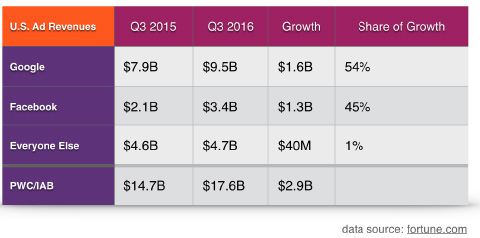
With these problems, the publishers are losing more and more ad revenues. To make matters worse Google and Facebook have started to dominate market share of the ad revenues.

What does Brave do?

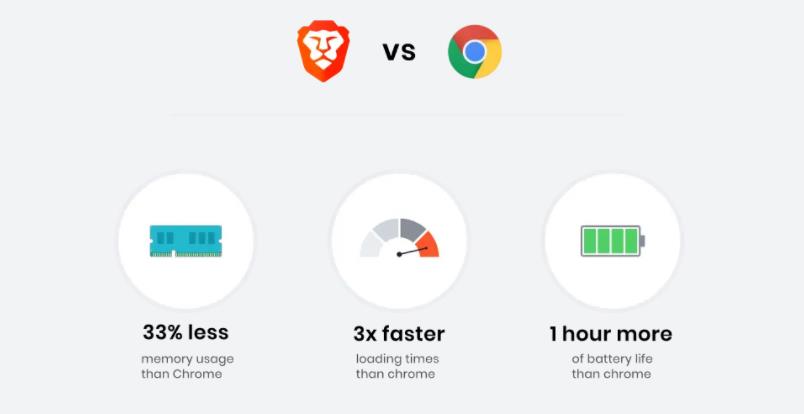
The brave browser blocks trackers and ads on websites that you browse, increasing the speed of your browsing and saving your battery life, making the user experience far better.

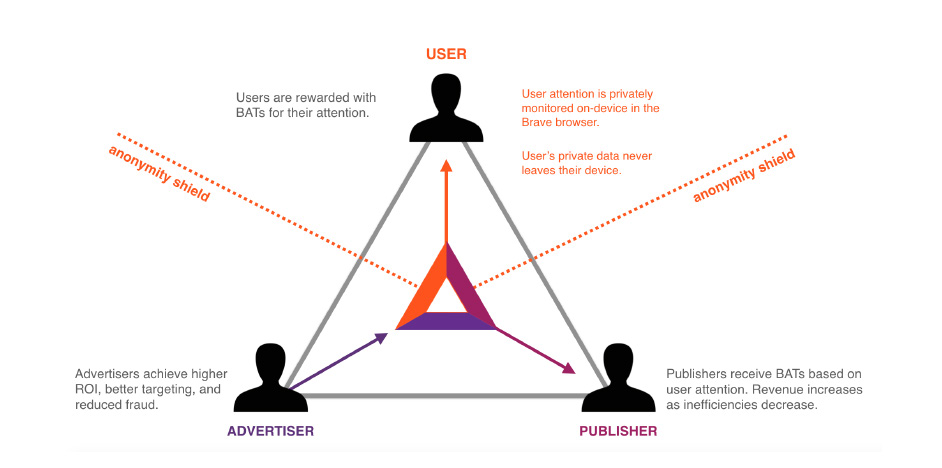
Should a user wish to receive advertisements, he simply enables it. The user’s data is locally tracked and stored within his device and no one can access it. Brave’s machine learning algorithm then accordingly matches the ads based on the user’s interest. The user on the other hand gets paid for his attention.

Advertisers pay BAT to publishers to have their ads viewed by users. They interact directly and eliminate a lot of middlemen, potential fraud, inefficiencies and simultaneously increase the advertiser’s ROI.

It is a WIN WIN WIN situation.

What is the utility of the coin?

BAT (Basic attention token) is the native token for the brave browser. It is used primarily for 3 purposes.

• Given out as a reward to users who gave their attention to an ad
• Used by advertisers to pay publishers
• Also serves as market feedback for content creators/ publishers


Competition analysis.

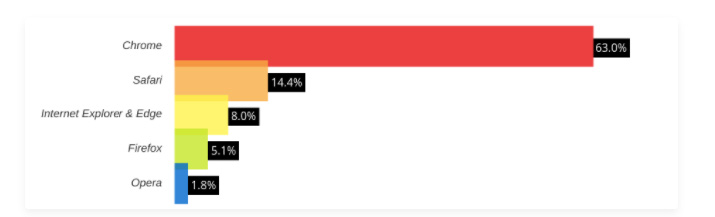
Brave browser has 11 million daily users which may seem like a big number in the cryptocurrency space, but Google Chrome, it’s competitor, has 2.65 billion users with the highest market share (63%).

Brave has 1 competitor in the cryptocurrency space namely Adshares. Adshares is a much smaller project with an Mcap of $6 million in comparison to Brave which has an Mcap of $888 million.


Team, Media, and community strength.

The founder of Brave is Brendan Eich. Prior to Brave Brendan founder JavaScript and co-founded Firefox with extensive experience in creating disruptive technologies.

They have a team size of 100+

Their community strength is excellent, with over 200,000 Twitter followers & 17,000 telegram followers. They also have a healthy media presence.

Conclusion

Pros:

1) Brave browser has 30 million active monthly users and 1 million content creators. They have launched over 2000 campaigns and there is a 90% campaign renewal rate. This level of adoption is extraordinary considering the browser was launched only in 2019.
2) It solves user privacy and advertising spends related issues which could potentially save billions of dollars.
3) Compared to its peers’ Brave browser is faster, secured, and gives monetary value to the users attention.

Cons:

1) People who aren’t bothered by ads and don’t mind their data being recorded will find changing browsers a hard sell.
2) Dominating competition against tech giants such as Google and Safari.

MintingM rating for Brave is 3.9/5

CriteriaScore
Industry4.37
Opportuniy Size5.00
Competitive advantage3.09
Tokenomics3.12
Team3.75
Overall Score3.9

Get deeper insights into the crypto market’s weekly trends discussed on our Spotify podcast.

Start your Crypto Investments with XMINT Bots today

images_Page_25_Image_0002

Decentraland Research Report

Decentraland Research Report

Research summary:

This research report is focused on Decentraland which is an upcoming project operating in the gaming industry. We will focus on how the project works, its tokenomics, and review its pros and cons. It is currently listed on Binance, Coinbase, Bithumb, & more.

The CMP is $0.52 as of 25th June 2021.


What is Decentraland?

Decentraland is a decentralized project that operates in the gaming industry (An industry that is slowly getting exposure to blockchain technology).

It is a virtual world owned by its users & you can Explore, Create and Trade in this virtual world.

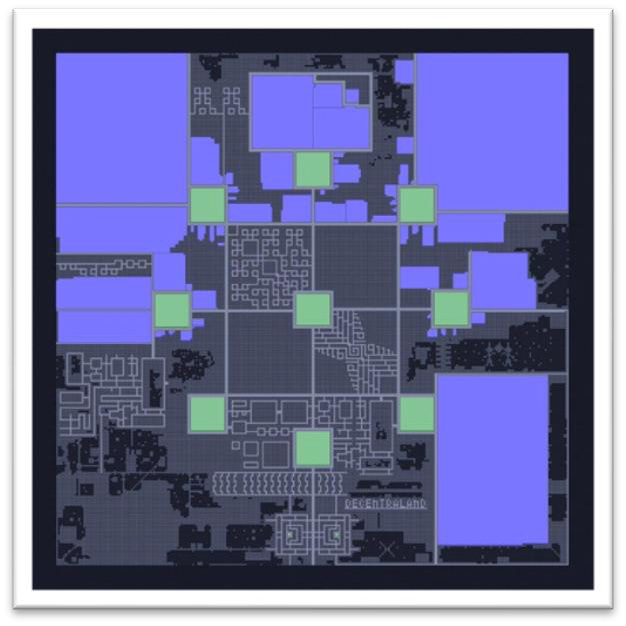
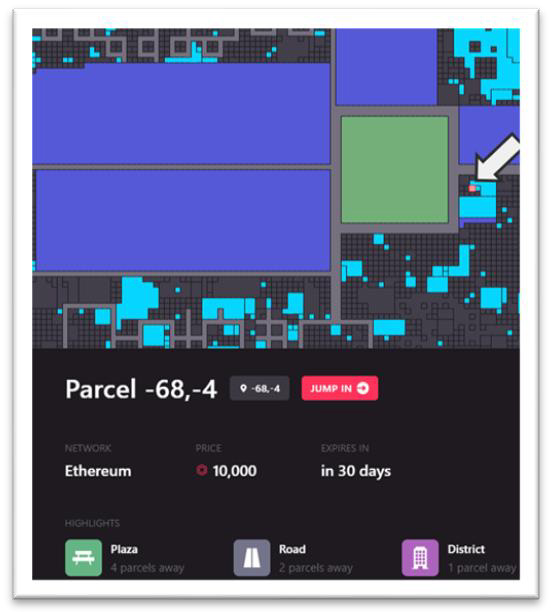
Decentraland is a virtual world with 90,000 Parcels (or plots) of land. The lands are NFTs and will be completely owned by the purchaser (Do read our report on Ethernity Chain to know more about NFTs). At the Launch of the virtual world, most of the parcels of lands were sold. The value of these lands behaves similarly to the prices of actual real estate. Land closer to the roads is more expensive and land which isn’t accessible is relatively cheaper. Below is the map of Decentraland along with the listing of one parcel of land (Which is currently going for approximately $5,200).

(Map of Decentraland)
(Listing of a land)

The most expensive Land TRADED for nearly $900,000.

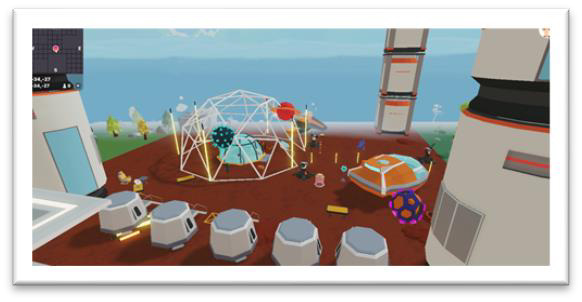
Once you do own land, you can CREATE whatever you want. This includes basic buildings, virtual businesses, Discos, amusement parks, or mini-games.

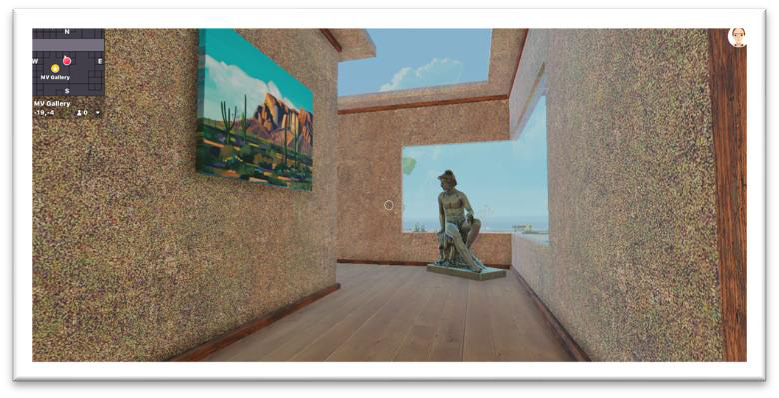
If you own nft arts, you can display it around your parcel of land. In this case inside the building.

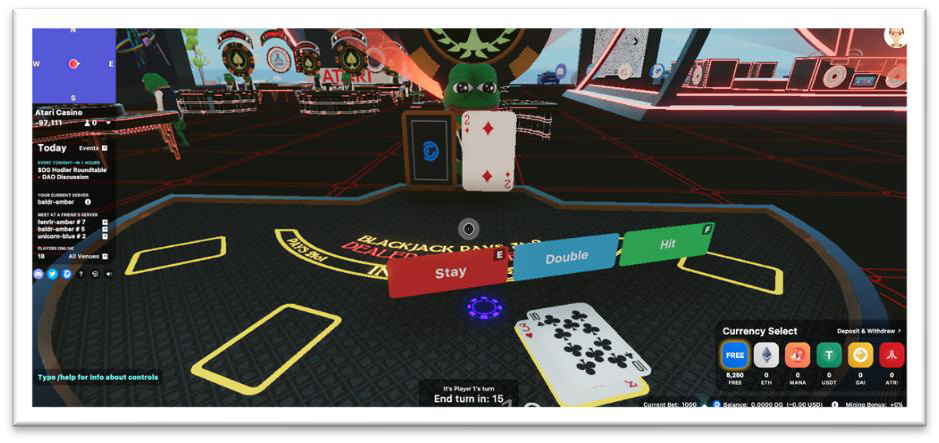
To access this virtual world you don’t need to own any land. You can simply log in and start EXPLORING the different parts of this world. This world also has multiple virtual casinos. One such casino is owned by Atari. You can bet ETH, USDT, DAI, and MANA (The native token).

The next big attraction is the NFT galleries, where NFT art is kept on display and can be bought. You will often find the artist near the NFT art (Just like physical art galleries). Virtual concerts are also held on Decentraland.


How does it work?

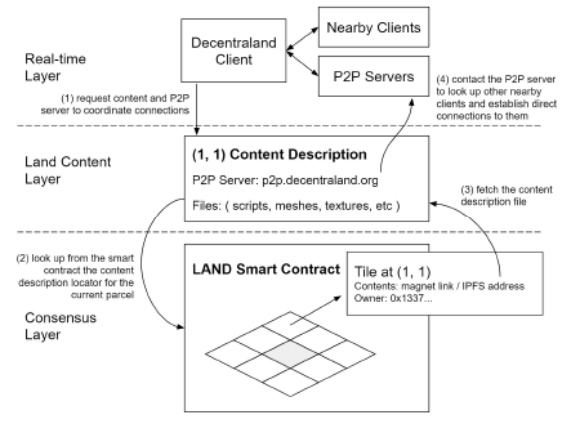
Just like many blockchain projects, it has a protocol and that protocol has three layers. These are the consensus layer, the land content layer, and the real-time layer.

• Consensus layer: Track land ownership and its content.
• Land content layer: Renders or displays everything you see when you enter Decentraland.
• Real-time layer: Provides the peer-to-peer connections that are required for users to interact with one another.


What is the utility of the token?

Mana (ERC-20 token) is the native token of Decentraland. It is primarily used as the medium of exchange within the virtual world. It is used to buy and sell land & is also used to Gamble in virtual casinos.

Unlike its peers, Decentraland is completely decentralized and is controlled by the Mana holders through the Decentraland DAO (Decentralized autonomous organization). The DAO owns the most important smart contracts and assets that make up Decentraland – the LAND Contract, the Estates Contract (Estate is a collection of Lands grouped. It is also an NFT), Wearables (Your Clothing within the game which is also an NFT), Content Servers, and the Marketplace.

Holders of Mana get 1 vote each for each token while Land and Estate holders get 2000 votes.

This truly gives the Mana holders control over all the important aspects of the project.


Tokenomics

Mana had an initial total supply of 2.8 billion tokens. It was initially deflationary as Mana used to purchase land during the launch of Decentraland was burnt. Along with genesis burn, 2.5% of every transaction within Decentraland was burned. A total of 600 million tokens were burnt.

However, this changed at the starting of this year. Mana holders voted to reallocate the would-be burnt tokens to the community’s treasury.

The current circulating supply is now 1.58 out of the total supply of 2.19 billion (72%) tokens.


Industry and competitive analysis.

Decentraland is operating within three Giant industries. The Gaming industry, NFT industry, and the Casino industry.

The global gaming industry is worth more than $300 Billion & the gambling market is expected to be more than $525 Billion alone by 2023.

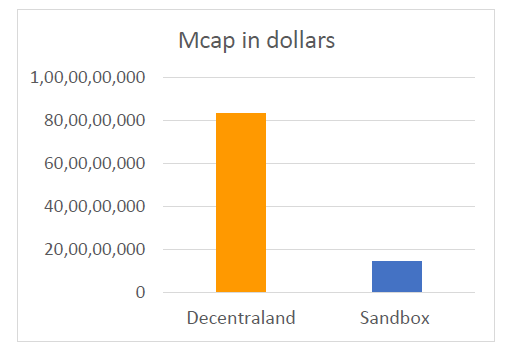
In the cryptocurrency space, Decentraland dominates the closest competition “Sandbox” based on Market capital.

Data as of 25th June
ProjectMcap
Decentraland$833,453,330
Sandbox$143,026,232

Team, Media, and community strength.

The project was conceptualized and developed by two blockchain experts. These two, Ari Meilich and Esteban Ordano, spent several years developing the blockchain and the smart contracts that run Decentraland. Post-launch, they both stepped back into an advisory role, allowing the Decentraland DAO provides the way forward for Decentraland

Grayscale has a Decentraland trust which has $8.3 Million. Binance is also holding $72 Million worth of Mana.

Their community strength is excellent with over 142,000 Twitter followers.


Conclusion

Pros:

1) The project is truly Decentralized as the founders have taken a step back and allowed the DAO to take over. The Dao represents the Mana and landholders. They will likely have the best interest of the project.
2) The overall industry it caters to, is worth beyond 100 billion dollar.
3) It dominates its peers (Sandbox) and is the market leader.

Cons:

1) Decentraland averaged about 10,000 daily active users in March. This is not a great sign as the success of any game depends on its adoption. It needs to catch up with the industry.

MintingM rating for Decentraland is 3.5/5

CriteriaScore
Industry5
Opportunity Size3.5
Competitive advantage4.22
Tokenomics2.25
Team2.5
Overall Score3.5

Get deeper insights into the crypto market’s weekly trends discussed on our Spotify podcast.

Start your Crypto Investments with XMINT Bots today
images_Page_30_Image_0002

Ethernity Chain Research Report

Ethernity Chain Research Report

Research summary:

This research report is focused on the Ethernity chain which recently conducted its IDO at Polkastarter & operates in the NFT space. We will focus on how the project works, what problems it solves, and review its pros and cons.

The CMP is $11.16 as of 17th June 2021.


What is an NFT?

NFT stands for non-fungible token. Non-fungible basically means it is unique and can’t be replaced by anything else. For instance, the US dollar is fungible, which means that USD isn’t unique and can be traded for another USD. A simple example – I borrow 1 USD from my father. When I pay him back, I can send him any USD and not specifically the USD that he gave me. While on the other hand trading cards, art and collectibles are non-fungible. For instance, a Ronaldo Trading card is not the same as a Messi trading card.

An NFT’s uniqueness is authenticated by the blockchain (Most NFTs are on the Ethereum network) it is on. People started to apply the technology to authenticate the uniqueness to digital art and thereby creating a whole new world of digital arts and collectibles.

The above digital art was bought by Metakovan, a south Indian Bitcoin Billionaire for approximately $70 million. Although we have attached a copy of the art above, he is the sole owner of the artwork and is confirmed on the blockchain.


What is the Ethernity chain?

Ethernity chain is a platform built & operational on the Ethereum network, where people can buy and sell rare Authenticated NFTs (aNFT). An Authenticated NFT is just a simple non-fungible token that has been endorsed by the subject of the NFT. For example, NFTs on Neil Armstrong which were endorsed by him are aNFT.

Its main objective is to build the biggest aNFT library, reward its artists, and raise funds for charitable causes forever.

It is currently ranked at #272 (based on Mcap) in the cryptocurrency market. There is a total supply of 30 Million tokens out of which 11.3 Million tokens (37.6%) are in circulation. It is currently listed on Uniswap and Gate.io.

What Problems does it aim to solve?

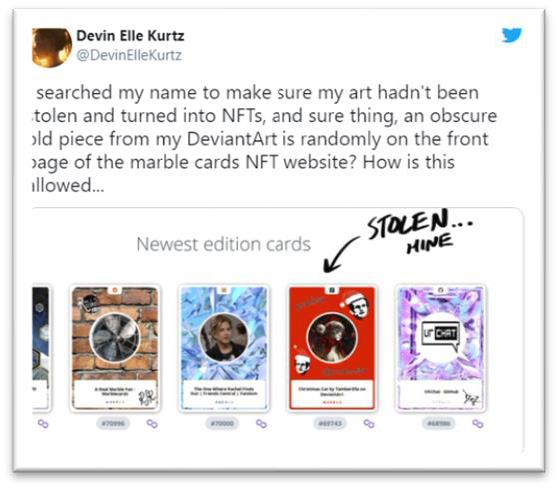
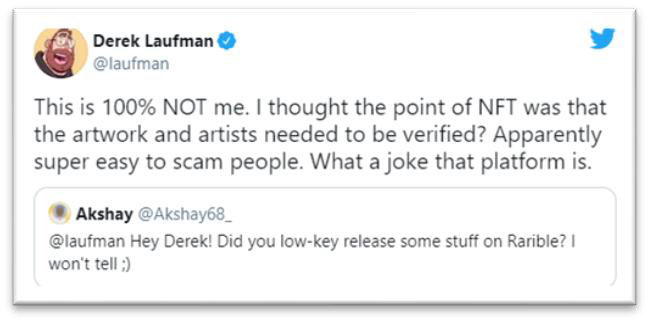
Whenever there is a boom in an industry, we must watch out for scams. For example, the cryptocurrency space is littered with scams. The NFT space recently went through a massive boom over the past few months (Quite similar to the Defi boom) and is suffering from issues such as people impersonating artists and selling the real artist’s artwork as their own.

In simple terms, there is an overabundance of unauthenticated NFTs in the entire industry.


What does Ethernity do?

Ethernity has a simple solution to unauthenticated NFTs. They just authenticate it.

Ethernity establishes agreements with celebrities (Like Neil Armstrong, Muhammed Ali, Pele) to release an NFT on their platform. NFTs endorsed by Neil Armstrong and the US space force were released (16th June 2021) on the Ethernity platform.

This process eliminates the possibility of unauthenticated NFTs to enter the market as it is coming straight from the source. For instance, If Mike Tyson sells his gloves & some unknown guy on ebay sells Mike Tyson’s gloves, I will go to Mike Tyson as the likelihood of the authenticity is comfortably high.

People can then bid on the Ethernity platform to purchase these aNFTs. Some portion of the purchase is then distributed to the ERN holders and charities.

The people who purchase these NFTs have the option to keep their purchased their aNFTs for sale.


What is the utility of the coin?

ERN is the native token for the Ethernity chain. It is used primarily for 3 purposes.

• As currency to bid on the aNFTs
• As a reward to the liquidity providers.
• To farm stones, which can be used to participate in exclusive NFTs auctions.

Competition analysis.

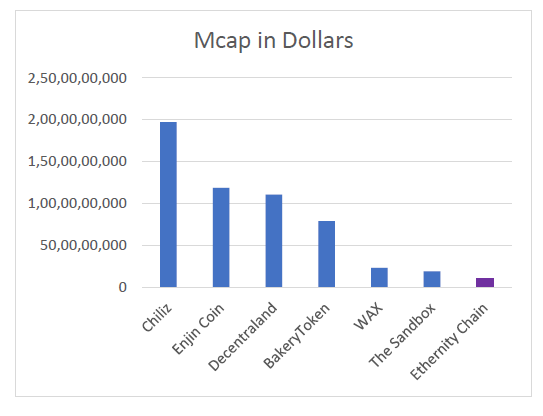
Even though the NFT space has boomed recently with many players, Ethernity Chain has great potential based on mcap comparison.

ProjectMcap
Chiliz1,97,23,97,896
Enjin Coin1,18,59,42,320
Decentraland1,10,59,03,910
BakeryToken79,13,89,048
WAX23,45,55,031
The Sandbox19,19,54,104
Ethernity Chain10,67,53,291

Team, Media, and community strength.

Ethernity has a big team with a great mix of marketing consultants, blockchain developers & talent relationship managers. They also have several funds backing them, along with big celebrities such as Mr.Beast and Dimitri Vegas and Likemike.

Ethernity’s media presence has consistently grown through strategic alliances with celebrities. Their community strength is excellent, with over 78,000 Twitter followers & 60,000 telegram followers.

Conclusion

Pros:

1) Ethernity solves the basic problems in the NFT industry and provides NFTs endorsed by Icons/Legends at the same time.
2) They have minted NFTs related to PELE, Muhammed Ali, Marilyn Monroe, Neil Armstrong, Fernando Tatis Jr & have many other celebrity NFTs in the pipeline.

Cons:

1) The NFT market, although a booming market, has a lot of competition and the space may soon become very crowded.

MintingM rating for Ethernity Chain is 3.5/5

CriteriaScore
Industry4.4
Opportunity Size for project5.0
Competitive advantage2.5
Tokenomics3.2
Team2.5
Overall Score3.5

Get deeper insights into the crypto market’s weekly trends discussed on our Spotify podcast.

Start your Crypto Investments with XMINT Bots today
images_Page_47_Image_0002

Livepeer Research Report

Livepeer Research Report

Research summary:

This research report is focused on Livepeer which is an upcoming project operating in the video streaming industry. We will focus on how the project works, what problems it solves, and review its pros and cons.

The CMP is $27.85 as of 10th June 2021.

What is livepeer?

Livepeer is a protocol that is based on the Ethereum network. It provides a cheap and cost-efficient transcoding solution to video streaming platforms.

Transcoding is the process of converting a raw video file and reformatting it for different devices and different quality.

The protocol operates in the video streaming industry, which is responsible for 80% of the internet’s bandwidth.

It is currently #112 (based on Mcap) in the cryptocurrency market. Livepeer’s native token is inflationary and currently has 23,732,784.45 tokens in circulation. It is currently listed on Binance, OKex, and Gate.io.

What Problems does it aim to solve?

The video streaming industry is huge. It has players such as Youtube, Twitch, Zoom, Google meet, and more. But the industry faces a challenge that is not quite visible to the consumers.

‘Video transcoding’ is the said challenge and acts as a huge barrier for new entrants in the video streaming industry. As mentioned above, Transcoding is the process of converting a raw video file and reformatting it for different devices and different quality. This process is conducted to make sure that the video is available for everyone.

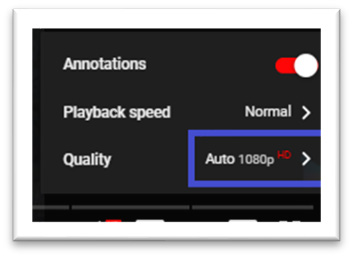
How does it do that? By reformatting the raw video for different devices, people will able to view Videos made on a desktop, on mobile. If the video was made on a 4k based camera, a person with 2g speed would wait for hours to watch the video (due to buffering). With the help of transcoding, different quality versions become available, making the viewing experience much better for the person with 2g speed especially on platforms like YouTube which have different video quality options.

The process of transcoding is extremely expensive and requires heavy computational power. According to Livepeer, this process costs around $3 per stream per hour to a cloud service such as Amazon, up to $4500 per month for one media server.

To cover costs, video streaming platforms often show ads on their videos or sell data.

What does livepeer aim to do?

Livepeer aims to bring down the cost of video transcoding and remove it as a barrier for new entrants. It does this with the help of 2 components.

Orchestrators: These are users who run software that allows them to contribute their computational power for transcoding. There is a need for technical expertise to become an orchestrator and can also be a full-time job, as you get paid in ether or a stablecoin.

Delegators: Delegators are Livepeer token holders who participate in the network by staking their tokens towards orchestrators who they believe are doing good and honest work. You can think about staking like putting a deposit down. When you stake, your tokens are locked up for a limited period. The delegator is incentivized by earning a portion of the fees the orchestrators earn. It currently has 2,724 delegators and this number is growing everyday.

Livepeer is not consumer-facing but rather a behind-the-scenes infrastructure solution. It is used by 2 types of people and is responsible for paying fees to the orchestrators and delegators.

Developers: Developers are the people who build applications that include live or on-demand video can use Livepeer to power their video functionality.

Broadcasters: Broadcasters are platforms like Twitch who have large audiences and high streaming bills or infrastructure costs that can use Livepeer to reduce costs or infrastructure overheads.

What is the utility of the coin?

The native token “LPT” is an ERC-20 token. It is primarily used by orchestrators and delegators. They need to stake LPT to perform the work of transcoding and distributing video on the network. The more LPT they own, the more work you’re able to perform on the network in exchange for fees. As the network’s usage grows, so does the demand for orchestrators and thus LPT.

If an orchestrator does not do a good job in terms of transcoding or they act maliciously, their staked LPT will be taken away from them.

Currently, 12.8 Million out of 23.7 million LPT are staked (54% of the current circulating supply.) The native tokenomics is inflationary (Inflation rate = 0.01805%) and mints LPTs every 17.63 hours.

Industry and competition analysis.

The global video streaming market size was valued at USD 50.11 billion in 2020. It is expected to expand at a compound annual growth rate (CAGR) of 21.0% from 2021 to 2028 due to the widespread adoption of the internet along with smartphones across the globe.

Based on Livepeer’s value proposition Video streaming giants such as Youtube, Netflix, Twitch, and more are likely to reduce their expenditures and will allow smaller players to enter the industry which in turn will bring innovation in the ever-growing space.

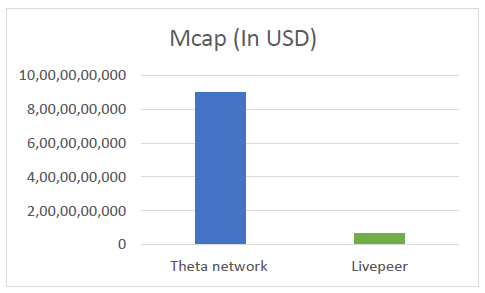
Theta is the main competitor of Livepeer in the cryptocurrency space. Theta is something that livepeer strives to become.

ProjectMcap (In USD)
Theta network 8,97,03,38,800
Livepeer65,97,46,014

Based on the mcap comparison, livepeer has the potential to go 12.5 from the current price.

Team, Media, and community strength.

Livepeer is currently governed by a for-profit company called “Livepeer Inc”. They are the same people who developed and released the protocol. They have mentioned in their roadmap that they will eventually be governed by the community.

Although the founders don’t come from a Video streaming background, they are entrepreneurs and have launched multiple startups, out of which 1 got acquired by Groupon.

Their media presence and community strength have tremendous scope for growth, with over 12,800 Twitter followers, 5,151 discord members, and 2,383 telegram followers.

Conclusion

Pros:

1) Livepeer is adding value by solving one of the biggest problems faced by the video streaming industry, which is responsible for 80% of the Internet’s bandwidth. So, it’s safe to say that there is great potential for Livepeer.

2) Livepeer has the glowing approval of Grayscale. They have a Livepeer trust which has over $12.2 million.

3) It has a focus on decentralization compared to its peers.

Cons:

1) The tokenomics is currently inflationary (There are plans to change this in the future) and mints new tokens every 17.63 hours

Get deeper insights into the crypto market’s weekly trends discussed on our Spotify podcast.

Start your Crypto Investments with XMINT Bots today