logog

Serum Research Report

Research summary:

Serum is a decentralized exchange (DEX) based on the Solana blockchain. It is part of the DeFi ecosystem and is one the 1st Dapps in the Solana blockchain, we will focus on how the project works, what value it adds, and review its pros and cons.

The CMP is $9.61, as of 17th September 2021 

What is DeFi?

All of the traditional financial services are centralized (controlled by a single authority or managed in one place) in nature. The Risks and problems that come with centralized financial (CeFi) services are Fraud, Mismanagement of funds, Theft, and restrictions to use your own money. DeFi stands for Decentralized Finance (DeFi is a category of Dapps. Dapps are decentralized applications that are launched on networks such as Ethereum). It is a financial service with no central authority. It eliminates these problems by allowing people to have complete custody and control of their money and to get more returns, by eliminating the 3rd party.

There are various categories of DeFi

  • Money Market: Such applications enable users to borrow assets against collateral and earn interest. Maker, Aave, and Compoundare the top DeFi applications in this category.  
  • Decentralized exchange: These kinds of applications give users the ability to swap one crypto for another. Uniswap and Sushiswapare the top DeFi applications in this category. 
  • Derivatives: A derivative contract derives its value from an underlying asset. With the help of smart contracts, DeFi projects like Synthetix allow people to get exposure to a wide variety of assets.  

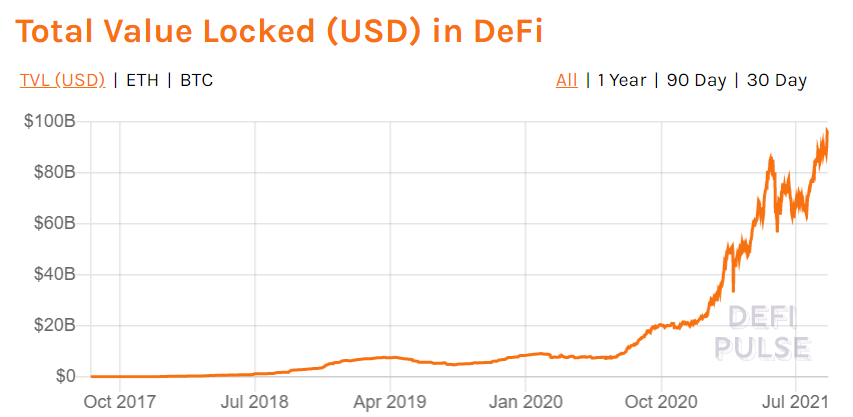
The DeFi space has seen explosive growth over the past year. The graph below indicates that 95.96 billion dollars are currently involved in the DeFi space.
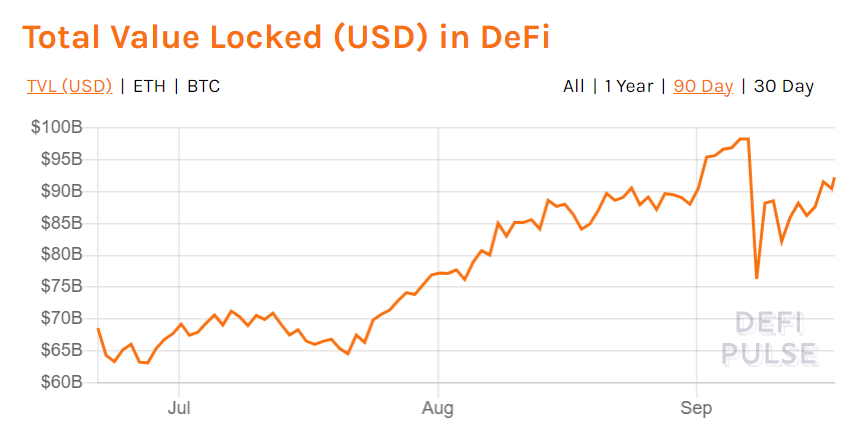
Data as of 17th September 2021 and from https://DeFipulse.com/

What is a Solana?

Solana blockchain is a 4th generation blockchain and is a competitor to the Ethereum blockchain. It has claimed to solve the “blockchain trilemma”, a term coined by Vitalik Buterin. He proposed that when a blockchain is being built, it is forced to sacrifice one out of the three aspects of the blockchain.
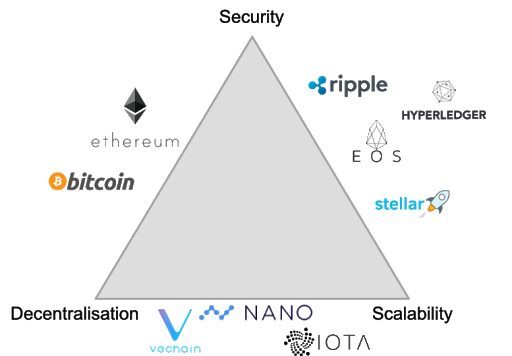
The three aspects are Security, Decentralisation, and scalability. Solana has claimed to solved the trilemma with the help of “Proof of History” & has achieved amazing statistics. When it comes to Transactions per second and average transaction fees, Solana beats Ethereum by a long stretch.

What is Serum?

Serum is a protocol for decentralised exchanges that brings the best of CeFi and DeFi through its on-chain orderbook design. In the world of ever-growing DeFi applications, amongst all the expensive and slow Dapps, Serum brings unprecedented speed and low transaction costs to decentralized finance

The total value locked (TVL) with Serum is $ 457 million. It is currently ranked at #132 (based on Mcap) in the cryptocurrency market. There is a Max supply of 10 billion SNX tokens out of which 50 million SNX tokens are in circulation. SNX is currently listed on Binance, FTX, and Bithumb.

What problem does Serum solve?

Although there are several advantages to Decentralized exchanges such as

  • No KYC requirement
  • You can avoid exchange hacks and scams
  • There is no restriction to the tokens that are traded

Speed and cost: Most of the decentralized exchanges in the current state are also very slow and are very expensive. There have been times when the transaction cost has surpassed the entire value of the transaction & there have been times when some of my Uniswap transactions have taken days to process. This is one of the reasons people flock to centralized exchanges.

Orderbooks: Most of the Decentralized exchanges use the AMM system rather than the orderbooks system.There are lots of disadvantages to AMM. You can’t provide liquidity unless you provide both sides; you can’t choose to only provide at a particular price; you can’t provide at a price other than the current market price, and you can’t choose the size to provide there without providing way more behind it. There’s a solution to this–it’s what the rest of finance does. But DeFi doesn’t have orderbooks, by and large, because the ETH network is too slow and expensive to support them. Matching bids and offers with each other involve a bunch of operations.

Cross-chain support:  Currently there is a problem in the cross-chain DeFi space which is trust.  It relies on those arbitrators, to be honest.

What does Serum bring to the table?

Most of the above problems are solved by Serum and do it with the help of the Solana blockchain. Each transaction is executed at a fast pace at a small cost. As it has the power to process 65,000 transactions per second, it can employ the orderbook system, which most of the centralized exchanges use. When it comes to cross-chain swaps, Serum uses smart contracts with built-in economic incentives to allow users to swap assets across different blockchains in a trustless manner (e.g., Ethereum for Bitcoin). This is done by requiring both parties involved in the swap to put down some amount of collateral to execute a swap. If the swap isn’t executed on time, the victim can raise a dispute and the Smart contract will determine if the dispute is valid. The staked crypto will be deducted accordingly.

What is the utility of the SRM?

SRM is an ERC-20 token on the Ethereum blockchain and an SPL token on the Solana blockchain. It has a deflationary mechanism inbuilt as all the net fees on Serum go to an SRM burn. Here are some of the major utilities of SRM.

Discount on Fee – Justlikeany other exchange token, holding SRM gives the holder a certain amount of discount on the transactions.

Staking – Staking SRM is required to run a validator node for the Serum DEX.

Competition analysis.

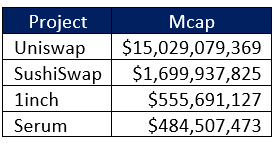
Serum has a long list of competitors in the DEX space and it is just getting started. Uniswap is the top competitor and is more than 10x away from Serum.  
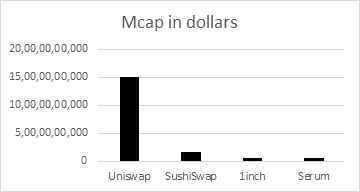
Based on the total value locked metric. Serum has just above $450 million while Uniswap has just above 4.9 billion.

Team, Media, and community strength.

Serum has a strong team of advisors, right from Sam Bankman, the founder of FTX exchange to the founders of Compound.

They have a mediocre media presence but they have a strong community strength of 137k Twitter followers and 12k telegram followers.

Conclusion

Pros: Serum has come up with a solution to the existing problems in the DEX space. You don’t have to pay high fees and the wait time is also extremely low. It has the backing of one of the greatest minds in the cryptocurrency space.

Cons: Although the tokenomics are deflationary in nature, the amount of circulating supply is too low.

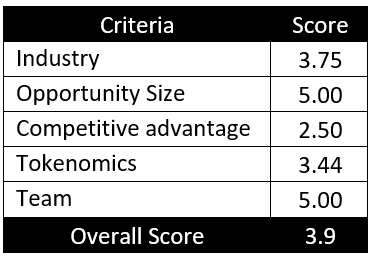
MintingM rating for Serum is 3.9/5
helium-02

Helium Research Report

Research summary:

This research report is focused on “Helium” which operates in the IoT industry. We will focus on how the project works, what problems it solves, and review its pros and cons.

The CMP is $21.41 as of 10th September 2021.

What Is an IoT?

IoT stands for Internet of things and in simple terms, it encompasses every device which is connected with the internet. These devices have sensors, software, and the ability to connect and exchange data with other devices and systems over the Internet. For example, an A/C which is connected to your smartphone via the internet could maintain the desired temperature in your home (by switching on and off) by sensing the room temperature. A Smart doorbell is perhaps an IOT that you might have encountered.

IoT has one sole objective, which is to ease the burden on Humans and has applications in the following fields. 

  • Smart Homes 
  • Smart Grids
  • Smart farming 
  • Smart healthcare 
  • Smart cars 

What Is Helium?

Amir Haleem, who was once the best player in the game “Quake” and was heavily involved in the gaming industry connected with the Co-founder of Napster (One of the first popular peer-to-peer file-sharing platforms), Shawn Fanning, to start Helium. Helium is a global, distributed network of nodes or hotspots that create public, long-range wireless coverage (similar to a telecom) for LoRaWAN (Long range wide network protocol)-enabled IoT devices. In simple terms, Helium is a decentralized blockchain-powered network for the Internet of Things devices.

It is operational and has 165,761 hotspots globally. 

It is currently ranked at #61 (based on Mcap) in the cryptocurrency market. There is a maximum supply of 223 million HNT tokens out of which almost 44% is in circulation. HNT is currently listed on Binance and FTX.

What problems does Helium solve?

Based on Helium’s whitepaper, IoT is expected to be a $1.4 trillion industry with more than 35 billion IoT devices in the year 2021. Now each of these 35 billion devices needs to be connected to the internet to function as an IoT. The purpose behind connecting with the internet is to transfer data packets. The current methods to connect with the internet are Wi-Fi, Cellular, and Bluetooth. These solutions are not efficient as connections via these bridges are often expensive, battery draining, and have a limited range. 

For example, a pharmaceutical company wanted to track their patient’s temperature on a real-time basis without any interruption but they could not do it as the IoT device would not always be in the coverage area, not to mention the battery drain for the device. 

This is the core problem that Helium aims to solve. 

What is the solution and how does it work?

The Helium network is a decentralized wireless network that enables IoT devices anywhere in the world to wirelessly connect to the Internet and geolocate themselves without the need for power-hungry satellite location hardware or expensive cellular plans.

There are 3 important elements in the entire network. 

Devices: These devices send and receive data from the internet. The data is fingerprinted and stored in the blockchain. 

Miners: The miners are the bridge between the devices and the internet. They provide wireless coverage to the helium network via a device referred to as a hotspot. To become a miner, you need to stake a certain amount of the native token HNT. Miners participate in the Proof-of Coverage process to prove that they are continuously providing wireless network coverage that the Device can use.

Helium Hotspot – Helium Store for Europe

Routers: The routers are the final piece of the network. They are the ones who receive the data from the miner. 

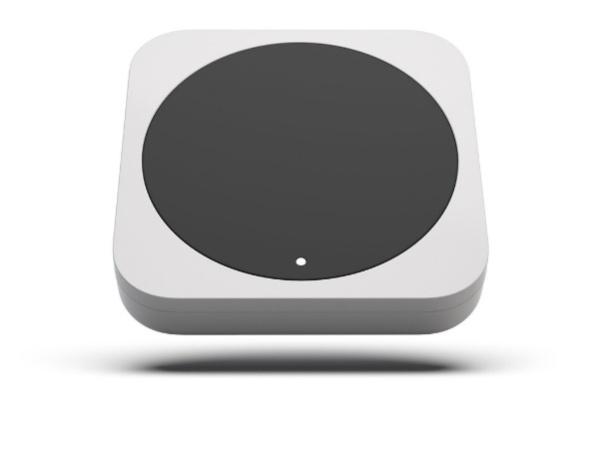
If you found that slightly complicated, here is a simple version for you. Miners connect to the network using devices called hotspots, which are something like wi-fi routers (Image used above), only they use less power and provide better range. They get paid to take data from connected devices and transport it to its destination through the internet. Let’s say you have a hotspot in your house: if a vial of medicine were to enter your coverage zone, it’s sensors would send its location and temperature data to your hotspot, which would then send it to its proper destination in return for a previously agreed upon cryptocurrency fee. These steps would then be cryptographically verified and recorded in the distributed ledger.

With the Helium network, the monopoly on coverage is eliminated and creates healthy competition amongst the miners. 

What is its Tokenomics & the utility of the token?

HNT is the native token in the Helium ecosystem and there was no pre-mine of HNT. HNT is primarily designed to be a reward to all the miners/ hotspot providers for providing network coverage. 

Data Credits Will Soon Be Live on the Helium Network | by Mark Phillips |  The Helium Blog

“Data Credit” is the only currency accepted to send data over the Helium Network and can be created only via burning HNT tokens. This makes the HNT Tokenomics deflationary. 

Who are Helium’s competitors?

Given Helium’s unique nature in the cryptocurrency space, it does not have any major competitors. It however does have competitors in the traditional space, who are also trying to create an IoT network. 

Team, media, and community strength

The founders of the Helium network have been experts in their respective fields. Amir was the best player in the popular game “Quake” and was involved in the development of the Battlefield franchise. While Shawn was the co-founder of Napster.com (Which was quite popular). They have attracted an excellent team under them to launch the Helium network.

They are also backed by some marquee venture capital firms such as Google Ventures and Khosla Ventures.

They have excellent community strength, with 80k Twitter followers and 21k Telegram members.  

Conclusion

Pros: 

Helium is working in the IoT space which is a trillion-dollar industry and aims to solve one of the biggest problems the industry is facing. The Helium network is also growing strongly in the US and Europe. The tokenomics also has a deflationary mechanism.

Cons: 

The Helium network however isn’t growing in Asia compared to the rest of the world. 

MintingM rating for is Helium 3.8/5

Synthetix Research Report – 2nd September 2021

Synthetix Research Report

Research summary:

Synthetix is a Defi project (live and operating) that allows anyone to gain exposure to a vast range of assets without any geographical limitation. We will focus on how the project works, what value it adds, and review its pros and cons.

The CMP is $12.77, as of 2nd September 2021


What is DeFi?

All of the traditional financial services are centralized (controlled by a single authority or managed in one place) in nature. The Risks and problems that come with centralized financial services are Fraud, Mismanagement of funds, Theft, and restrictions to use your own money. DeFi stands for Decentralized Finance (DeFi is a category of Dapps. Dapps are decentralized applications that are launched on networks such as Ethereum). It is a financial service with no central authority. It eliminates these problems by allowing people to have complete custody and control of their money and to get more returns, by eliminating the 3rd party.

There are various categories of DeFi

Money Market: Such applications enable users to borrow assets against collateral and earn interest. Maker, Aave, and Compound are the top DeFi applications in this category.

Decentralized exchange: These kinds of applications give users the ability to swap one crypto for another. Uniswap and Sushiswap are the top DeFi applications in this category.

Derivatives: A derivative contract derives its value from an underlying asset. With the help of smart contracts, DeFi projects like Synthetix allow people to get exposure to a wide variety of assets.

The DeFi space has seen explosive growth over the past year. The graph below indicates that 95.96 billion dollars are currently involved in the DeFi space.

Data as of 2nd September 2021 and from https://DeFipulse.com/

What is a Synthetic Asset?

Similar to traditional financial derivatives, which derive their value from other underlying assets like commodities, currencies, precious metals, stocks, or bonds, synthetic assets aim to achieve the same objectives without the necessity of holding the actual asset itself.

For example, let’s say that there is a cricket fantasy league app, where you can buy players and have them on your team. When the player (Let’s say Dhoni) performs well in the real world, the very same player in the game will also play well. In this example, you have a synthetic asset (The player) without actually owning the real player in your team.

Very popular synthetic assets that every crypto investor is familiar with are stable coins. USDC behaves like a USD but is not a USD.


What is Synthetix?

Synthetix (Previously known as Havven) is a decentralized synthetic assets issuance and trading platform built on the Ethereum network. The synthetic assets include cryptocurrencies, equity, commodities, and even fiat currencies. As long as there is a price feed for an asset, a synthetic asset can be created.

Synthetic assets serve one major benefit “Convenience”. You don’t have to go to the NYSE to buy equity, Binance to buy crypto and you don’t need to go to CME to deal with commodities and currencies. You can get exposure to all the assets with the help of synthetic assets.

The total value locked (TVL) with Synthetix is $1.8 billion and has a Mcap-TVL ratio of 0.752.

It is currently ranked at #78 (based on Mcap) in the cryptocurrency market. There is a maximum supply of 250 million SNX tokens out of which 114 million SNX tokens are in circulation. SNX is currently listed on Binance, Coinbase, and Huobi Global.


How does Synthetix work?

Kwenta.io is the exchange that operates on the Synthetix protocol, where you can buy and sell synthetic assets or synths. It isn’t like the traditional exchange where a buyer and seller are matched (Peer to peer). It is a peer to contract (P2C) trading. This means that All trades are executed against the Synthetix smart contracts, so traders don’t have to worry about the limitations of the peer-to-peer trading model, such as liquidity, slippage, or order books.

You need to connect your web3 wallet (You will have complete custody of all the tokens you purchase) and buy sUSD (Synthetic USD) from the exchange or from other decentralized exchanges. Once you buy sUSD you can start trading the sUSD with other synths. Something interesting happens when you trade. As this is a P2C when I buy 1 sEther for 4000 sUSD, the 4000 sUSD is destroyed and 1 sUSD is minted. This allows for no liquidity and slippage issues, unlike other decentralized exchanges.

Just like stable coins, each synthetic asset has collateral (in the form of SNX tokens) behind it. Synths are minted when SNX holders stake their SNX as collateral using Mintr, a decentralized application for interacting with the Synthetix contracts. Synths are currently backed by a 750% collateralization ratio, although this may be raised or lowered in the future through community governance mechanisms. So, if I want to mint 1 sUSD, I will need to back it up with $7.5 worth of SNX token. The over-collateralization is to absorb price shocks.

SNX stakers incur debt when they mint Synths, and to exit the system (i.e unlock their SNX) they must pay back this debt by burning Synths. The debt will be the current value of the synth they minted. This means that the debt can increase or decrease independent of its original minted value, based on the exchange rates and supply of Synths within the network. For example, if 100% of the Synths in the system were synthetic Bitcoin (sBTC), which halved in price, the debt in the system would halve, and each staker’s debt would also halve. This means in another scenario, where only half the Synths across the system were sBTC, and BTC doubled in price, the system’s total debt—and each staker’s debt—would increase by one quarter. In this way, SNX stakers act as a pooled counterparty to all Synth exchanges; stakers take on the risk of the overall debt in the system.

You can also purchase inverse synthetic assets, which is essentially equivalent to shorting the asset.


What is the utility of the SNX?

SNX is an ERC-20 native token to the Synthetix ecosystem. It represents a core element in the Synthetix ecosystem. Whenever a new synth is minted, the SNX token is considered collateral. The collateral is locked and can be also considered as staked. The system is designed in such a way that each synth is backed by the Synthetix Network Token (SNX), which is staked as collateral at a ratio of 750%. If this ratio is below 750%, the stakers won’t be eligible for the 0.3% fee on each exchange occurring.

In order to increase the number staked SNX, the tokenomics had inflation designed into it. So a person who does not stake SNX will be losing 22% APY (Current rate) compared to a normal holder.


Competition analysis.

When it comes to derivatives in the Defi space, Synthetix has the highest amount of Locked value and has a dominance of 53.23%.

Source- https://DeFipulse.com/

Team, Media, and community strength.

Synthetix originally was a project referred to as Havven which was focused on creating collateralized stablecoins but evolved. The leadership team has strong experience in the field of Finance & Technology. Synthetix also has excellent community strength, they have 150k Twitter followers and 31k discord members. Their media presence is however not very impressive.

Conclusion

Pros: Synthetix is dominating the derivative space in the DEFI. It has huge market potential as the traditional markets are beyond trillions of dollars and Synthetix can create any synthetic asset. The native token is also vital in the ecosystem and is designed to be staked, locking up most of the supply.

Cons: Some Synths can be classified as securities and could potentially come under the existing regulations. The price feeds for the assets are a potential weak spot for the project. If by any chance, it is manipulated the entire system could be subject to fraud and deceit. The stakers face a risk of burning more synths to unlock their SNX tokens.

MintingM rating for Synthetix is 3.9/5

CriteriaScore
Industry5.0
Opportunity Size5.0
Competitive advantage2.5
Tokenomics2.63
Team4.16
Overall Score3.90
images_Page_06_Image_0002

Axie infinity Research Report

Research summary:

This research report is focused on “Axie Infinity”, a game that employs blockchain technology and is currently spearheading the “Play-to-Earn” Revolution. It is equally involved in the NFT space. We will focus on how the project works, what value it adds, and review its pros and cons. It is currently listed on Binance, Huobi Global, and Coinbase.

The CMP is $69.24 as of 26th August 2021.


What is Pokémon?

The Pokémon (short for Pocket Monsters) franchise revolves around a trainer who goes on to catch wild Pokémon (Just like wild animals), tame them, and battles them with another trainer’s Pokémon. There are several types of Pokémon and each has an advantage over the other type, so for example a fire-type Pokémon would be weak against a water-type Pokémon. On the other hand, a water type would be weak to an electric type Pokémon. So, there is strategy involved when it comes to battles.

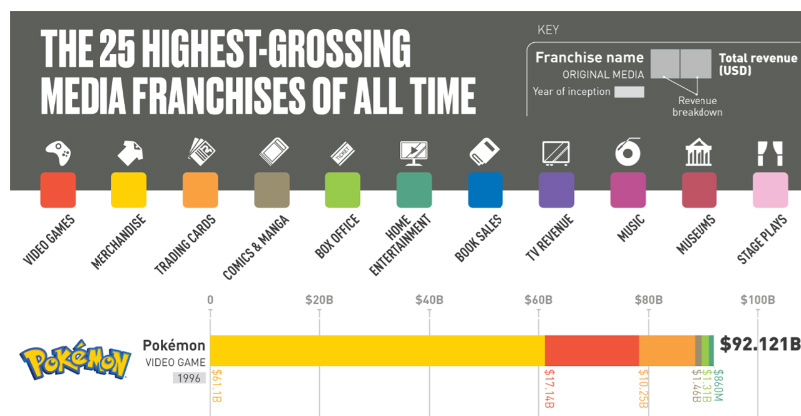
The Pokémon franchise is the highest grossing media franchise in the entire world ($92 Billion), even beating giants like Star Wars and Mickey Mouse.

Pokémon collectibles are also worth a lot of money. Some of the 1st edition Pokémon cards have been sold for $220,574. With the surge of NFT collectibles, people are buying up anything that comes close to Pokémon.


What is Axis Infinity?

Axie Infinity is a Pokémon-inspired universe where anyone can earn SLP tokens (More on SLP tokens on the tokenomics section) through playing the game and contributing to the ecosystem. It operates on an Ethereum side-chain “Ronin” which was created by the founders of Axis Infinity to host the game. Players can battle, collect, raise, and build a land-based kingdom for their Axies (Which are non-fungible tokens).

The two creatures below are Axies

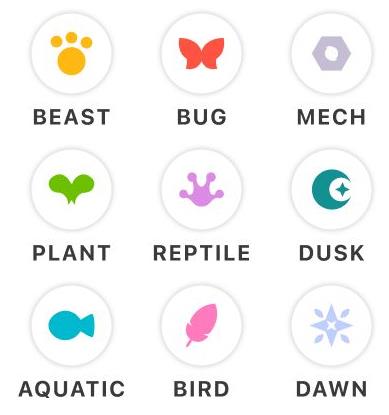
The ecosystem started off with 3112 Axies. Each Axie has its own unique body parts, statistics and class (or type)

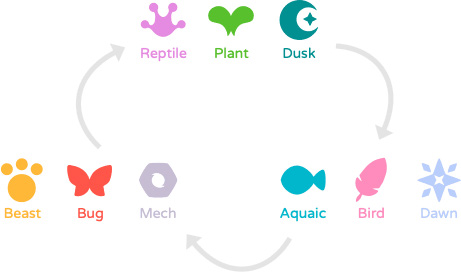
Battle: The battles are designed as a 3 vs 3 and just like Pokémon, there are Axis also have a class-based system and each class has an advantage over the other in battle.

So once your defeat another team, you will receive some SLP tokens (As mentioned above, the more you engage or play the more you earn. Aka “Play to earn”).

Breading: Axies can be bred and is the source of new Axies coming into the system. Breeding an Axie costs AXS (The governance token) and some Smooth Love Potions (SLP tokens) depending on how many times the Axies have been bred. The AXS portion is variable and subject to adjustment based on a myriad of economic factors. In order to avoid hyper-inflation, an Axie can also bred 7 times with an incremental SLP cost. You can make some extra money by selling the offspring in the market or use that to keep the breeding cycle going (Another source to Earn).

land-based kingdom: Just like Decentraland and Sandbox, you can buy land in the world of the Axies “Lunacia”. There are 90,601 plots of land (Map of the Lunacia on the left) which will be customizable and will be NFTs in nature. Lunacia will unlike the above-mentioned peers have NPCs (Non-player character) and there will be a story to the world.

Resources will spawn across Lunacia and be used to upgrade both land and Axies. Computer based enemies will be present all across Lunacia, making resource gathering a difficult task. Players will be able to take on them on a real-time battle either alone or in groups. Once defeated, the enemy will drop an assortment of resources, items, and blueprints used to upgrade territory and individual Axies. The world has not rolled out yet. A bundle of land was sold for a whopping 888.25 Eth.

Tokenomics

There are 2 tokens at play for the Axie infinity ecosystem. AXM token and the SLP token.

Both the tokens are an integral part of Axie Infinity’s “Play to earn” system. Every time you battle, you will earn SLP tokens (New tokens are minted) and the AXS token (50% of the total supply is allocated for rewards and staking), You can also use the SLP and the AXS tokens to breed your Axie and can sell the resulting offspring. You can earn SLP as passive income via the scholarship program (If you don’t have the money to buy your 1st 3 Axies, you use an existing team from another player

and earn enough SLP to start off. While the original owner will get a cut)

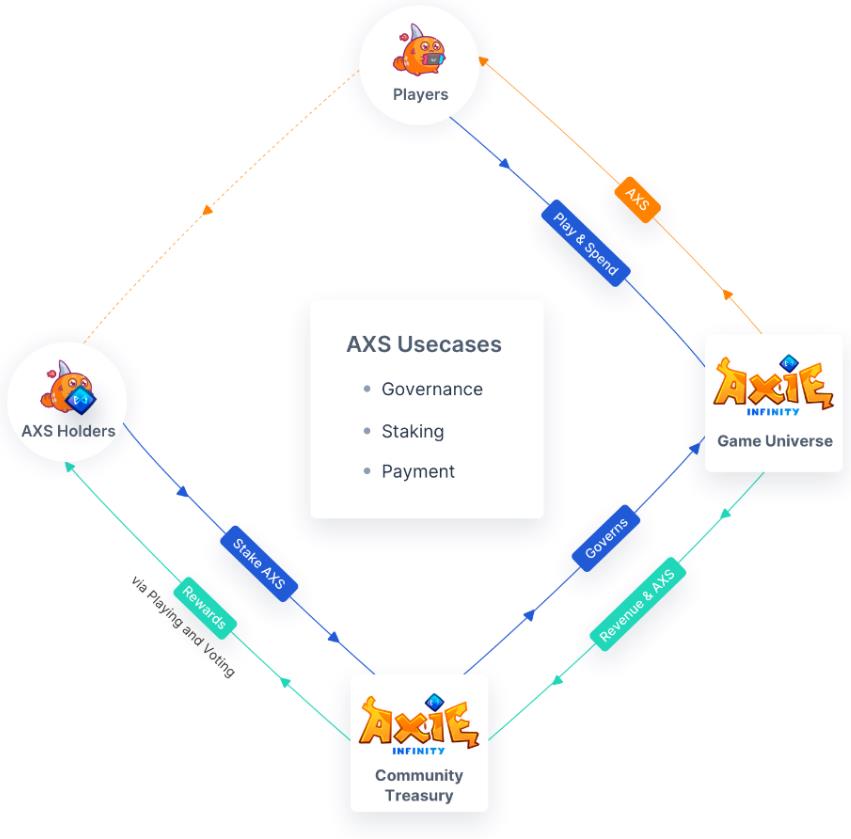
SLP is inflationary but has a deflationary mechanism in place. Everytime the SLP token is used for breeding, those tokens are burnt. While the AXS used for breeding is sent to the community treasury.

AXS is an ERC-20 governance token for the Axie Universe. AXS holders will be able to claim rewards if they stake their tokens, play the game, and participate in key governance votes. Players will also be able to earn $AXS when they play various games within the Axie Infinity Universe and through user-generated content initiatives.

AXS is Ranked #33 (based on Mcap) in the cryptocurrency market, total starting supply is 270 million tokens out of which 60.9 million tokens (23%) are in circulation. While SLP is ranked #177 (based on Mcap) in the cryptocurrency market. It is inflationary and has a circulating supply of 1.65 billion tokens.


Competition Analysis

Axie Infinity is operating within two giant industries – the gaming industry and the NFT industry. The global gaming industry is worth more than $300 billion and the NFT industry is a fast-growing industry.

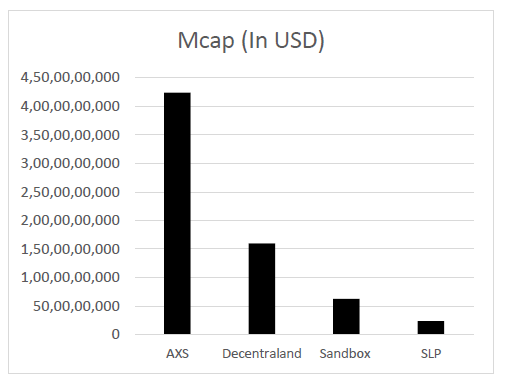
In the cryptocurrency space, Decentraland and Sandbox are the closest competition.

ProjectMcap (In USD)
AXS token4,24,11,47,280
Decentraland1,60,16,57,331
Sandbox62,88,45,443
SLP token23,59,02,986

Although the governance is token for Axie Infinity dominates the space, its SLP token is still small IN size.

Team, Media, and Community Strength

Axie Infinity is being developed by Sky Mavis which is a technology-focused game studio founded in early 2018. The team consists of 40 full-time employees and has its headquarters in Ho Chi Minh City, Vietnam. The founding team consists of experts in the gaming and blockchain space. They are prominent in the media.

Their community size is extremely large to generate $933 million worth of trading within its own marketplace. They have 423k Twitter followers and almost 800k discord members.


Conclusion


Pros:

Axie Infinity is a Pokémon (A 92 billion Dollar Franchise) inspired game, which is community driven and has 1 million daily active users. It is operating in the gaming and the NFT which is beyond 100 billion dollars. Axie Infinity dominates the industry and has a passionate and experienced team behind it. Their Virtual world will be launching in the first half of 2022.


Cons:

Axie Infinity has two tokens in play, SLP and AXS. AXS is the governance token and has some utility within the game. SLP also has many utilities within the game. Both have different Tokenomics this makes the overall tokenomics and the economy is complicated. There is a lot of criticism online regarding this.

MintingM rating for Axie Infinity is 4/5

CriteriaScore
Industry4.38
Opportunity Size5.00
Competitive advantage3.33
Tokenomics2.38
Team5.00
Overall Score4.00
Cartesi Research Report – 20th Aug 2021

Cartesi Research Report

Overview:

Cartesi (CTSI) is a versatile layer-2 infrastructure project which enables complex and intensive computations to run in a Linux environment, outside the blockchain, without compromising decentralization. In this report, we lay emphasis on how the project works, its problem solving capacity and review the pros and cons.

The CMP is $0.76 as of 20th August 2021.


What is Cartesi?

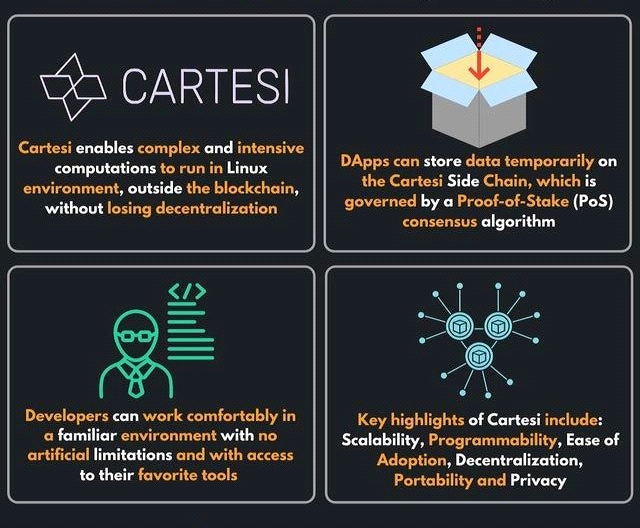
Cartesi is a layer-2 platform for the development and deployment of scalable decentralized applications(DApps). It is an infrastructure for blockchains that lets developers create highly scalable smart contracts with conventional software stacks on a Linux virtual machine.

The CTSI DApps are hybrid in nature, offering a combination of blockchain and off-chain

Erick de Moura, one of the co-founders, iterates that Cartesi bridges the gap between an innovative blockchain technology and the power of mainstream software development.

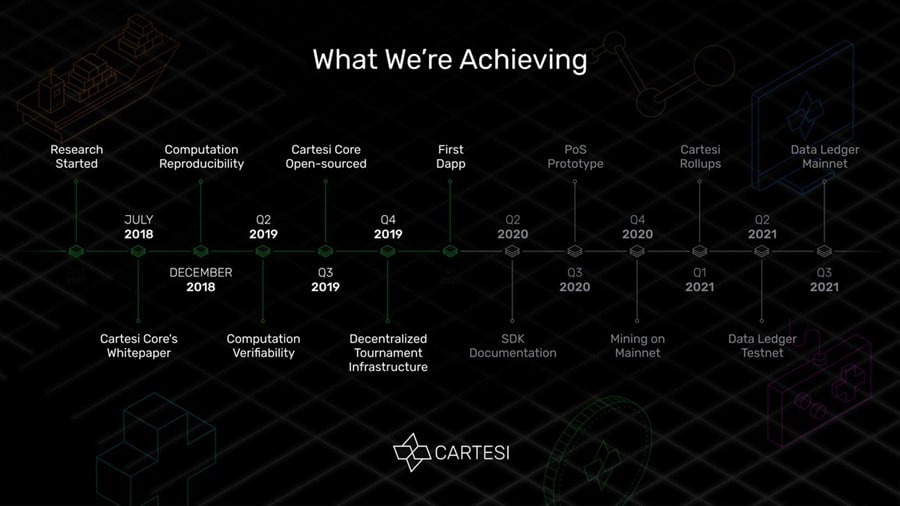
Image source: Reddit

Why Cartesi matters and its problem solving capabilities?

The two most fundamental roadblocks to Blockchain technology are scalability and cumbersome development software.

Software development on the blockchain platforms has always been hard to do with, expensive and susceptible to bugs/delays. One of the main reasons behind this is that developers have to build applications in a fresh programming language and start from square one, without resorting to the thousands of libraries that they have been used to.

Erick de Moura further explains that the DeFi is built on severe restrictions, where developers have to be almost heroic to work under these computational limitations devoid of a real operating system.

Cartesi brings about an essential solution to this scenario where developers can build on well-established software they are familiar with and execute them in a Linux environment. The project aims to bridge the gap between the centralized and decentralized worlds of application development. Some of its key features include:

  • Scalability
  • Programmability
  • Ease of Adoption
  • Decentralization
  • Portability
  • Privacy

Fundamentals of Cartesi

As mentioned earlier, Cartesi DApps are a hybrid of blockchain and off-chain components. The off-chain component runs in a network of Cartesi Nodes each representing the interests of a DApp user. The off-chain component is further divided into two modalities. Native computations run directly in the host hardware.

Although native computations have access to the node’s full processing power (including GPUs), the computations are not reproducible. The reproducible computations run instead inside Cartesi Machines that are controlled by the Cartesi Node. These are general, fully self-contained Linux systems that run on a deterministic RISC-V architecture. Nodes interact with Cartesi Machines by means of a well-defined host interface.

Rollups

Considering the limitations of the blockchain, several pioneers of the field and many projects have been coming up with solutions to these problems, one being rollups. Simply put, rollups are a way to deploy complex computations outside of the blockchain, reducing the heavy burden that is responsible for its current jamming. It has become the most promising of them all for two reasons: first, it provides a very generous scaling factor with very few compromises on security and versatility and secondly, rollups and sharding form a very powerful combination that complements each other to push scalability even further.

Cartesi token(CTSI)

Cartesi is currently developing a proof of stake blockchain on the Ethereum platform which will be maintained by a network of Node Operators.

The Cartesi token will have the following features in this new consensus algorithm:-

  • Election of Block producers – Miners will be selected to propose in the blocks based on their Cartesi token balances.
  • Slashing – Unruly behavior by the corrupt actors can be disincentivized
  • Staking – Block generators will be selected based on the amount of the Cartesi tokens staked
  • Transaction fees – Cartesi tokens will be used to pay the transaction fees to the Node Operators
  • Challenge computations –

The Cartesi Token will also be important in order to challenge computation results posted on the blockchain.

Existing products and Use cases:

CREEPTS

Creepts is a decentralized tower defence game built by Cartesi to showcase an early version of Cartesi’s core technology. It relies on a bracket structure where each winner is promoted to the next round until the final match-up.

NOETHER

Noether is a high-performance side chain for data availability. It is a side chain designed by Cartesi for temporary data availability, allowing dApps to achieve high throughput and storage of large files with reduced fees. It is presently being bootstrapped through CTSI reserve mining.

DISCARTES

Descartes SDK is the simplest infrastructure that DApps can use to run computations that would be impossible or too expensive to execute on-chain, either due to their complexity or due to the amount of data to be processed.

Potential Use Cases

The potential uses of Cartesi extend far beyond just gaming. It can be used to improve the

performance of any type of app, including:

  • Logistics & Optimization
  • Decentralized Finance(DeFi)
  • Research
  • Marketplace
  • Outsourcing

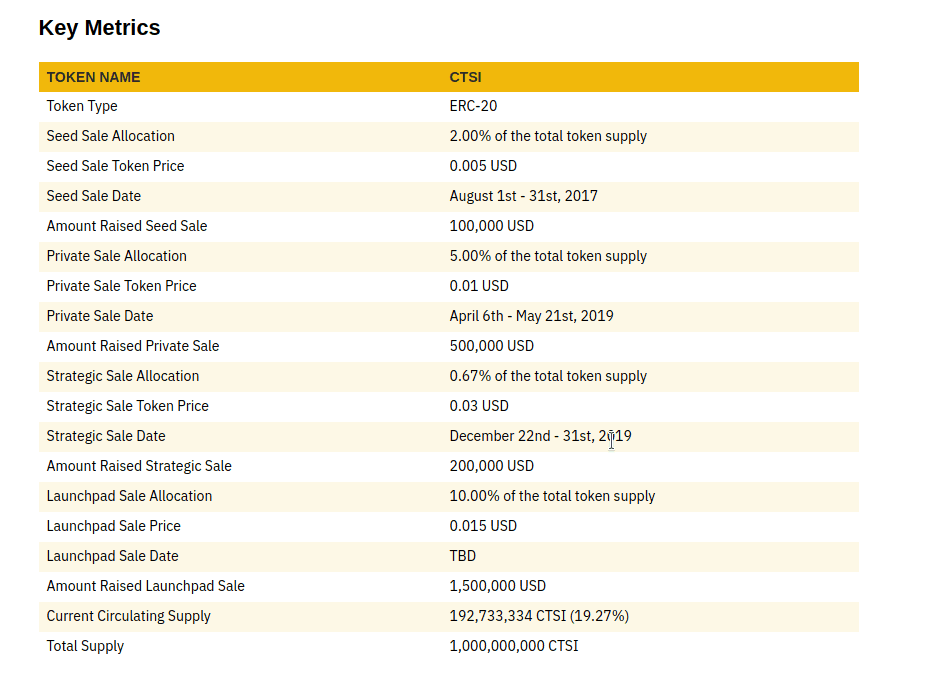
Tokenomics

Image source: https://icodrops.com

Opportunity and Competition Analysis

In a $500 Billion industry growing at a 30% CAGR, Cartesi shares a market cap of USD 300 million. With Cartesi aiming to resolve the fundamentals roadblocks in the blockchain system, it is only a matter of time before it dwells on a tremendous opportunity and captures a large chunk of its industry market cap.

In regards to competitors, Cartesi is fairly unique project in a certain way. Offchain Labs (Arbitrum) appears to be one of the closest projects. It has a similar protocol for off-chain computation that involves an interactive dispute resolution.

Team Cartesi

The Cartesi project was initiated in 2018 by four co-founders – Erick de Moura, Augusto Teixeira, Diego Nehab and Colin Steil.

The four originally became interested in blockchain due to Augusto Teixeira being friends with IOTA’s founder Serguei Popov.

Once Cartesi was started Popov became one of the earliest investors and advisors in the project.

Conclusion

Cartesi’s ultimate aim is to help DApp developers build captivating products for their clients and customers.

In a direct application of the principle of least astonishment, Cartesi’s core enables developers to leverage pre-existing knowledge and tools to boost their productivity.

As specified earlier, the key strength of Cartesi seems to lie in Scalability, Programmability, Ease of Adoption, Portability and Privacy Its weakness seems to be Partial security. It may be noted that there is no specific platform that can guarantee 100% security for the safety of data which is its weakness.

MintingM rating for CARTESI: 3.9/5

CriteriaScore
Industry3.75
Opportuniy Size5.00
Competitive advantage3.5
Tokenomics3.25
Team4.00
Overall Score3.9

Important links and sources
https://cartesi.io/cartesi_whitepaper.pdf
https://research.binance.com/en/projects/cartesi
https://cartesi.io/