0_BimXGGrGaRFuQipU

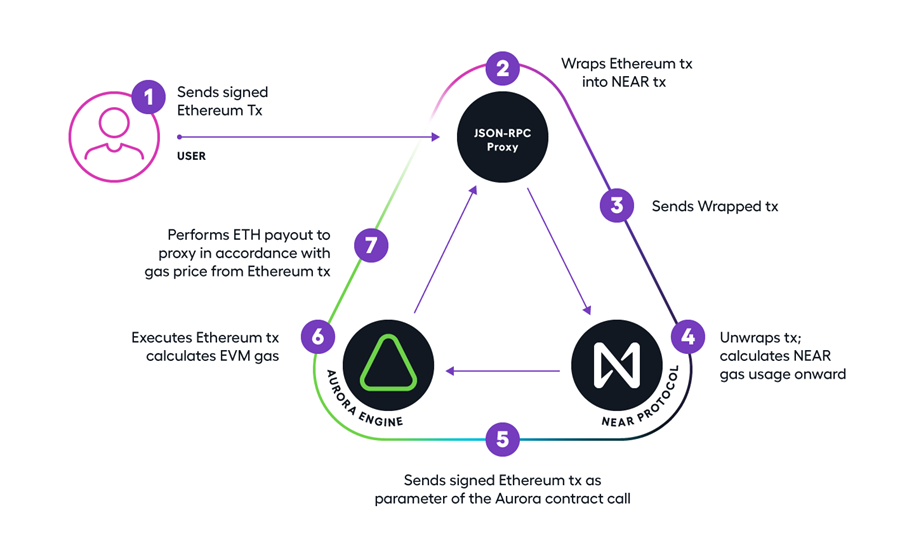
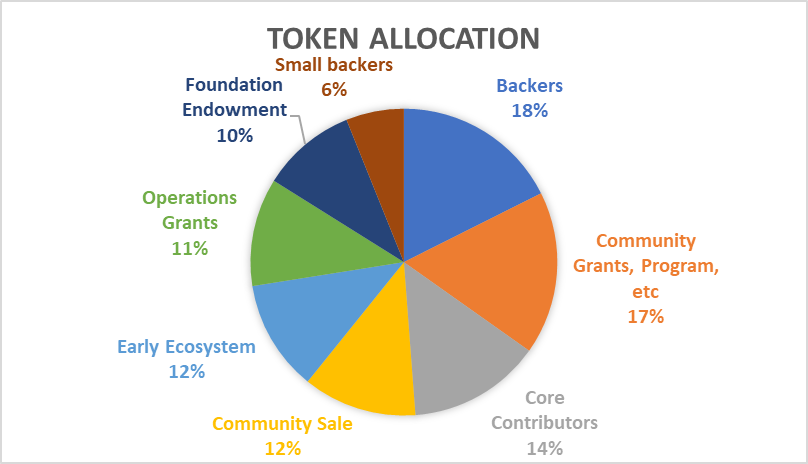
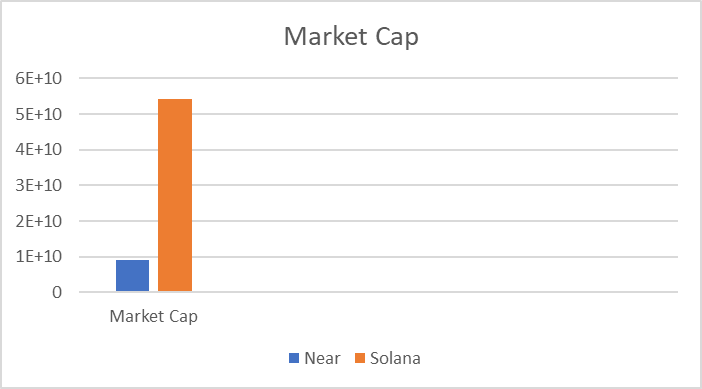
NEAR Protocol Overview

3d487344-bffd-4808-aa24-c53f601572be

Mina Protocol Overview

1_dVvJp04FWfVyjkIoljVt9g

Mirror Protocol Report

Mirror Protocol Report – 17th December 2021

Overview:

Mirror Protocol is a DeFi protocol for creating synthetic assets known as Mirrored Assets, or mAssets, based on the Terra blockchain. mAssets are digital assets that replicate the price behaviour of traditional and digital financial assets, allowing traders to trade without the need of intermediaries and acquire price exposure without having to own the underlying assets.

The CMP of MIR on 17Th December is $2.24

What is terra blockchain?

Terra is an open-source blockchain payment network for algorithmic stablecoins, which are digital currencies that track the value of other assets. Terra stablecoins may be spent, saved, traded, or exchanged instantaneously on the Terra blockchain.

What is DeFi?

Decentralized finance, or DeFi, is a mechanism for making financial goods available on a decentralized blockchain network that is open to the public. As a result, instead of going via intermediaries like banks or brokerages, anybody may utilise them. Unlike a bank or brokerage account, DeFi does not require a government-issued ID, Social Security number, or proof of address.

What is a Synthetic Asset?

Similar to traditional financial derivatives, which derive their value from other underlying assets like commodities, currencies, precious metals, stocks, or bonds, synthetic assets aim to achieve the same objectives without the necessity of holding the actual asset itself.

For example, let’s say that there is a cricket fantasy league app, where you can buy players and have them on your team. When the player (Let’s say Dhoni) performs well in the real world, the very same player in the game will also play well. In this example, you have a synthetic asset (The player) without actually owning the real player in your team.

Very popular synthetic assets that every crypto investor is familiar with are stable coins. USDC behaves like a USD but is not a USD.

What is Mirror Protocol?

Mirror Protocol (MIR) is an Ethereum token that administers the Mirror Protocol, a system that “allows the creation of fungible assets that mirror the price of real-world goods.” By minting “synthetic” reproductions of the real thing, the idea hopes to enable 24/7 equities trading. MIR tokens can be used to propose and vote on significant protocol modifications.

Why Mirror Protocol matters and its problem – solving capabilities

The creators of the Mirror Protocol have set out to solve a number of issues. The project’s primary purpose is to hasten the integration of conventional assets into the blockchain industry. Anyone may participate in the market since Synthetics provide exposure to these assets.

Millions of individuals throughout the world are now unable to access vital financial resources owing to their geography, status, or other restrictions. Traditional financial assets like stocks, bonds, and derivatives are extremely difficult for people outside of America and Europe to invest in. Furthermore, there are several additional charges involved with these transactions, adding to the challenges faced by many investors. The Mirror Protocol offers a more inclusive market option.

Fundamentals of Mirror Protocol

Mirror Protocol is used to construct synthetic assets that are modelled after real-world and real-time asset values in traditional financial markets. Anyone from anywhere in the globe may establish mAssets, lowering the entry barrier to trading stocks, commodities, and other assets.

Mirror Protocol is also utilized to bring liquidity to the synthetic asset market, and the project’s developers hope to expand the network’s capabilities to include earning a dividend for holding stocks, dynamic ETFs, and margin trading.

Use cases:-

  • Minting:-  MIR tokens were added as a new collateral option for minting mAssets in Mirror Protocol V2. Other new features in this version include support for pre-IPO assets, a “Mint/Short” LP Token, and solutions for governance issues. If a result, as the number of users on the platform grows, so will the demand for MIR. The MirrorToken (MIR) is minted by the protocol and distributed as a reward to reinforce behaviour that secures the ecosystem. With it, Mirror ensures liquid mAsset markets by rewarding MIR to users who stake LP Tokens obtained through providing liquidity.
  • Governance:-  Active stakeholders and liquidity providers are actively engaged in the process of discussing and voting for protocol upgrades.
  • Liquidity Incentives:-  MIR is distributed as a reward to users who provide mAsset liquidity to AMM. There is a fixed fee called the LP commission of 0.30% which serves as a reward for liquidity providers for Mirror-related pools on Terraswap.

Tokenomics

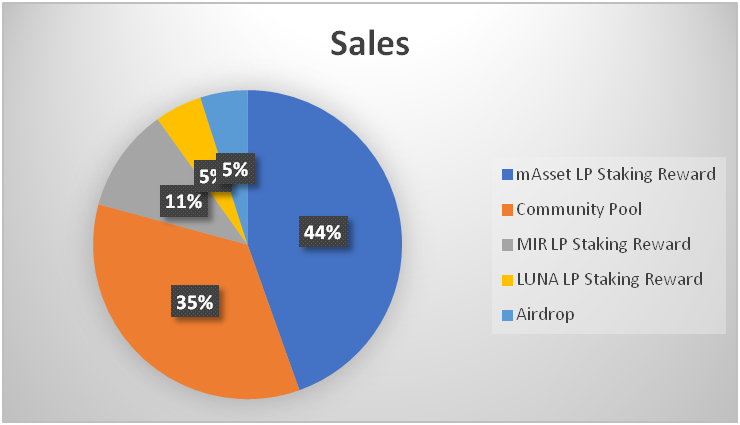
Mirror Protocol’s native token MIR has a fixed supply asset with only 370,575,000 tokens to be distributed over 4 years. Beyond that, there will be no more new MIR tokens introduced to the supply. In 2021 – Year 1 – Mirror Protocol is set to print a total of 128.1m (183m – 54.9m) $MIR tokens, or 350,728 $MIR tokens in a day assuming emissions follow a linear inflation. In 2022 – Year 2 – it will print an additional 73.2 million $MIR tokens.

Competition Analysis

Mirror Protocol and Synthetix

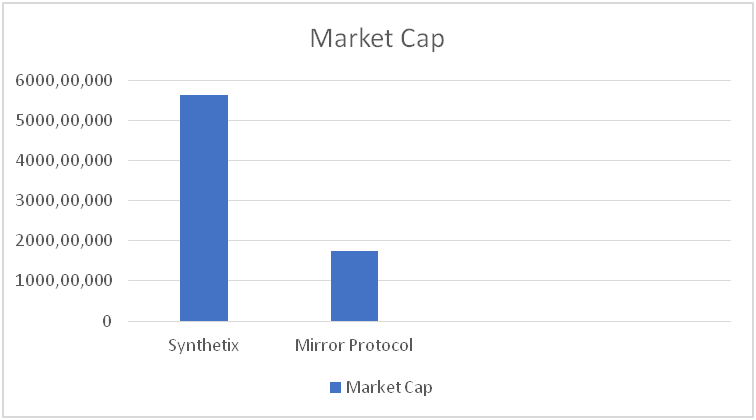
Even while these two protocols work in a similar way, in that one deposits assets to be used as collateral and the other utilises that collateral to mint synthetic assets, there are some differences. There are a few key distinctions between them that contribute to their respective utility and, as a result, worth.

To begin with, they use distinct blockchains. Synthetix is based on Ethereum, whereas Mirror is based on Cosmos and operates on the Terra blockchain. Right away, this has significant ramifications. Because Synthetix is based on Ethereum, gas prices will be a major barrier to broad adoption, at least until it is ported to an L2, which is not now the case. Mirror, on the other side, operates on the Terra environment, which is based on Cosmos and has far lower gas prices.

Team, Media & Community strength

Do Kwon and Daniel Hyunsung Shin are the co-founders of Terraform Labs. Do Kwon is the CEO of the company. Do was a software engineer at Microsoft and Apple and studied Computer Science at Stanford. Prior to founding Terraform Labs, Daniel founded TicketMonster, which is Korea’s leading e-commerce platform.

They have over 82.3K followers on twitter and 14.2K in telegram

Conclusion

Traders in decentralized finance (DeFi) are increasingly interested in synthetic assets, which they think can help break down barriers to the old financial system by allowing traders from all over the globe to obtain exposure to equities and other assets. Mirror Protocol aims to fill this need by offering proxy versions of the major financial assets. Users can mint synthetics by placing collateral and trading them on automated market makers using the protocol. Holders of the protocol’s native Mirror token are in charge of it (MIR).

It’s the first of its kind on the terra blockchain. It was launched between 11th November to 4th December  2020. By May 2021, Mirror protocol grew to be the fifteenth largest DeFi protocol by Total Value locked(TVL), with $118 billion of collateral locked in the protocol. It has a total supply of $370,575,000 with a circulating supply of $77,742,679. With the ongoing developments and upgrades that are taking place within the MIR platform. Mirror Protocol has a great future ahead in this crypto market. Traditional brokerages still cost $10 to enter and exit a position. On Mirror protocol it costs from $0.10 to $1.50, almost 10x cheaper. Even though the founders have adequate experience from the best of the tech companies what they lack is the financial expertise in this particular space. Though this space is complex and complicated it has a lot of potential growth which can lead to replace the traditional market space.

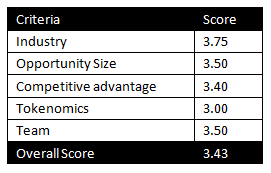
MintingM rating for Mirror Protocol: 3.43/5

Get deeper insights into the crypto market’s weekly trends discussed on our Spotify podcast.

Start your Crypto Investments with XMINT Bots today

Main logo

Oasis Network Overview

Overview:

The Oasis Network is the first blockchain network with privacy features for open finance and a responsible data economy. The Oasis Network, with its high throughput and secure design, can support private, scalable DeFi, reinventing Open Finance and bringing it to a wider audience than traders and early adopters.

The CMP of ROSE on 10th December is $0.261

What is Oasis Network?

The Cosmos SDK was used to create the Oasis Network, a privacy-focused smart contract platform for open finance. The project emphasizes data privacy and user confidentiality applications and use-cases. It tries to do this by isolating its consensus layer from its contract execution layer and offering a built-in interface for privacy-preserving computation between the two. The consensus layer serves as a hub that secures the network and reaches an agreement on transaction legality using a Proof-of-Stake (PoS) method. The execution layer is made up of a number of parallel runtimes (dubbed ParaTimes) for different types of computations that all plug into the consensus layer.

Why Oasis Network matters and its problem-solving capabilities

The mission of the Oasis Foundation is to build a responsible data society. The idea behind it is to use a combination of advanced distributed ledger technologies to allow people more control over their own data. The public and freely shareable character of tokenized data (whitepaper) is combined with safe computing environments in these technologies. The capacity to create a new type of crypto data is the ultimate outcome.

The Oasis Network can enable new use-cases like under-collateralized loans, private dark pools, private automatic market makers, private stablecoins, private oracles, private payments, and more because of its unique ability to keep data discreet and private.

Fundamentals of Oasis Network

The Oasis Network was created to expand and enhance DeFi prospects for both major and small companies by removing the barriers that currently exist in the field. The Oasis Network has significant benefits that will enable it to support the next generation of DeFi.

Private smart contracts, which enable the creation of a new generation of decentralized applications born that see privacy as an incentive to create trust with their users

Private state and transaction details, which prevent malicious players from gaming the system in order to realize higher profits while limiting the participation of smaller DeFi users

The flexibility to keep data public or confidential, which allows DeFi Dapps to comply with regulations while ensuring the protection of commercial interests and participation of financial institutions in the system.

High throughput, which reduces/eliminates the transaction fees that disincentivize any but the already-wealthy to participate in DeFi

Use cases:-

  • Nebula Genomics:-  Using Oasis’ framework, usesr can retain ownership of their genomic data and Nebula Genomics can run analysis on the data without seeing the customer’s raw information.
  • BMW:-  Oasis Labs is collaborating with the BMW Group to evaluate differential privacy solutions in their internal systems. All accesses may be saved to a ledger for consent-based auditing, and the Oasis Labs platform can validate all access policies for high integrity before executing queries and delivering results.
  • Binance CryptoSafe Alliance:-  The CryptoSafe Platform, developed by Oasis Labs and Binance, allows exchanges to share threat intelligence data. The Oasis Network’s support for confidential computing ensures that exchange data remains private even when being compared.

Tokenomics

Competition Analysis

The web is the Oasis Network’s largest rival. The Oasis Network offers primitives like data ownership, immutability, and secrecy that the present web lacks, making it the best choice for the next generation of digital apps and services that value user privacy.

Team, Media & Community strength

Oasis Network was founded by Dawn Song, a professor in the Department of Electrical Engineering and Computer Science at the University of California, Berkeley.

Raymond Cheng is the co-founder and CTO of Oasis Labs. He holds a PhD in Computer Science from Washington University and has a solid research record.

Noah Johnson is another co-founder and the CPO of Oasis Labs. Noah is a PhD candidate at Berkely.

Bobby Jaros is the last co-founder and the COO of Oasis Labs. He holds a Master degree in electrical engineering from Stanford University.

Oasis Foundation has over 90K followers on Twitter and 14.1K in telegram

Conclusion

The contemporary economy’s most valuable asset is user data. Control, ownership, usage, and monetization of this data continue to be an economic and privacy concern. To solve these challenges and allow a “responsible data economy,” Oasis, a privacy-first, proof-of-stake, decentralised computing network, was created. The protocol intends to put people in charge of their data by allowing them to own and control it while also facilitating the creation of privacy-preserving apps and services.

As we can see the industry size is growing quite extensively in just a year’s time. It has a good market capital for a reasonably new token. As it has the upper hand of being the first blockchain network with privacy features, it has a certain edge compared to others. It has a total supply of 10 billion ROSE and a circulating supply of 3.5 billon in the market.

Oasis Network is one of the rare blockchain startups founded by a woman. The present Oasis Team constitutes of talent from across the globe with backgrounds from Apple, Google, Amazon, Goldman Sachs, Stanford, Harvard and more — all committed to growing and expanding the impact of the Oasis Network.

Oasis network achieves scalability through its cutting-edge set of features that provide faster transaction speeds and higher throughput than other networks.

Looking ahead, the Oasis Network looks to be a strong project with emphasis on scalability and high throughput.

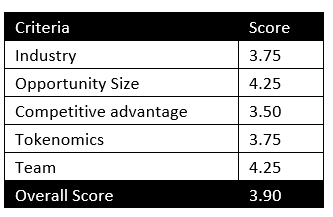
MintingM rating for Oasis Network: 3.90/5

Important links and sources

https://medium.com/

https://deficoins.io/

https://docs.oasis.dev/

Get deeper insights into the crypto market’s weekly trends discussed on our Spotify podcast.

Start your Crypto Investments with XMINT Bots today
chainlink

Chainlink Overview

Chainlink Overview

Overview:

Chainlink is a decentralized network of nodes that provide data and information from off-blockchain sources to on-blockchain smart contracts via oracles.

The CMP is $24.75 as of 3rd December 2021

.

What is Chainlink?

Chainlink is an Ethereum-based decentralised blockchain oracle network similar to Tellor.  The network is designed to make it easier to move tamper-proof data from off-chain sources to smart contracts on the blockchain. Its inventors say that by linking the contract directly to real-world data, events, payments, and other inputs, it may be used to check if the requirements of a smart contract are satisfied in a way that is independent of any of the deal’s stakeholders.

Why Chainlink matters and its problem solving capabilities

Chainlink contributes by offering an innovative decentralised method of authenticating data from oracles and pertinent smart contract output data. ChainLink examines centralised oracle feeds as a single point of failure and proposes a remedy via “middleware” that compromises a decentralised oracle platform. Before data becomes a trigger for a smart contract, ChainLink detects and authenticates it. Individual nodes on Chainlink operate as smart contracts, executing calculations to ensure that the data given into the smart contracts is accurate.

Chainlink follows a paradigm or structure that is quite similar to a blockchain. There is a decentralised network of autonomous oracles that gathers data from diverse sources, aggregates it, and gives a verified, single data point to the smart contract, accelerating its execution and removing any single point of failure.

Fundamentals of Chainlink

Chainlink is a decentralised oracle network made up of data buyers and sellers. Data is requested by purchasers, and it is returned in a secure manner by suppliers.

Buyers choose the data they want, and providers compete to deliver it. When making a bid, providers must commit a stake of LINK tokens, which can be taken away if they misbehave. Once providers have been chosen, it is their responsibility to ensure that the proper responses are added to the chain.

Chainlink aggregates and weights the data given using an oracle reputation system. If everything goes according to plan, providers will be paid, and everyone will be satisfied.

Use cases:-

  • Decentralized Finance(DeFi):- When it comes to the crypto sector today, DeFi is now at the top of the list. Intriguingly, 2020 has been called the Year of DeFi, since the sphere saw a 1000 percent gain in TVL in just the third quarter of the year. The DeFi industry is recognised for providing a wide range of services, including lending, hedging, and loan collateralization.
  • Stablecoins:- These are cryptocurrency tokens that are linked to valued assets. These things might include fiat monies such as the US dollar, precious metals, and even cryptocurrency. These tokens, as the name indicates, are less prone to volatility than other types of cryptocurrency.
  • Bonds:- They have existed since the beginning of decentralised technology. Traditional bond contracts are being phased out in favour of automated smart contracts powered by oracle systems such as Chainlink. They also give useful information like as interest rates, fiat payments, debt scores, and so on.

Tokenomics

The LINK token is utilised as both a payment and a labour token. LINK is used to compensate Chainlink node operators for delivering oracle services as a payment token. Node operators can stake LINK as collateral to provide oracle services as a work token.

The LINK token sale began on September 19, 2017, with a hard ceiling of $32 million. LINK was offered at $0.09 per token during the pre-sale, with a 20% bonus depending on when the investor bought. Following that, LINK was sold at $0.11 per token in a public sale. Both sales totaled 350 million LINK LINK LINK LINK LINK LINK LINK LINK LINK LINK LINK LINK LINK Initially, 1 billion LINK tokens were distributed.

Competition Analysis

Chainlink vs Band Protocol

To request external data, Dapp’s smart contracts interface with Link’s Oracle. The Dapp accepts ETH as payment, which is subsequently converted to the LINK token. This conversion is required so that the Oracle may utilise the LINK token to pay its nodes (employees/workers) for retrieving external data. This is the bottleneck: translating from ETH to LINK during peak network traffic is too expensive/slow for a Dapp that relies on real-time data to execute its smart contract.

Furthermore, the nodes are OFF CHAIN (An off-chain transaction is the movement of value outside of the block chain). Working outside of the block chain is wasteful since it necessitates two transactions to communicate the external data that the Dapp requires.

Dapp’s smart contracts communicate with Band’s Oracle to request external data. The Dapp pays with ETH that is then converted to the BAND token. This conversion happens on Band’s COSMOS infrastructure. COSMOS eliminates the dependence of the ETH blockchain which is subject to network congestion and high gas fees. In addition, Band’s Oracle communicates with its network nodes that live ON CHAIN which means that information can be seamlessly relayed and does not need two transactions to occur like Chain Link.

Team, Media & Community strength

Sergey is the founder and CEO of Chainlink, a prominent blockchain middleware startup that is utilised by businesses (SWIFT, Google, Oracle) and smart contract teams (Web3 Foundation, Zeppelin, Open Law, Market Protocol, and many others). The strength as of now is 89 members working in chainlink .
They have over 635.7K followers on twitter and 4.6K in telegram

Conclusion

Chainlink is a decentralised oracle network that feeds real-world data to blockchain smart contracts. Smart contracts are pre-specified blockchain agreements that assess data and execute automatically when specific circumstances are satisfied. LINK tokens are the digital asset tokens that are used to pay for network services.

Pros

  • Allows secure interaction between smart contracts and off-chain data.
    • Potential to allow smart contracts that mimic current financial agreements
    • Financial reward for feeding reliable data securely into Chainlink
    • Partnerships with big companies like SWIFT and Google Cloud

Cons

  • Questions as to whether LINK tokens are actually necessary for project
  • Systems can work with a single oracle, allowing for data manipulation

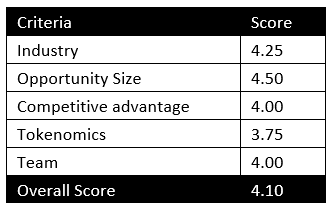
MintingM rating for Chainlink: 4.10/5

Important links and sources

https://medium.com/

https://deficoins.io/

https://www.gemini.com/

https://www.leewayhertz.com/

https://decrypt.co/

Get deeper insights into the crypto market’s weekly trends discussed on our Spotify podcast.

Start your Crypto Investments with XMINT Bots today