waves

Waves Blockchain Overview – 15th April 2022

anch-logo

Anchor Protocol Research Report

Research summary:

Anchor Protocol is a Defi protocol (live and operating) that allows anyone to earn interest on their money. It aims to shape the current DeFi ecosystem and make it suitable for mass adoption. We will focus on how the project works and review its pros and cons.

The CMP of ANC is $3.06 as of 8th April 2022 

What is DeFi?

All of the traditional financial services are centralized (controlled by a single authority or managed in one place) in nature. The Risks and problems that come with centralized financial services are Fraud, Mismanagement of funds, Theft, and restrictions to use your own money. DeFi stands for Decentralized Finance (DeFi is a category of Dapps. Dapps are decentralized applications that are launched on networks such as Ethereum). It is a financial service with no central authority. It eliminates these problems by allowing people to have complete custody and control of their money and to get more returns, by eliminating the 3rd party.

There are various categories of DeFi

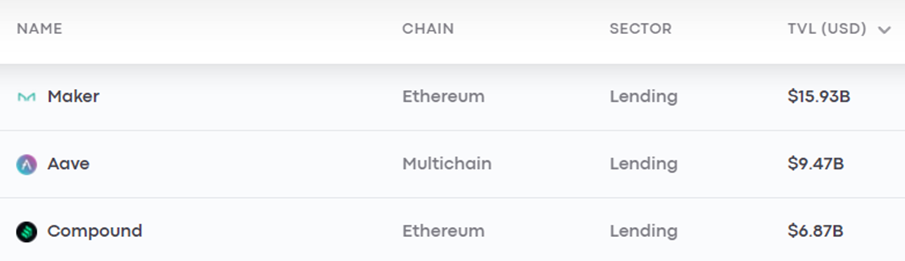
  • Money Market: Such applications enable users to borrow assets against collateral and earn interest. Maker, Aave, and Compound are the top DeFi applications in this category.  
  • Decentralized exchange: These kinds of applications give users the ability to swap one crypto for another. Uniswap and SushiSwap are the top DeFi applications in this category. 
  • Derivatives: A derivative contract derives its value from an underlying asset. With the help of smart contracts, DeFi projects like Synthetix allow people to get exposure to a wide variety of assets.  

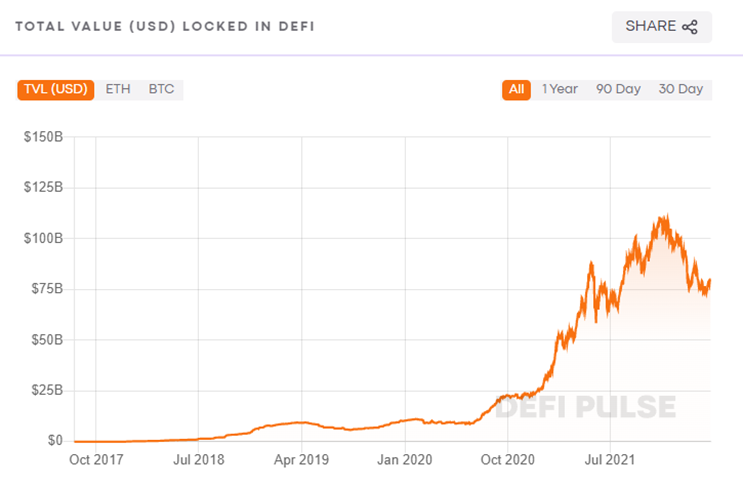
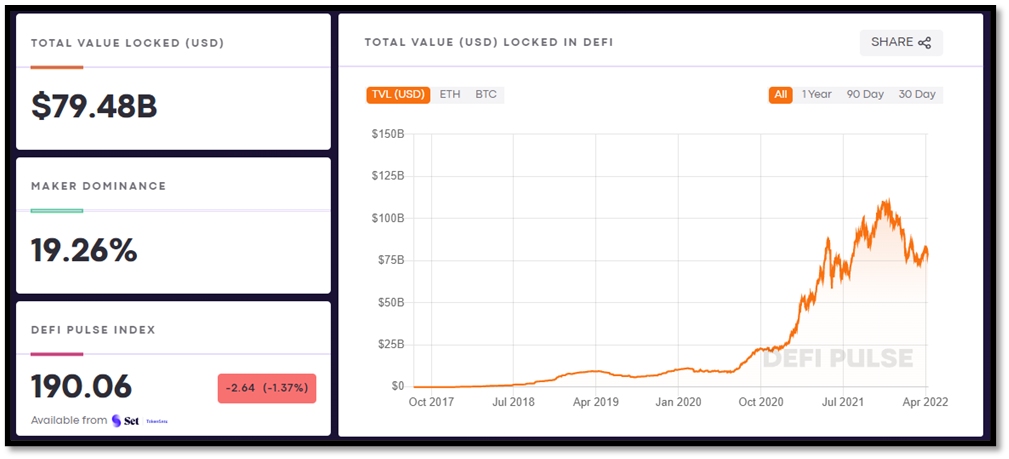
The DeFi space has seen explosive growth over the past year. The graph below indicates that 79.48 billion dollars are currently involved in the DeFi space.

Data as of 8th April 2021 and from https://DeFipulse.com/

What is Anchor Protocol?

Anchor Protocol is a borrowing and lending protocol built on the Terra blockchain by Terraform Labs. It is the 3rd largest DeFi protocol and has close to $15.52 billion in total value locked. 

DeFi was one of the 1st niches within the cryptocurrency space that started booming as the crypto community realized its true potential. This led to a strong influx of brain and capital within the space however DeFi is still complicated. You need to jump through hoops to earn that extra yield and it is acting as a barrier when it comes to mass adoption. The team behind Anchor Protocol realized that a simple “Savings Account” which is considered to be the most popular financial instrument in the world would eliminate the complexity barrier and is the move forward. Anotherbarrier when it comes to mass adoption is “Volatile deposit interest rates” and this is an issue associated with the top lending and borrowing DeFi peers like Compound Finance. To counter this issue, the Anchor protocol provides a stable deposit interest rate of approximately 20%. 

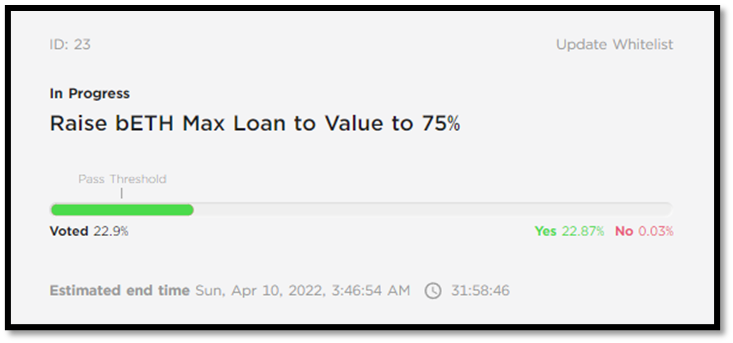
The protocol is decentralized and is managed by ANC token holders. Proposals are brought to the token holder’s attention and holders can vote “Yes” or “No”.

It is currently ranked at #94 (based on Mcap) in the cryptocurrency market. There is a maximum supply of 1 billion ANC tokens out of which (28%) 27.6 billion ANC tokens are in circulation. ANC is currently listed on Binance, Kucoin, and Huobi Global.

How does Anchor Protocol work?

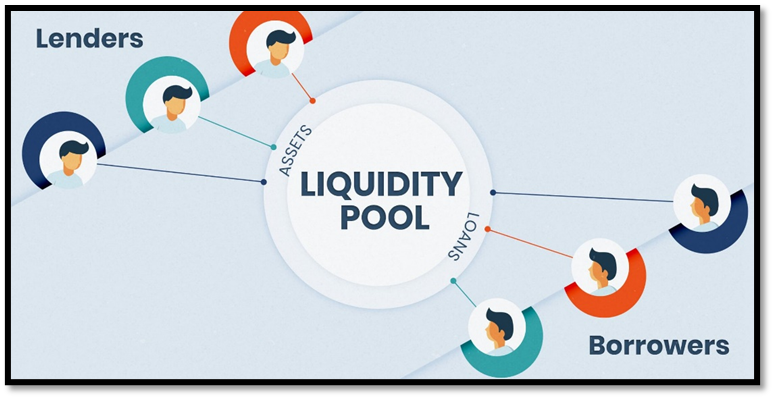
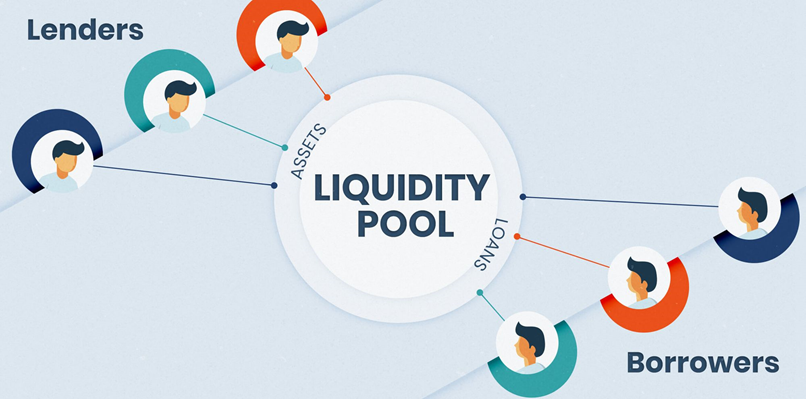
In Anchor Protocol, you can borrow and lend money in a decentralized manner. There isn’t any requirement to fix the specification of a loan or meet anyone. This is possible with something referred to as a liquidity pool.

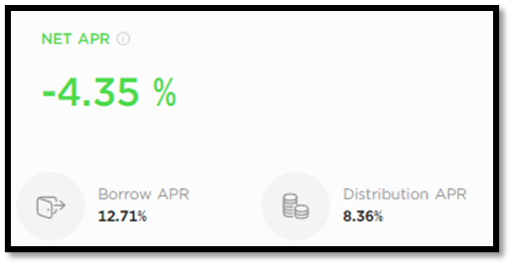
A liquidity pool can be viewed as a bowl of money, lenders can deposit UST in the bowl for approximately 20% annual interest rate while the borrowers can borrow money from the bowl for a certain interest rate (-4%, yes, it is negative. More on this below).

The borrower has to deposit collateral in the form of liquid staked PoS assets from major blockchains (It only supports Ethereum and Luna at the moment) to borrow money.

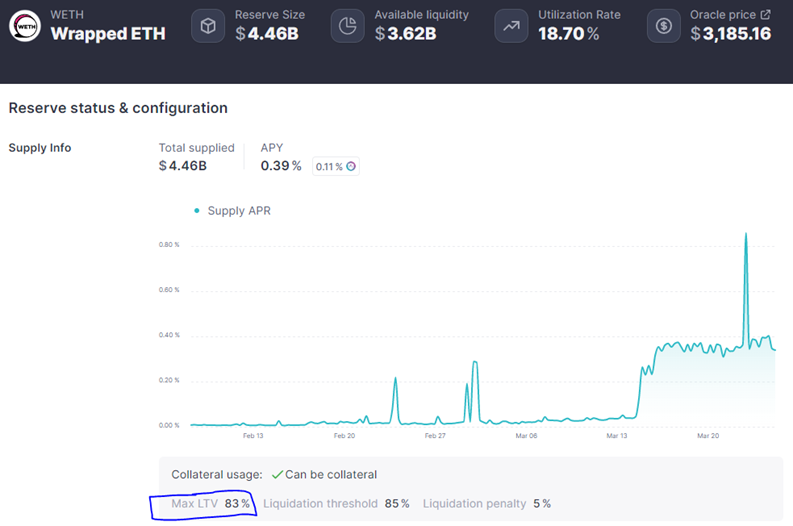
To make sure that the value of the collateral does not drop significantly (due to the volatility in the crypto space) compared to the loan amount, the protocol overcollateralizes. LTV stands for loan to value ratio, so if I want to borrow $100 worth of Ethereum, I will have to deposit $120 worth of Ethereum.

The motivation from the lender’s point of view is to earn passive income while borrowers can use the protocol to increase their leverage on their position. Let’s say that the investor is confident that BAT is about to surge, so he can borrow money and keep BAT as collateral. He will then buy more BAT with the borrowed money. So, when BAT surges, the borrowed BAT’s new value minus the principal and interest would be the profit. Another common reason to borrow money is to suffice temporary cash crunch without selling your crypto.

How does it provide ~20% returns?

The explanation is quite simple and “Staking” is an important factor. Staking is an essential aspect of the “Proof of Stake” consensus mechanism. Unlike “Proof of work”, PoS randomly selects a validator to forge the new block and is accordingly rewarded. To ensure that the validators do not have any malicious intentions, they need to put the skin (or stake) in the game. If you do something wrong, you lose their stake.

The borrower has to deposit staked Ethereum (bETH) or staked Luna (bLUNA) as collateral to borrow. The staking rewards generated from the collateral go to the anchor protocol. The staked rewards along with the interest on the outstanding loan serves as the reward for the depositors. If the rewards exceed 20% of the deposited value, then the extra money goes into a Yield reserve. The purpose behind the yield reserve is to compensate the depositors when the staked rewards and the interest on loans don’t achieve a 20% interest rate.

Let’s look at the current numbers as of today (8th April). The total deposit value stands at – $ 12,308 million. So, a 20% interest would account for $1,230 million

Staked rewards arising out of Terra account for 6.4% of the staked value which is $281 million and the rewards arising out of staked Ethereum account for $62.5 million. The current 12.71% APR on borrowed funds accounts for ~$432.33 million.

So, the overall revenue that Anchor generates comes down to $775 million while the 20% rewards to the depositors sit at $1,230 million. Anchor protocol is falling short of $454 million and if the yield reserve (328 million) is completely deployed to shorten the gap, there will still be a gap of $126 million.  

What is the utility of the ANC token?

The only way to reduce the gap is to increase borrower’s interest so that they can deposit staked collateral and pay interest. To achieve this the native token “ANC” comes into play. Not only does it act as a governance token but it is also used to incentivize the borrowers. Today you are paid to borrow money from the protocol in the form of ANC tokens.

ANC is designed to grow along with the Anchor’s AUM and distributes protocol fees to the ANC stakers. One concerning aspect is that the token issuance will end within a few years.

Competition analysis.

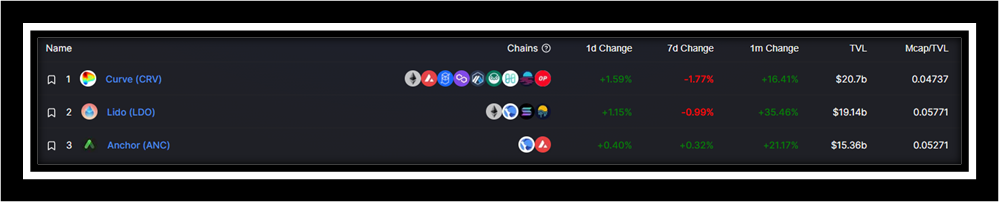
When it comes to the DeFi space, Anchor is the 3rd largest Dapp based on total value locked (TVL) and the 2nd largest Dapp in the lending category.

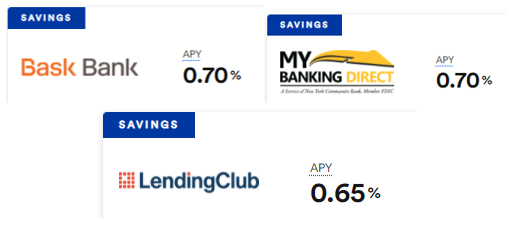
It has gained tremendous traction in the last year, as last April it only had a TVL of 0.5 billion. Besides its crypto peers, the traditional banks are also a competition. It has an amazing edge over the banks in developed nations.

Team, Media, and community strength.

The Anchor protocol is governed by its token holder community.

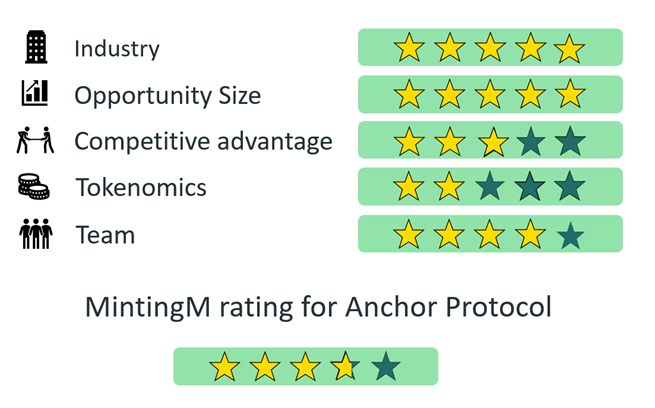
Anchor protocol has excellent community strength. They have 200k Twitter followers, 40k telegram followers, and 19k discord members. Their media strength is mediocre.

Conclusion

Pros:  Anchor protocol has created a solution that is perfect for mass adoption as it not only focuses on the most popular financial product but also tries to provide a stable interest rate. It is one of the largest DeFi applications and has close to $15.4 billion. It is a DeFi protocol that is governed by the token holders and has huge market potential as it is trying to take over the primary role of the banks which is a multibillion-dollar industry. Keep in mind that the depositors earn 19.5% as of now.

Cons:  Anchor protocol faces several challenges. The 1st one is regulation. DeFi falls just behind Bitcoin when it comes to regulator’s priority as DeFi serves as a replacement to the existing traditional and extremely regulated financial industry. The 2nd challenge or a potential issue is that most of the value locked is in the form of UST which is an algorithmic stablecoin. Although there is a risk of UST losing its peg (similar to the Iron Finance fiasco), Terra has been working on reducing the risk by creating a Bitcoin reserve for UST. The tokenomics is also a concerning factor as the issuance is quite high and is serving as an incentive to borrow.

Get deeper insights into the crypto market’s weekly trends discussed on our Spotify podcast.

Start your Crypto Investments with XMINT Bots today

poly

Polygon Research Report

Overview:
Polygon is a firm believer in Web 3.0 and aims to introduce it to the entire world. It focuses on scaling Ethereum and eliminating some major issues that act as a barrier to mass adoption. It is one of the most well-known layer 2 solutions on the market.
The CMP of MATIC on the 1st of April 2022 is $1.65


What is Polygon?

Polygon is a decentralized Ethereum scaling platform that offers multiple scaling solutions. It has been built by an Indian software company called “Polygon technologies” and close to 7,000 Dapps have used Polygon to scale their performance. It has close to $4.1 billion in total value locked.
It is currently #16 (based on Mcap) in the cryptocurrency market. Polygon’s native token “MATIC” has a maximum supply of 10 billion MATICs and currently has 7.7 billion MATICs (77%) in circulation. It is currently listed on all the major exchanges.


What problem does Polygon solve?

The current internet that we all know is dominated by organizations that provide services in exchange for the user’s personal data. If no fee is charged for a service, then your data is the fee. The prime examples would be Facebook, Twitter and Google. Another aspect when it comes to the current web 2 players is that the ownership of assets and power is with the organization. For example, Twitter can ban you or delete your account without your consent. The banks have made reckless investments with the publics savings and have lost it as well.

The trust that people need to place in organizations has dropped to an all-time low. This is why Web 3 has been gaining traction. With Web 3, you can throw the trust aspect out of the window. It is decentralized in nature and it cannot censor you & it does not prevent you from making payments. Unlike Web2, Web3 does not exist on 1 centralized server but rather on a network of 1000s of computers (in case they use Ethereum). Bitcoin’s core function is to decentralize money and it is still working on doing so as it gets more and more adoption. “If we can decentralize money, imagine what else we could decentralize” were the thoughts of the founders of Ethereum. Ethereum, the 2nd largest cryptocurrency, is an open-source decentralized platform (1000s of computers) upon which developers can create decentralized applications or Dapps.

It has $121.59 billion dollars in total value locked and has the lion’s share when it comes to blockchain developers. However, Ethereum’s current structure is not scalable thus acts as a barrier to mass adoption.

Here is a detailed elaboration on the issue. Every time you need to use a Dapp on Ethereum, you need to pay a fee (Gas fee). Ideally for mass adoption, the fee is supposed to be insignificant, however, for small to medium investors, the gas fee is extremely high. There were instances where the investors had to pay $125 to sell $200 worth of assets on a decentralized exchange or wait for days for their transaction to go through. This stumps the evolution of the internet and makes Ethereum useless for a significant part of the world.


How does Polygon solve the problem?

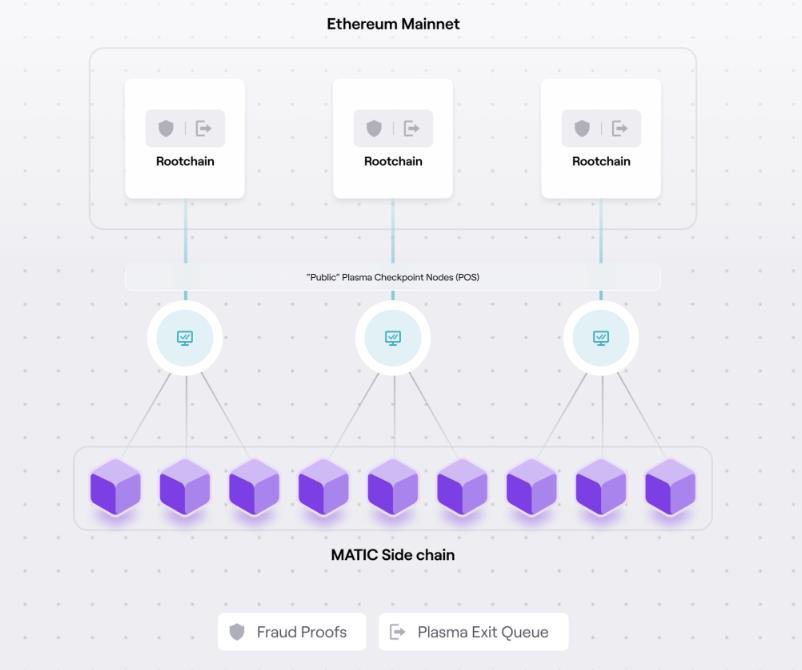
The answer to the above-mentioned problems is “Scaling solutions” and Polygon offers a suite of scaling solutions. The most popular solution is the “Polygon PoS” which has achieved high transaction speed and cost savings by utilizing side-chains for transaction processing. At the same time, POS ensures asset security using the robust Plasma bridging framework and a decentralized network of Proof-of-Stake validators.


A simple translation would be that it is a separate blockchain with its own set of validators. It essentially bundles up a bunch of transactions on its own chain and then sends that to the Ethereum chain.


• It can process 65,000 transactions per second (TPS) vs Ethereum’s 20 TPS
• The cost per transaction comes down to approximately $0.002 vs $15 (average cost per transaction on 31st March 2022)
Polygon PoS is also EVM compatible, which means that Ethereum Dapps can be quickly deployed on Polygon without changing much of the Dapp. This is one of the reasons Polygon was able to bring 80+ major Dapps from Ethereum over to Polygon. This includes the likes of Uniswap and AAVE.

Will Ethereum 2.0 make Polygon obsolete?

To tackle the gas high issue, EIP-1559 was proposed and implemented. This changed the structure of the reward mechanism for miners and added a deflationary mechanism for Ethereum. The fees were reduced but eventually returned to high levels.
With the upcoming “Merge” event, Ethereum will be moving from the publicly condemned “Proof of Work” consensus mechanism to the “Proof of Stake”. The big misconception is that the Gas fees are going to drop tremendously and Ethereum will become extremely scalable. PoS is actually going to be implemented only on the consensus layer while the execution layer (Where you pay the gas fees) will not change.

When Ethereum 2.0 materializes, it will spread the network load across 64 separate shards. In simple terms, it will have 64 main chains (It is just 1 right now) thus increasing its scalability by 64x. This number might seem huge but we have to compare it with the demand for network usage. Days when the Ethereum network is congested (due to an increase in demand to use the Dapps on it) the gas fees have gone up to $200. Assuming that the ideal gas fee would be just $1 (Which is also quite high) one can assume that the demand is already 200x. So, When Eth 2.0 does materialize, it would reduce the gas fees, but it will still be high enough to act as a barrier when it comes to large-scale adoption.

Tokenomics

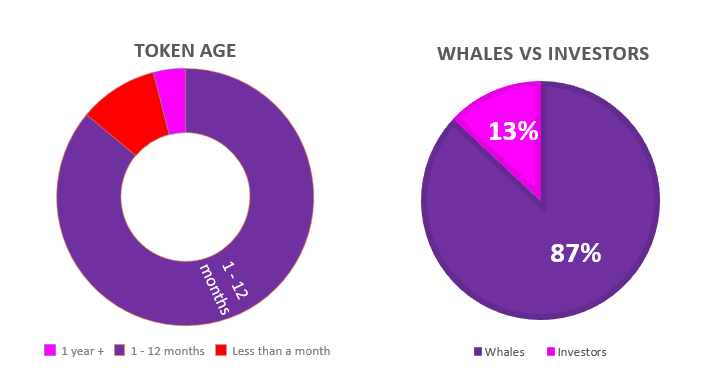
“Matic” is an ERC-20 token and is the native token to the Polygon ecosystem. It has a maximum supply of 10 billion and 7.7% is currently in circulation. The ownership is heavily concentrated and only 4% of the tokens have been HODLed for at least a years’ time.

Its primary utility is to pay for gas fees on the platform and for securing the network.

The correlation between Matic and the recent (excellent partnership) updates from Polygon might weak as the price has not moved towards the upside. We can infer that the price is currently being suppressed by the whales.


Competition Analysis

One can argue that essentially all the Layer1 and the Layer2s are competing with Matic. To put above sentence in context, some major Dapps, that exist on both Ethereum and Polygon have more active users on Polygon due to their low cost and high speed.

Some other competitors include Arbitrum, Optimism, Fantom and MINA. However, Polygon is also expanding its suite of solutions. It recently acquired Hermez, a zero-knowledge cryptography-based scaling project for $250 million in MATIC tokens.

Team, Media & Community strength

Polygon was founded by 3 Indian engineers and later added Mihailo Bjelic as the 4th co-founder of Polygon. The team has excellent technical knowledge and they have worked wonders in terms of increasing adoption for Polygon. Their Media and community strength is exceptional. They have 1.3 million followers on twitter and have 70,000 members on telegram.


Conclusion


Pros: Polygon is solving one of the biggest problems that exists in the cryptocurrency space. It is playing a vital role when it comes to the adoption of Web 3 applications and has close to $4 billion in total value locked. As the need for Dapps increases (Even beyond current levels), Polygon is ready to take full advantage by providing a suite of solutions.


Cons: When it comes to tokenomics, Polygon is taking a hit. Although the price 100xed over the past year, the price has been suppressed by the MATIC whales. The ownership is heavily concentrated.

Get deeper insights into the crypto market’s weekly trends discussed on our Spotify podcast.

Start your Crypto Investments with XMINT Bots today
aave-aave-logo

AAVE Research Report

Research summary:

AAVE is an open-source Defi protocol (live and operating) that allows anyone to earn interest on their money without any aspect of KYC. We will focus on how the project works, what value it adds, and review its pros and cons.

The CMP is $170 as of 25th March 2022 

What is DeFi?

All of the traditional financial services are centralized (controlled by a single authority or managed in one place) in nature. The Risks and problems that come with centralized financial services are Fraud, Mismanagement of funds, Theft, and restrictions to use your own money. DeFi stands for Decentralized Finance (DeFi is a category of Dapps. Dapps are decentralized applications that are launched on networks such as Ethereum). It is a financial service with no central authority. It eliminates these problems by allowing people to have complete custody and control of their money and to get more returns, by eliminating the 3rd party.

There are various categories of DeFi

  • Money Market: Such applications enable users to borrow assets against collateral and earn interest. Maker, Aave, and Compoundare the top DeFi applications in this category.  
  • Decentralized exchange: These kinds of applications give users the ability to swap one crypto for another. Uniswap and Sushiswapare the top DeFi applications in this category. 
  • Derivatives: A derivative contract derives its value from an underlying asset. With the help of smart contracts, DeFi projects like Synthetix allow people to get exposure to a wide variety of assets.  

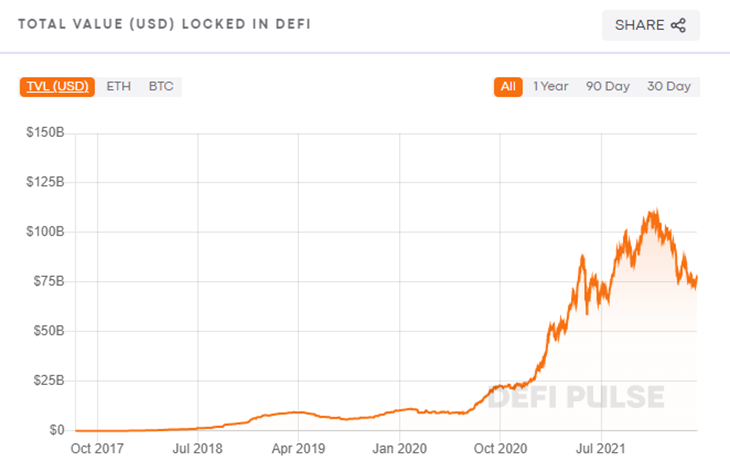
The DeFi space has seen explosive growth over the past year. The graph below indicates that 77.11 billion dollars are currently involved in the DeFi space.

Data as of 25th March 2021 and from https://DeFipulse.com/

What is AAVE?

AAVE is a non-custodian decentralized borrowing and lending platform. It takes over the bank’s primary role of being the intermediary of borrowing and lending money. It completely saves the banks margins and gives them to the borrower and the lender. There is no lengthy process of conducting KYC, no need to travel to any location and it is completely accessible. All you need to do is create a Web 3 wallet to get started. This eliminates all the risks that are associated with bank and it also gives investors the opportunity to earn passive income on their cryptocurrency.

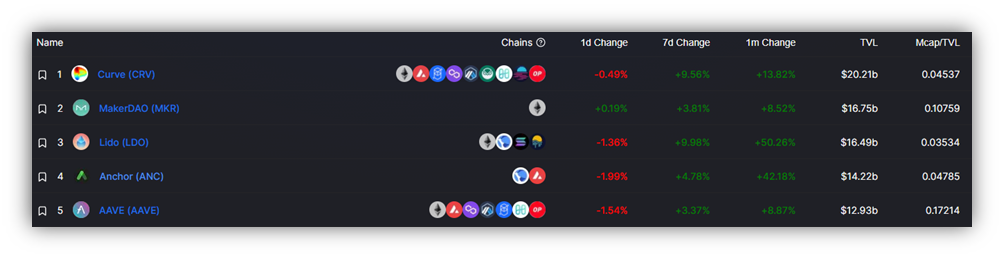
It operates on not just the Ethereum network but rather functions on six other networks. The total value locked (TVL) with AAVE is $13.12 billion and has a Mcap-TVL ratio of 0.1775.

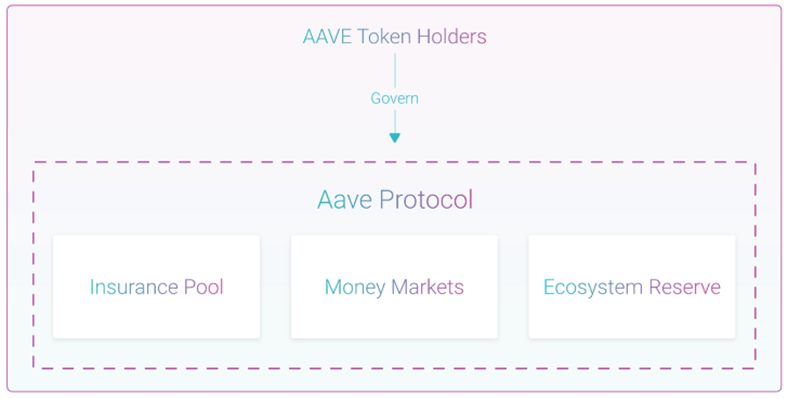
The protocol is audited, open-source and it managed by AAVE token holders making it one of the most decentralized DeFi protocol. It is currently ranked at #52 (based on Mcap) in the cryptocurrency market. There is a maximum supply of 16 million AAVE tokens out of which 13.6 million AAVE tokens are in circulation. AAVE is currently listed on Binance, Coinbase, and FTX.

How does AAVE work?

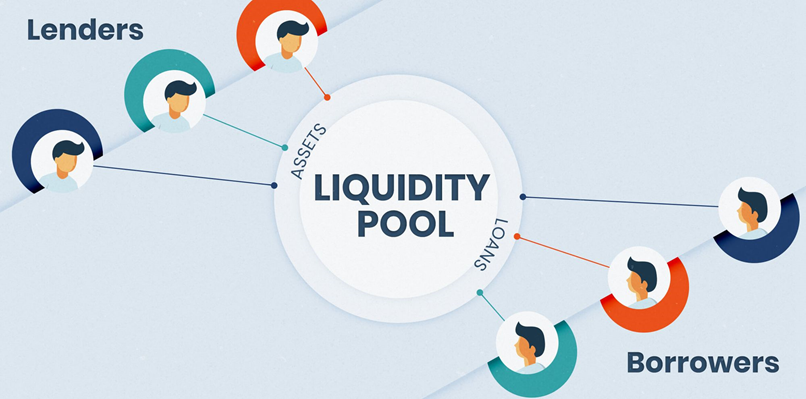
In AAVE, you can borrow and lend money in a decentralized manner. There isn’t anyone any requirement to fix the specification of a loan or meet anyone. This is possible with something referred to as a liquidity pool.

A liquidity pool can be viewed as a bowl of money, lenders can deposit money in the bowl for a certain interest rate (reward) while the borrowers can borrow money from the bowl for a certain interest rate (fee). The bowl in the case of AAVE would be a smart contract and not a bank. The rates are also dynamic and change based on the demand and supply of an asset.

You can borrow and lend 30+ ERC20 tokens, the top tokens are Ethereum, USDC, and WBTC. The lender earns interest in the form of aTokens (which are pegged 1:1 against the underlying asset). The advantage here is that aTokens are not exclusively used in the AAVE protocol and can be sold in the secondary markets via Decentralized exchanges (such as Uniswap).

To make sure that the value of the collateral does not drop significantly (due to the volatility in the crypto space) compared to the loan amount, the protocol overcollateralizes. LTV stands for loan to value ratio, so if I want to borrow $100 worth of Ethereum, I will have to deposit $120 worth of Ethereum.

The motivation from the lender’s point of view is to earn passive income while borrowers can the protocol to increase their leverage on their position. Let’s say that the investor is confident that BAT is about to surge, so he can borrow money and keep BAT as collateral. He will then buy more BAT with the borrowed money. So, when BAT surges, the borrowed BAT’s new value minus the principal and interest would be the profit.

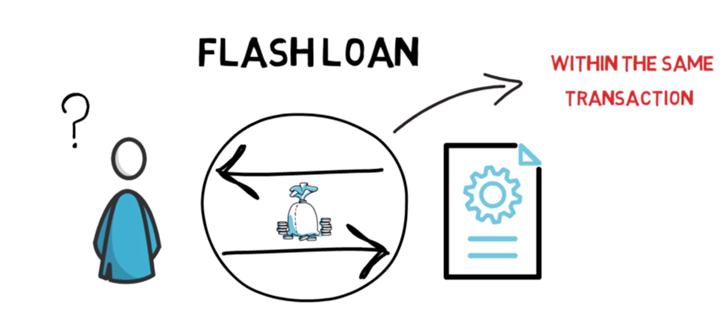
If an investor wants to take out a quick loan without collateral, then he or she can the flash loan feature. It is a feature designed for developers and a fair bit of technical knowledge is required.  

Flash Loans allow you to borrow any available amount of assets without putting up any collateral, as long as the liquidity is returned to the protocol within one block transaction (or 15 seconds). Flash loans are primarily used to make significant amounts of money via arbitrage. Flash loan was recently on the news as a developer redeemed claimed 1.1 million dollars’ worth of ApeCoin during its airdrop.

The owners of the famous bored ape NFT could claim ApeCoins. Unfortunately, ApeCoin airdrop was not handed out based on who owned which Bored Ape at a particular time in the past but rather was handed out based on the present ownership at the time of redemption. This allowed a clever developer to take a flash loan, buy an NFT vault with Bored Apes (With unclaimed airdrop tokens), redeem the ApeCoin, sell the Bored Apes back to the market, and pay back the flash loan with interest.

Institutional investors interest

The common differentiating factor between the traditional finance industry and DeFi is that most of the DeFi protocols are not equipped for institutional investors. However, AAVE is an exception. At the start of the year Aave launched Aave Arc. It is a permissioned liquidity pool specifically designed for institutions in a bid to maintain regulatory compliance in the decentralized finance space.

Taurus Group, a Fintech firm, has also integrated Aave Protocol into its asset infrastructure, allowing banks and exchanges to deposit and borrow digital assets.

Several institutional investors have invested in Aave as well. Here are a few highlights.

  • Grayscale, the world’s largest digital asset manager has launched a DeFi fund and AAVE represents 12.3% of the portfolio.
  • AAVE also represents a large 14.07% of the Bitwise’s (another digital asset manager) DeFi Crypto index fund

What is the utility of the AAVE token?

AAVE is an ERC-20 native token to the Aave ecosystem. It is deflationary in nature and is a governance token. The token holders can put forth proposals and can also vote on proposals. These proposals can be used to shape the future of the protocol.

You also have an option of staking your AAVE token and earn rewards.  

Competition analysis.

When it comes to the Defi space, Aave is the 5th largest Dapp based on total value locked (TVL) and is the 3rd largest Dapp in the lending category.

Among the top 3 lending protocols, it is the only one that is on multiple chain. More importantly it is on Polygon. This alone gives Aave an edge over the other protocols.

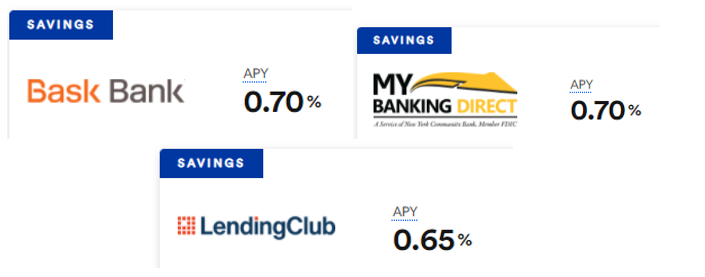
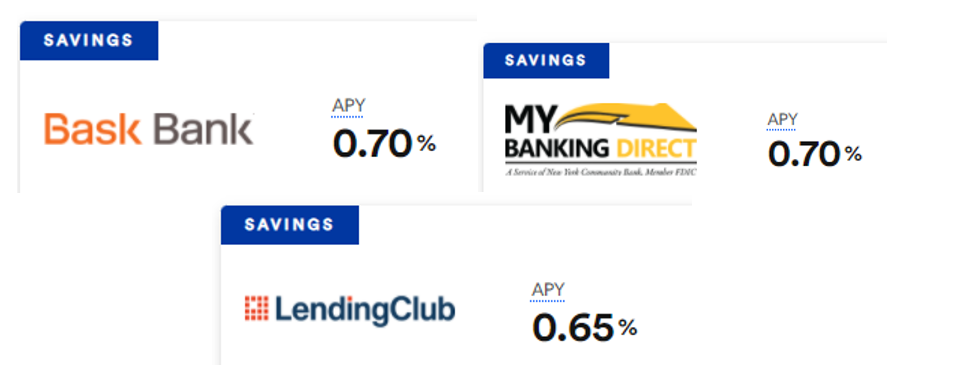
Besides its crypto peers, the traditional banks are also a competition. It has an amazing edge over the banks in developed nations. 0.7% found at US savings account is always beaten by the APY available on Aave.

Team, Media, and community strength.

The Aave protocol is governed by the 107,345 token holder community and is one of the most decentralized DeFi protocols.

Aave has excellent community strength. They have 442k Twitter followers, 15k telegram followers, and 22k discord members. Their media strength is also quite strong.

Conclusion

Pros: Aaveis the 5th largest Dapp and the 3rd largest Lending protocol in the DEFI space. It is one of the most decentralized DeFi protocols and has huge market potential as it is trying to take over the primary role of the banks which is a multibillion-dollar industry. Unlike most of the top DeFi protocols, Aave is not exclusive to a specific chain but rather operates on 7 different chains including Ethereum and Polygon. It also has high institutional interest.

Cons:  Aave could face 1 major challenge and it is regulation. DeFi falls just behind Bitcoin when it comes to regulator’s priority as DeFi serves as a replacement to the existing traditional and extremely regulated financial industry. Aave’s flagship feature, “Flash loans” has been a hot topic and has been associated with hacks. The above-mentioned event on Apecoins airdrop is considered as an exploit by many in the community.

Get deeper insights into the crypto market’s weekly trends discussed on our Spotify podcast.

Start your Crypto Investments with XMINT Bots today
Logo

Compound Finance DeFi Protocol – 18th March 2022

Research summary:

Compound Finance is a Defi protocol (live and operating) that allows anyone to earn interest on their money without any aspect of KYC. We will focus on how the project works, what value it adds, and review its pros and cons.

The CMP is $115 as of 18th March 2022 

What is DeFi?

All of the traditional financial services are centralized (controlled by a single authority or managed in one place) in nature. The Risks and problems that come with centralized financial services are Fraud, Mismanagement of funds, Theft, and restrictions to use your own money. DeFi stands for Decentralized Finance (DeFi is a category of Dapps. Dapps are decentralized applications that are launched on networks such as Ethereum). It is a financial service with no central authority. It eliminates these problems by allowing people to have complete custody and control of their money and to get more returns, by eliminating the 3rd party.

There are various categories of DeFi

  • Money Market: Such applications enable users to borrow assets against collateral and earn interest. Maker, Aave, and Compoundare the top DeFi applications in this category.  
  • Decentralized exchange: These kinds of applications give users the ability to swap one crypto for another. Uniswap and Sushiswapare the top DeFi applications in this category. 
  • Derivatives: A derivative contract derives its value from an underlying asset. With the help of smart contracts, DeFi projects like Synthetix allow people to get exposure to a wide variety of assets.  

The DeFi space has seen explosive growth over the past year. The graph below indicates that 77.11 billion dollars are currently involved in the DeFi space.

Data as of 18th March 2021 and from https://DeFipulse.com/

What is Compound Finance?

Compound Finance is a decentralized borrowing and lending platform which algorithmically sets the interest rates based on supply and demand. It takes over the bank’s primary role of being the intermediary of borrowing and lending money. It completely saves the banks margins and gives it to the borrower and the lender. There is no lengthy process of conducting KYC, no need to travel to any location and it is completely accessible. All you need to do is create a Web 3 wallet to get started. This eliminates all the risks that are associated with bank and it also gives investors the opportunity to earn passive income on their cryptocurrency.

The primary goal of Compound Finance is to create a decentralized system for the frictionless borrowing of Ethereum tokens (ERC-20 tokens) without the flaws of existing approaches, enabling proper money markets to function, and creating a safe positive-yield approach to storing assets. The total value locked (TVL) with Compound is $6.8 billion and has a Mcap-TVL ratio of 0.109.

It is currently ranked at #89 (based on Mcap) in the cryptocurrency market. There is a maximum supply of 10 million COMP tokens out of which 6.6 million COMP tokens are in circulation. COMP is currently listed on Binance, Coinbase, and FTX.

How does Compound Finance work?

In Compound Finance, you can borrow and lend money in a decentralized manner. There isn’t anyone any requirement to fix the specification of a loan or meet anyone. This is possible with something referred to as a liquidity pool.

A liquidity pool can be viewed as a bowl of money, lenders can deposit money in the bowl for a certain interest rate (reward) while the borrowers can borrow money from the bowl for a certain interest rate (fee). The bowl in the case of compound finance would be a smart contract and not a bank. The rates are also dynamic and change based on the demand and supply of an asset.

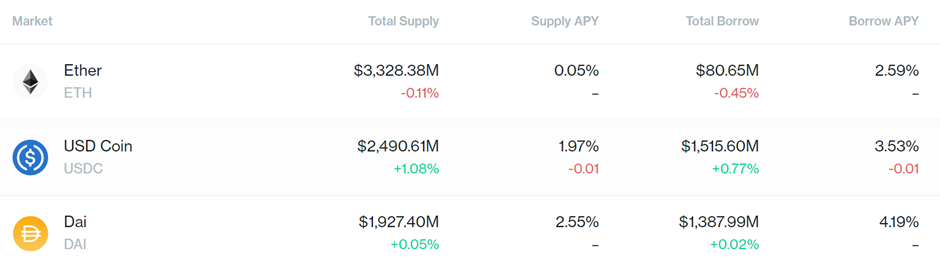
As per the above-mentioned image, you can borrow and lend 10+ ERC-20 tokens, the top tokens are Ethereum, USDC and DAI. 

When a lender supplies an asset (Lets take BAT tokens for this example), he receives something referred to as a “cTokens” (cBAT) which will increase in value as the interest is accrued while a borrower has to provide collateral in cTokens to borrow from the pool. To make sure that the value of the collateral does not drop significantly (due to the volatility) compared to the loan amount, the protocol overcollateralizes.

The motivation from the lender’s point of view is to earn passive income while borrowers can the protocol to increase their leverage on their position. Let’s say that the investor is confident that BAT is about to surge, so he can borrow money and keep BAT as collateral. He will then buy more BAT with the borrowed money. So, when BAT surges, the borrowed BAT’s new value minus the principal and interest would be the profit.

What is the utility of the COMP?

COMP is an ERC-20 native token to Compound Finance’s ecosystem. It represents a core element in Compound Finance’s ecosystem and is essentially a governance token. The token holders can put forth proposals and can also vote on proposals. These proposals can be used to shape the future of the protocol.

Competition analysis. When it comes to Lending platforms in the Defi space, Compound Finance is the 6th largest Dapp based on total value locked (TVL) and is the 3rd largest Dapp in the lending category space.

Although it is within the top 3 lending applications, there is a huge potential towards the upside based on the competition. Besides its crypto peers, the traditional banks are also a competition. It has an amazing edge over the banks in developed nations. 0.7% found at US savings account is always beaten by the 4.58% on Aave tokens on compound finance. 

Team, Media, and community strength.

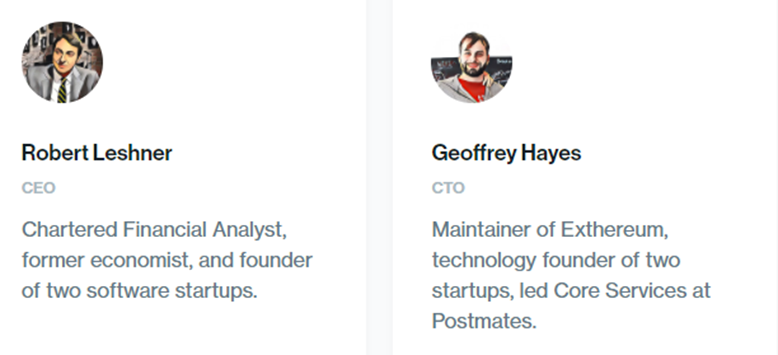
The leadership team has strong experience in the field of Finance & Technology and has created multiple companies in the past. Compound Finance has great community strength, but they are only visible on Twitter and Medium. They have 222k Twitter followers and their media presence is not very impressive.

Conclusion

Pros: Compound Financeis the 6th largest Dapp and the 3rd largest Lending protocol in the DEFI space. It has huge market potential as it is trying to take over the primary role of the banks which is a multibillion-dollar industry. It is a simple to use Dapp, which is a key aspect to mass adoption. The team has expertise in Finance, Technology and Business.

Cons: Technology can be exploited and this applies to DeFi applications such as Compound Finance. During an update, the protocol gave away approximately $90 million dollars to its users. This does not mean that the traditional banks have not done something similar (Fat finger error or an AI going berserk when it meets an undefined condition). The other major problem is usability, given that it is based on the Ethereum network, the gas fees make the network extremely expensive to use, making it obsolete.

Get deeper insights into the crypto market’s weekly trends discussed on our Spotify podcast.

Start your Crypto Investments with XMINT Bots today