terra-luna-luna-logo

Terra Research Report

Overview:

Terra protocol is a decentralized, open-source public blockchain designed for algorithmic stablecoins (More on stablecoins below). These stablecoins can be used on any decentralized applications especially DeFi applications on the Tera blockchain. It currently has 25.9 billion in TVL. It is creating an important element necessary for the success of the DeFi ecosystem.  

The CMP of LUNA (Tera’s native token) on 11th March is $97.19

What is Stablecoin?

In the stock market, it is a common strategy to convert your stocks to cash or fiat currency during times of uncertainty. This option gives the investor flexibility and he can potentially buy back in at cheaper rates.

The cryptocurrency markets are known for their volatility as it operates 24/7, throughout the year and there weren’t safe haven coins which allowed investors to take a step back and spectate the market during extreme volatility. Fiat currency was an option, but converting back to fiat currency would be expensive and the lack of banking support for crypto in several parts of the world would compound the difficulty. This led to the creation of stablecoins, a new class of cryptocurrency. Stablecoins by definition were supposed to be stable in the world of volatility and their value were pegged or directly linked to the value of a stable coin (All the popular stablecoins are pegged to the USD).

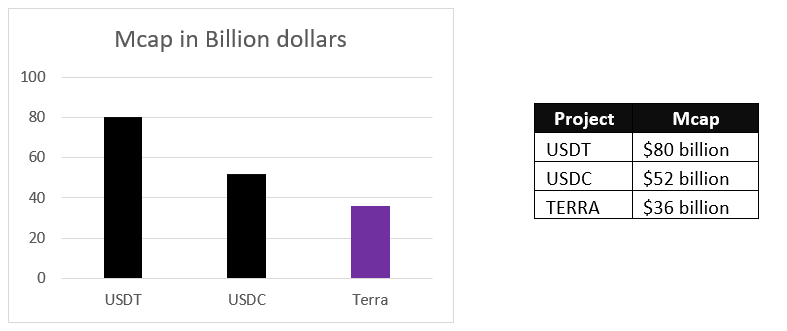
Tether’s USDT is the most popular stablecoin and it is pegged to the USD. Tether is an organization that takes collateral and mints USDT, so theoretically the USDT is backed 1:1 by an actual USD. As of the time of writing this report, Tether has a market capital of $80 billion and is 3rd largest cryptocurrency.

Circle’s USDC is the 2nd most popular stablecoin and it is also pegged to the USD. Circle also is extremely similar to Tether. It is an organization that takes collateral and mints USDC, so theoretically the USDC is backed by an actual USD. As of the time of writing this report, USDC has a market capital of $52 billion and is the 5th largest cryptocurrency.

Together USDT and USDC represent $132 billion in the cryptocurrency space and unlike most of the cryptocurrency projects, both these players are completely centralized private companies.

Besides being a safe haven, the stablecoins became “Cash” in the cryptocurrency space. So, the utilities increased significantly, especially in the DeFi ecosystem.

What is Terra?

In the world of centralized stablecoins, Terra brings a better solution. The Terra protocol creates algorithmic stablecoins that consistently track the price of any fiat currency. It is a decentralized, smart contract compatible proof of stake blockchain. The Terra mainnet was launched in April 2019 and was built via the cosmos SDK. They have an excellent leadership team and the project has raised funds from multiple partners.  

It is currently #9 (based on Mcap) in the cryptocurrency market. Terra native token “LUNA” has a maximum supply of 1 billion “LUNAs” and currently has 0.37 billion LUNAs (37%) in circulation. It is currently listed on all the major exchanges.

What problem does Terra solve?

In the current financial ecosystem, sending money from 1 country to another is not an easy task. It is expensive as there are a lot of conversions that occur and there are often limitations when it comes to money transfer. Bitcoin fixes this issue but brings in different issues of its own. The biggest one is that the value of a bitcoin is often volatile and will fluctuate a lot. Stablecoins fixes this issue as it is designed to be stable.

As mentioned above, the top two stablecoin leaders represent $132 billion and both of them are centralized private companies. This is a major issue as both the private companies are under no obligations to disclose the collateral for these stablecoins.

Tether the largest player has management that has been associated with scams in the past while there are a lot of irregularities when it comes to the collateral behind USDT. The official statement has changed multiple times, initially, it mentioned that the USDT was backed 1:1 with a USD and now the language has changed to 1 USDT is backed by tether reserves.

This is an extremely concerning aspect as a stablecoin is supposed to be an integral part of the DeFi ecosystem and the global payment processor ecosystem.

How does Terra solve this problem?

Terra solves both the above-mentioned problems with its algorithmic stablecoins that consistently track the price of any fiat currency.

UST is pegged to the USD while KRT is pegged to the Korean won and so on. So, a user can send USD to a Korean vendor by swapping his UST with the KRT at relatively low fees and with no limitation.

Given that the roots of this project are from Korea, people from Korea are already using this functionality via the “CHAI” application through the Terra blockchain. Based on what the team mentioned, they are already in 18,000 offline stores in Korea. Similar applications are present in other countries as well.

How is UST different from USDT or USDC?

“LUNA”, the native token to the terra blockchain is extremely integral to the Terra ecosystem. LUNA and UST are dependent on each other as you need LUNA to create UST. 1 LUNA is equal to 1 UST and while converting LUNA to UST, some portion of LUNA is burned while the rest goes to the community pool (The money from the community pool is used for making new applications) The stability of the value of UST is assured with the help of arbitrage. Arbitrage is an activity when you buy and sell something that has different prices at two different locations. For example, if bitcoin is trading for $10,000 at Binance and Bitcoin is trading at $15,000 at Coinbase, people will start buying from Binance and sell at Coinbase till the values meet on both exchanges. The values will equate as more buying happens at Binance; the price will rise while on the other hand, the price at Coinbase will fall due to the massive sell-off.

So, when the value of UST goes above $1, people will start burning LUNA (as the intrinsic value of 1 LUNA and 1 UST is the same) and mint more UST. This will lead to the supply of UST increasing and thus the value of UST will fall back to $1. This process works in the opposite manner when the value of UST falls below $1.  

Due to this relationship, it is safe to say that the value of LUNA rises when there is a demand for UST and the value of UST depends on the adoption of Dapps on the terra blockchain.

LUNA has a maximum supply of 1 billion and we a burn mechanism in place, the token could become deflationary in the long run. Other token utilities include staking and governance.

Competition Analysis

Terra is trying to solve one of the biggest problems in the DeFi space and is going against the top stablecoin issuers. It has an edge over the top two leaders in the space as it is primarily focused on fixing its flaws via its own offering. Another player in the cryptocurrency space would be COTI as they are also moving in the footsteps on Terra.
Team, Media & Community strength

The leadership team behind the project are serial entrepreneurs and ivy leaguers.

Terra’s social media strength is growing rapidly on Twitter and telegram. They have over 350K followers on Twitter and 31k members on telegram. Their media presence is also extremely strong.

Conclusion

Pros:

Terra is aiming to solve one of the biggest problems in the DeFi and stablecoin sector. The token is designed in such a way that if the project grows, the value of the LUNA token will also grow with it.

The adoption is also looking good as the Chai application has over 2 million users. Their community pool dedicated to building new Dapps is filled to the brim with money.  

The protocol has multiple strong Dapps such as mirror protocol under its belt and the network is and the transaction fees are extremely cheap.

Cons:

Transparency is a huge problem with Tether and unfortunately, there is a lack of clarity when it comes to the circulating supply of the LUNA tokens, this however can be fixed if the team adds more clarity in this section. Competition is also a major challenge that Terra has to face as there are 2 players who already have a 1st mover advantage.  Regulation is another big issue as most of the major economies are planning to bring over CBDC.

Get deeper insights into the crypto market’s weekly trends discussed on our Spotify podcast.

Start your Crypto Investments with XMINT Bots today

Internet Computer Research Report

Overview:     

Internet Computer (previously known as Dfinity) is a platform that enables people to create and use decentralized applications or Dapps in an extremely scalable format. It is trying to be an upgraded version of Ethereum.

The CMP of ICP on 4th March is $18.93

What is Internet Computer?

Internet Computer is trying to adopt the concept of a “World computer”. It is a blockchain that will allow you to build anything on top of it and unlike other smart contract platforms, it isn’t focused only on the application layer but also focuses on the entire internet stack. What this means is that it can be completely decentralized, extremely fast, and incredibly cheap to use.

It is currently #35 (based on Mcap) in the cryptocurrency market. Internet Computer’s native token “ICP” has a total supply of 477 million “ICPs” and currently has 208 million ICPs (43%) in circulation. It is currently listed on all the major exchanges.

What Problems does it aim to solve?

In the current cryptocurrency space, a lot of projects claim to be decentralized however there is a certain level of dependency on centralized service providers. This dependency comes in the form of storage, computing power, and front-end usage.

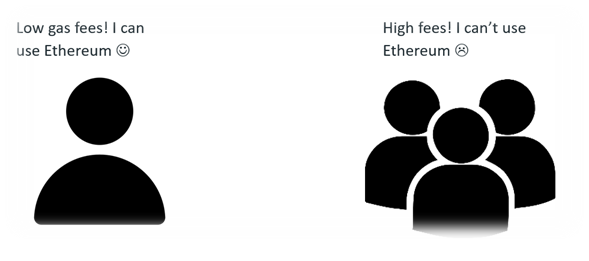
According to the white paper, when it comes to adoption, Ethereum is the leader but it has a lot of limitations such as extremely high Gas fees and slow computational speed making it slightly unusable. Due to this limitation, there are a lot of alternative players that are making a move in the market; however, they are not completely decentralized and are essentially hybrids with dependency on centralized service providers. There is also an element of false advertising. Many players are proclaiming themselves as a Web 3 Dapp however they are Web2 applications running on the cloud that interact with a blockchain.

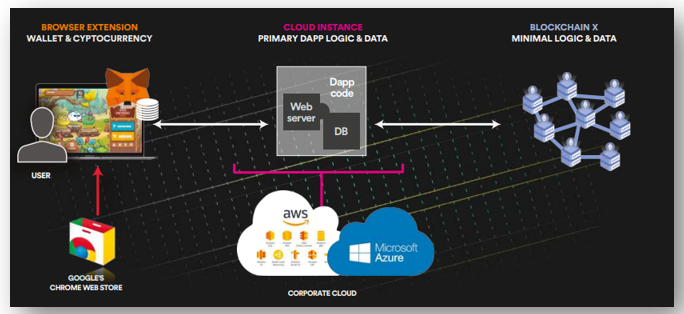
Illustration of how web2 app is cloaking as web3 app

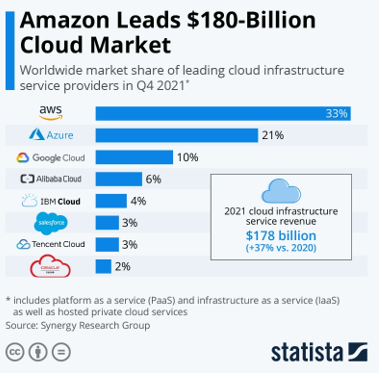
AWS, Azure, and Google cloud together represent 64% of the market share when it comes to cloud service providers. In simple language, this means that 64% of the internet is hosted on the top 3 service providers. This level of concentration brings a big problem, if these 3 players vanish from the market or pull the plug, 64% of the internet goes with it.

Google had banned Metamask back in 2018 temporarily and Most of the NFTs are actually hosted on the cloud. If the file is deleted, the NFT is gone.

What does Internet Computer do?

ICP’s main net launch was on the 10th of May 2021. ICP brings a decentralized and scalable platform to the world and solves the above-mentioned problem. They consider “smart contracts” as a general-purpose, tamperproof computer program whose execution is performed autonomously on a decentralized public network.

ICP aims to offer additional value compared to the existing smart contract platforms, in the following manner.

•             It is CHEAPER especially when it comes to storage costs.

•             It is FASTER when it comes to processing smart contract transactions.

•             It is more SCALABLE

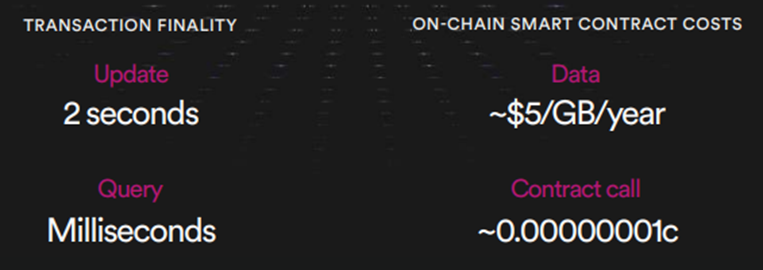
Internet computer archives these numbers for their Dapps with the help of canisters which are superior to smart contracts while on the other platforms Dapps essentially are a series of smart contracts. Given that canisters have the backing of strong data centers, it tends to provide speeds almost similar to the regular internet and there is no need for fees.

What is the utility of the coin?

The “ICP” token is well integrated into the Harmony ecosystem. It has 3 major utilities. It is used for governance, rewards for participation in the network and it is used as canister fees to host applications.

The tokenomics is inflationary in nature and has a declining inflation rate. “ICP” has a current total supply of 477 million “ICPs” and currently has 208 million ICPs (43%) in circulation. It is currently listed on all the major exchanges.

Competitor analysis.

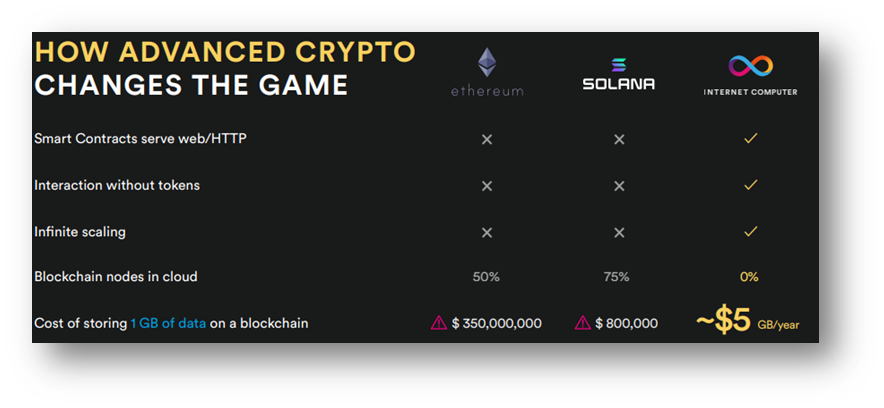
Internet computer is trying to solve one of the biggest problems in the cryptocurrency space and is doing it in a creative manner. The top competition includes Ethereum and Solana and here are some statistics that indicate how it is beating them.

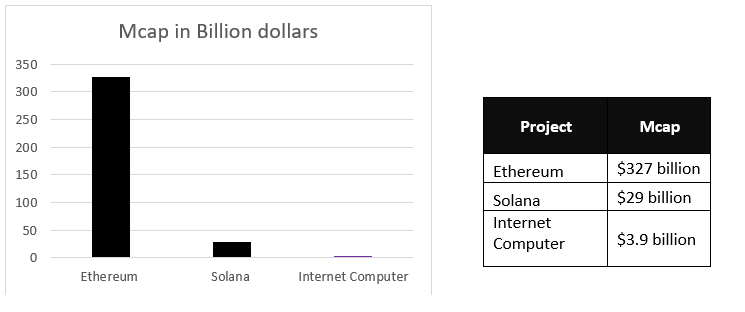
When it comes to Market Capital, Internet computer has huge potential as the topmost competitor is 100x away from the price levels.

The top competitors to Internet Computer

Team, Media, and community strength.

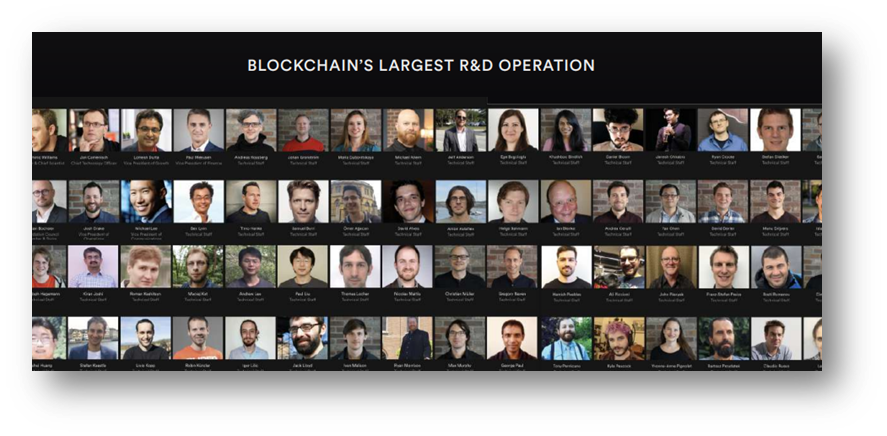
The team behind the project has vast experience and has worked at companies such as Apple, Microsoft, Amazon, and Google. When Vitalik Buterin was asked about the closest competitor to Ethereum, he cited that it was the internet computer’s team.

Internet computers’ social media strength is growing rapidly on Twitter and telegram. They have over 550K followers on Twitter and 50k members on telegram. Their media presence is also strong as they are often mentioned across multiple news articles.

Conclusion

Pros:

  • Internet Computer is aiming to solve one of the biggest problems in the cryptocurrency space. The token is designed in such a way that if the project grows, the value of the ICP token will also grow. They have one of the best team in the industry.

Cons:

  • Decentralization is their selling point however their infrastructure has several centralized components involved. To become a node operator, you need to get permission and a hardware device from the project itself. To use applications on this network, you need an internet identity thus eliminating the anonymity of the user.
  • The project token launch was considered as a massive blunder and the price of the coin plunged by 95% as the internal team dumped their coins. This happened because the tokens allocated to the team did not have a vesting schedule while only the seed investors had it. The extremely concerning inference is that the team placed their own interest over the project’s interest. 

Get deeper insights into the crypto market’s weekly trends discussed on our Spotify podcast.

Start your Crypto Investments with XMINT Bots today

Harmony

Harmony Blockchain Overview

Overview:

Harmony is a platform that enables people to create and use decentralized applications or Dapps. It aims to eliminate the traditional problems associated with the 1st and the 2nd generation layer 1 blockchains.

The CMP of ALGO on 25th Feb is $0.128

What is Harmony?

According to the whitepaper, Harmony is a fast and secure blockchain for decentralized applications. The project has taken inspiration from the market leaders, Ethereum and Cardano, and was built with a focus on scalability, security, decentralization and privacy. The harmony mainnet was launched in June 2019 and was built from scratch. There is an excellent team behind Harmony and the project has raised funds from multiple partners, including Binance Labs.

It’s competing with the likes of EOS, Zilliqa, Hashgraph, Algorand and has is trying to solve the “The blockchain trilemma”.  

It is currently #57 (based on Mcap) in the cryptocurrency market. Harmony’s native token “ONE” has a total supply of 13.5 billion “ONEs” and currently has 11.7 billion ALGOs (86%) in circulation. It is currently listed on all the major exchanges.

What problem does Harmony solve?

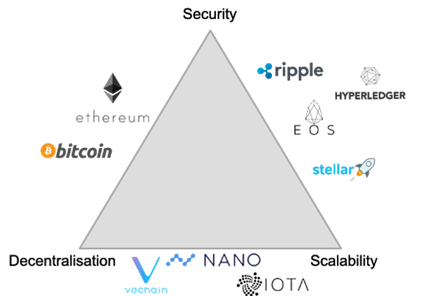
Security, decentralization, and scalability are three characteristics of the ideal blockchain. However, achieving all three characteristics is extremely difficult and often blockchain achieves only 2 out of the 3 characteristics. If you go for Security and decentralization, you are sacrificing scalability, if you are going for decentralization and scalability then you are sacrificing security and if you are going for security and scalability, you are going to sacrifice decentralization. 


Security: Blockchain is inherently secure, but is not entirely immune to hacking. If a hacker is able to secure control of more than half of the network (51%), they are able to alter a blockchain and manipulate transactions to steal from the network. In the blockchain, the more nodes, the more security.

Scalability: In the blockchain, scalability is similar to scalability in business; it refers to how large a network may expand in the future while keeping the current level of transaction speed and output.

Decentralization: The concept of decentralization is simple; it means that there isn’t a central authority that has power. When decentralization is taken out of the equation, we land back to the existing world of centralized organizations.  

Bitcoin targets decentralization and security but it has issues with scalability as the Bitcoin network’s limited ability to process huge volumes of transaction data on its platform in a short period of time. It has to do with the fact that the amount and frequency of records on the Bitcoin blockchain are restricted.

Iota consists of decentralization and scalability but lacks security because, on November 26, 2019, a hacker identified a vulnerability in MoonPay’s third-party payment service, which is linked into the IOTA Foundation’s mobile and desktop wallet. Over 50 IOTA seeds were hacked, resulting in the theft of nearly $2 million in IOTA tokens.

EOS has scalability and security but decentralization is its priority as the blockchain platform EOS has been embroiled in a crisis, with evidence showing that some verified transactions were reversed surfacing on Reddit. The company’s approach toward decentralization worried the crypto community.

One of the biggest reasons, why Bitcoin and Ethereum are popular is due to the decentralization and security aspect but to get mass adoption, you need to be scalable. Ethereum and Bitcoin are far from that.

How does Harmony solve this problem?

Ethereum has addressed the congestion issues and has proposed and implemented several solutions, one of them being EIP-1559. The long-term solution is Eth 2.0 and has been designed to eliminate the high gas fees problem or alternatively, make Ethereum scalable.  

Based on the technology, one can say that Harmony is Eth 2.0. It uses the Ethereum virtual machine for smart contracts and uses the sharded proof of stake with 4 shards.

To keep it simple, sharding can be viewed as a method of increasing scalability. It breaks down the blockchain into multiple shards and reduces the latency and increases the transaction per second. It can process 2,000 transactions per second with the finality of just 2 seconds or 1 block.

To secure the network it uses effective proof of stake. It essentially means that it does not allow validators with large stake to corrupt a block. The native token “ONE” is required to become a validator and once you become a validator it allows you to propose improvement proposals and vote for them. 

Chainlink, Curve Finance, Aave are some of the major names that have partnered with Harmony and more is yet to come. 

Tokenomics

The native token “ONE” should not be confused with “Onecoin”. Onecoin was one of the biggest crypto scams that occurred and was a Ponzi scheme in its simplest form. The “ONE” token is well integrated into the Harmony ecosystem. It has 2 major utilities. It is used by the validators for staking purposes and it is used for transaction fees within the network.

There are 441 million ONE tokens minted annually but there is a possibility for the same to be burned away, making it a zero-sum game. 

Competition Analysis

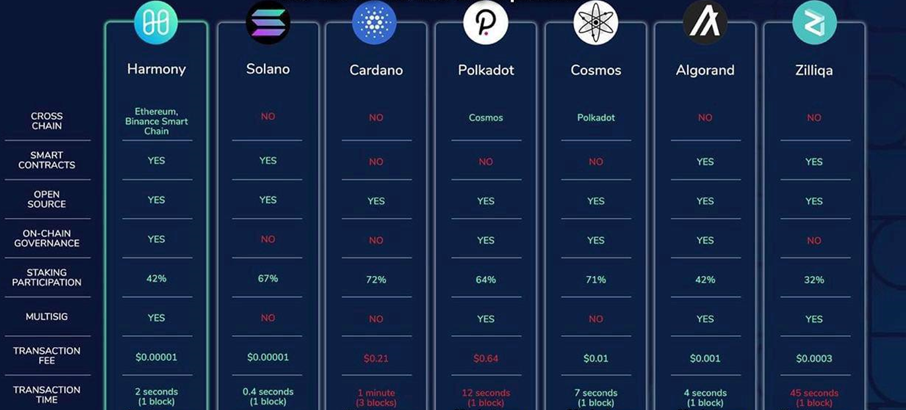
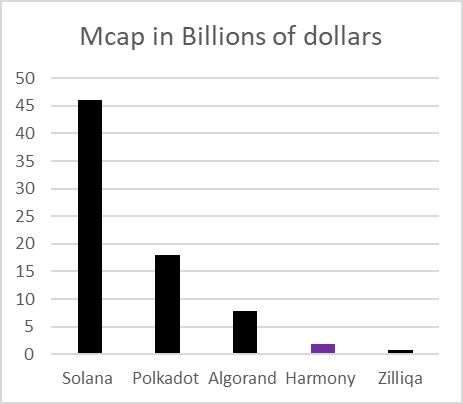
Harmony trying to solve one of the biggest problems in the cryptocurrency space and it isn’t the only player trying to solve the problem. The space is relatively crowded and the top competitors are mentioned below. How it does have an edge over most of the players in the space and it is the team. The team follows the “Work over showboating” strategy and has a lot of quality engineering experience.

ProjectMcap
Solana$46 billion
Polkadot$18 billion
Algorand$7.9 billion
Harmony$1.8 billion
Zilliqa$0.8 billion

Team, Media & Community strength

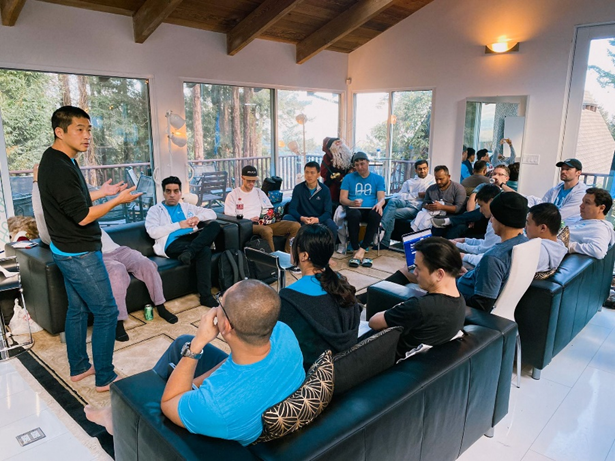
The leadership team behind the project have vast engineering experience and have worked at companies such as Apple, Microsoft, Amazon and Google.

Harmony’s social media strength is growing rapidly on Twitter and telegram. They have over 350K followers on Twitter and 41k members in telegram. Their media presence is also strong as they are often mentioned across multiple news articles.

Conclusion

Pros:

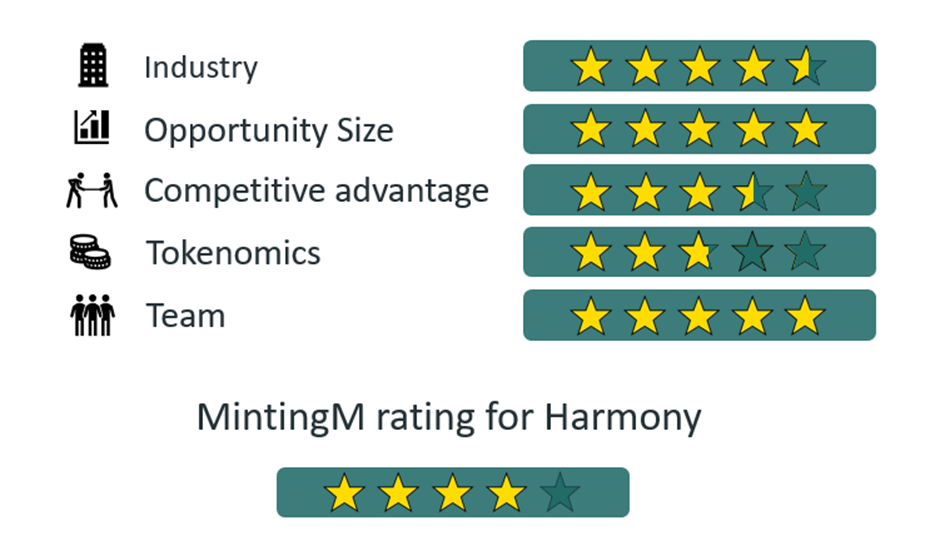
Harmony is aiming to solve one of the biggest problems in the cryptocurrency space. The token is designed in such a way that if the project grows, the value of the ONE token will also grow. They have one of the best team in the industry as the leadership has quality experience in the industry.

Cons:

There has been an exploit in the past and over 25 million ONE coins were stolen. Transparency is extremely important in the cryptocurrency space and this is where Harmony suffers. There are some gaps of information when it comes to the token balance.

Get deeper insights into the crypto market’s weekly trends discussed on our Spotify podcast.

Start your Crypto Investments with XMINT Bots today
 

Gala Games Research Report

Research summary:

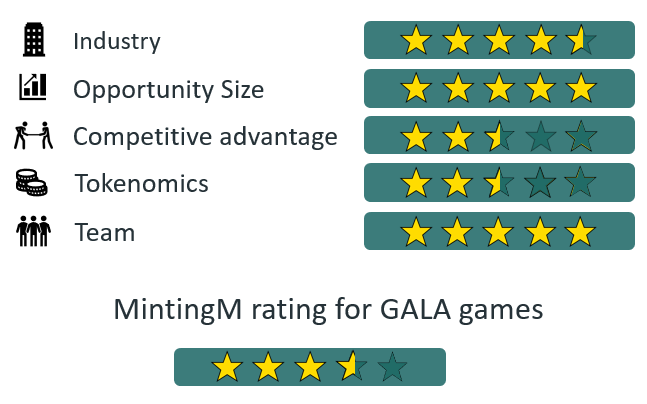
This research report is focused on “Gala games” which solves major issues in the gaming industry. We will focus on how the project works, what value it adds, and review its pros and cons.

The CMP is $0.30 as of 18th Feb 2022.

What are Gala games?

Gala games is a project that operates in the gaming industry (a multibillion-dollar industry) and the NFT industry which is also booming. Its objective is to change the current status quo of the gaming industry by becoming the world’s largest decentralized gaming platform.

It is Ranked #51 (based on Mcap) in the cryptocurrency market. The maximum supply is 50 billion tokens out of which 36 billion tokens are in circulation. It is currently listed on Binance, Coinbase, and Huobi Global.

How does GALA bring value to the table?

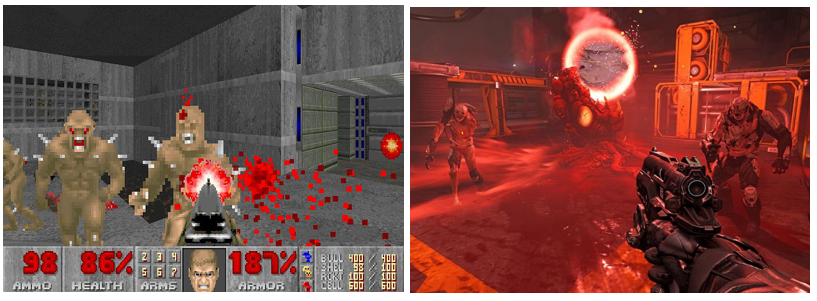
Video games were considered a fun activity and were always considered for children. However, the industry has grown significantly since the early 90s and has become a multi-billion-dollar industry. Currently, there are more than 3 billion gamers in the world across all platforms and the gaming space has evolved from extremely simple games to extremely complicated and realistic games.

The above images are from the same game franchise


When video games were published and sold to the public back in the 90s and the early 2000s, they were completed and didn’t involve any internal commerce. However, as the industry size increased, so did game gaming company’s greed. Today, video games follow the “Pay to win” strategy, where people need to buy the game and still pay money to unlock characters within the game. EA sports, the company behind FIFA and Starwars games is always in hot waters due to this very same issue. These microtransactions are responsible for a large portion of the revenue and money has been flowing out of gamer’s wallets.

When it comes to earning money from gaming, out of the 3 billion gamers only a fraction of this gaming community makes money via gaming, they are professional gamers and streamers. Professional gamers play for hours to hone their skills to participate in gaming tournaments for a chance to earn millions as rewards. Streamers are essentially people who livestream their gameplay on YouTube or Twitch and earn money via sponsorships, ads and donations.

Becoming a professional gamer or a streamer is not a simple task. There is immense competition and the barrier for entry is high. In simple terms, making money in the gaming space is extremely difficult.

With the help of NFTs and innovations of blockchains, “Play to earn” is possible. So instead of paying and playing the game, it is now possible to play and earn money. A simple example would be the Mario coins but the coins would have a real value in the world. Axie infinity (A project we have covered) is the market leader when it comes to “Play to earn” and people in the Philippines are making a living off this game.

The current & traditional gaming environment is outdated and GALA games aims to break the trend.  

It currently has 9 games under its belt, right from a Farmville equivalent game to a game about zombies and yes, you can earn money by playing the game.

Townstar, the farming-based game, has its tokens, NFTs and an economy and the other games also have a similar structure. Spider Tanks is already picking up in South Korea.

GALA games is currently on the Ethereum network but it has plans to move to it’s own side chain referred to as the “GALA chain sidechain” and it is powered by GALA nodes. There are currently 23,707 nodes online but there are plans for 50,000 nodes, which will make it extremely scalable. You can get yourself a node by purchasing it for approximately 160,000 GALA tokens. Owning a Gala node will allow you to earn NFTs, GALA tokens, governance power and more rewards.

Token utility

GALA is an ERC-20 token that is primarily used as a currency within the GALA games environment to purchase NFTs, GALA nodes and in the future, it will quite likely be used to pay for transaction fees on the Gala chain.

It is fused into the GALA games environment, so there is likely to be a correlation between the tokens value and the growth of the project.  The tokenomics however isn’t made clear by the team and there is an ambiguity involved in this section.


Competition Analysis

The gaming industry is worth more than 300 billion dollars and GALA games also operates in the NFT space as well making their potential huge. It has a lot of billion-dollar competition in the traditional space, but GALA is trying to beat them but completely reinventing the wheel. It does not have direct competition in the cryptocurrency space. Axie infinity slightly comes close to it.  

Team, Media, and Community Strength

GALA games has one of the best leadership team in the industry. These include Eric Schiermeyer, the cofounder of Zynga which is a publicly traded gaming company. It was the company behind one of the most popular poker games. The leadership team includes Michael McCarthy was behind another extremely popular game called “Farmville”

Their media presence is strong & their community strength is excellent, with over 320k Twitter followers & 32k discord members.

Conclusion

Pros:

  • GALA is aiming to solve one of the biggest problems in the gaming space which is worth approximately 300 billion dollars. The token is designed in such a way that if the project grows, the value of the ENJ token will also grow. They have the best team in the industry as the leadership was behind two extremely popular games and know what they are doing.

Cons:

  • Transparency is extremely important in the cryptocurrency space and this is where GALA games suffers. You need to really dig into the limited documentation to understand the project.

Get deeper insights into the crypto market’s weekly trends discussed on our Spotify podcast.

Start your Crypto Investments with XMINT Bots today
Uniswap Overview