1720512271650

Long-Term Investing in Stocks – MintingM

Long-Term Investing in Stocks: Why It’s a Winning Strategy

As financial markets continue to evolve, one principle remains timeless: long-term investing in stocks often outperforms short-term trading. This strategy, requiring discipline and patience, has proven to be one of the most effective ways to grow wealth steadily over time. By holding investments for years, or even decades, investors not only ride out market volatility but also capitalize on compounding and lower costs.

Historically, the stock market has demonstrated resilience. For example, the S&P 500 has experienced annual losses in only 13 years between 1974 and 2023, showcasing that the market delivers returns more frequently than it incurs losses. Despite occasional downturns, a long-term perspective enables investors to navigate challenges such as recessions, market crashes, and geopolitical uncertainties while still achieving favorable results.

The Case for Higher Returns

Over the decades, stocks have consistently outperformed other asset classes like bonds and commodities. From 1928 to 2023, the S&P 500 delivered a geometric average return of 9.80% per year, far exceeding the returns of three-month Treasury bills (3.30%), 10-year Treasury notes (4.86%), and gold (6.55%). Emerging markets, though riskier, have also demonstrated significant return potential, with indices like the MSCI Emerging Markets showing notable performance despite short-term fluctuations.

Investors seeking exposure to different equity segments may benefit from exploring small and large-cap stocks. As of October 2024, the Russell 2000 index, which tracks small companies, posted a 10-year annualized return of 8.39%, while the large-cap-focused Russell 1000 index delivered an impressive 13.15%. These returns underscore the long-term growth potential embedded within equity markets.

Navigating Market Volatility

Stocks are inherently volatile in the short term, with values often fluctuating by 10% to 20% or more. However, this volatility tends to smooth out over longer periods. Investors who remain steadfast during market lows and avoid emotional decision-making are better positioned to achieve long-term success. Historical data suggests that even during major crises like the Great Depression and the financial crisis, a 20-year investment in the S&P 500 consistently yielded positive returns.

Emotional trading remains one of the biggest hurdles for many investors. Fear of loss during market downturns often leads to panic selling, while optimism during rallies can result in overbuying. Such behaviors can severely impact returns, as investors frequently miss out on rebounds or enter the market after significant gains have already been made. A disciplined buy-and-hold approach eliminates the need to time the market and mitigates the risks associated with emotional decision-making.

The Cost Advantage

Holding stocks for the long term is not just a strategy for higher returns; it is also cost-effective. Short-term trading incurs transaction fees, commissions, and taxes that can erode portfolio gains over time. Long-term capital gains are taxed at significantly lower rates than short-term gains, offering an additional incentive to hold onto investments for more than a year. Investors in lower tax brackets may even qualify for a 0% long-term capital gains tax rate, further enhancing net returns.

Beyond tax benefits, long-term investors save on trading fees and avoid the expenses associated with frequent portfolio turnover. As more brokerages offer commission-free trades, the financial burden of managing a portfolio has decreased, making long-term investing even more attractive.

The Power of Compounding

One of the most compelling arguments for long-term investing lies in the power of compounding, particularly with dividend-paying stocks. Companies with a history of regular dividends provide investors with steady income that can be reinvested to accelerate portfolio growth. Over time, these reinvested dividends generate returns on returns, creating a compounding effect that significantly boosts the value of investments.

Dividend stocks, often associated with blue-chip or defensive companies, are especially appealing during periods of economic uncertainty. These firms tend to perform consistently regardless of market conditions, providing both stability and growth opportunities for long-term investors.

Choosing the Right Stocks for the Long Term

When building a long-term portfolio, investors must consider factors such as risk tolerance, investment goals, and age. For beginners, index funds can serve as a practical entry point. These funds track major indices like the S&P 500 or the Russell 1000, offering diversification and low costs. Meanwhile, growth stocks, known for their potential to deliver significant revenue and earnings increases, cater to those willing to accept higher risk for the chance of outsized returns.

Dividend-paying stocks are another excellent option for those seeking steady income and compounding benefits. These equities provide regular payouts, which, when reinvested, contribute to long-term wealth accumulation.

Final Thoughts

Long-term investing in stocks remains a cornerstone of wealth-building strategies. By holding onto investments through market fluctuations, investors can benefit from compounding, lower costs, and reduced tax liabilities. While short-term trading might seem appealing, the consistency and resilience of a buy-and-hold approach often deliver superior results over time.

As history shows, those who adopt a patient and disciplined investment strategy are better positioned to achieve financial success, regardless of market conditions. In the ever-changing world of finance, a long-term perspective remains one of the most reliable ways to grow and preserve wealth.

Get Started with your Stock Investments today with MINTALPHAA.

Get deeper insights into the crypto market’s weekly trends discussed on our Spotify podcast.
1694163190131

Relative Strength Index (RSI) – MintingM

Relative Strength Index (RSI) : A Guide to Momentum Analysis

The Relative Strength Index (RSI) is a widely recognized momentum indicator in technical analysis, used to evaluate the speed and magnitude of price changes in securities. Developed by J. Welles Wilder Jr. and introduced in his 1978 book New Concepts in Technical Trading Systems, RSI has become an essential tool for traders and investors seeking to identify overbought or oversold conditions, potential reversals, and trend continuations.

What Is the RSI?

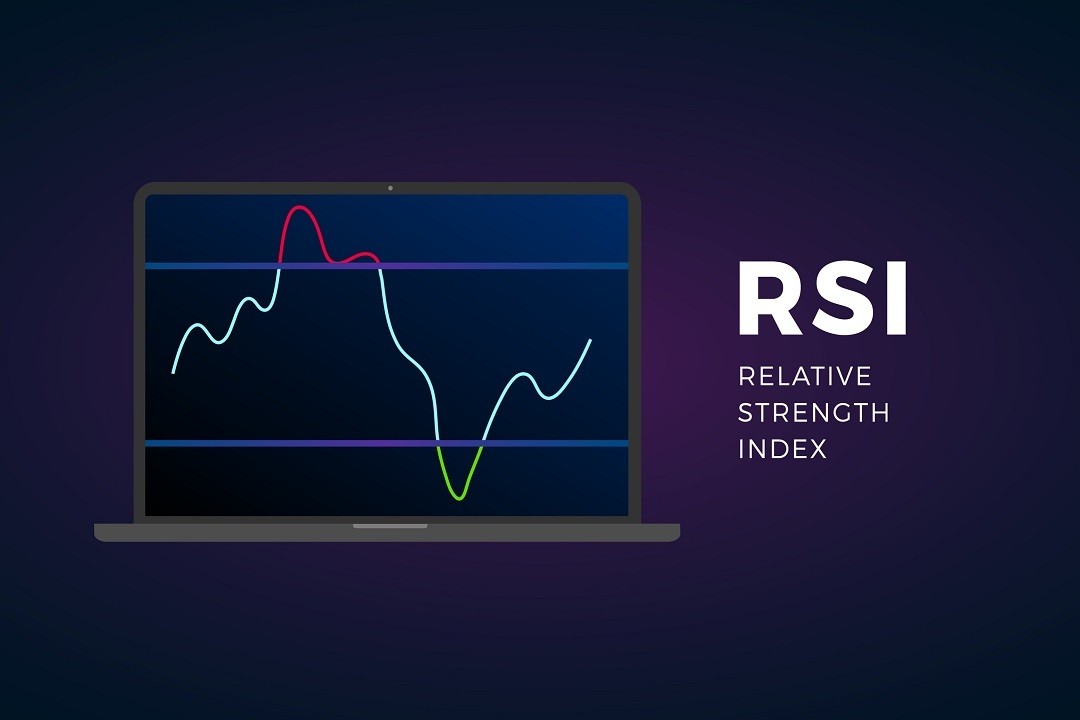
The RSI is an oscillator, displayed as a line graph ranging from 0 to 100, that measures the momentum of price movements.

  • Overbought Condition: RSI readings above 70 typically suggest that a security may be overbought and due for a correction or pullback.
  • Oversold Condition: RSI readings below 30 often indicate oversold conditions, suggesting a potential price rebound.

These signals can help traders make buy or sell decisions. However, the RSI works best in range-bound markets and requires context when applied to trending securities.

How RSI Is Calculated

The RSI calculation involves two main steps:

  1. Step One: Calculate the initial RSI value:

The average gain or loss considers the percentage price changes over a look-back period (commonly 14 periods). Gains are summed and averaged for up days, while losses are summed and averaged for down days.

  1. Step Two: Smooth the results with subsequent calculations to ensure RSI approaches 0 or 100 only in strongly trending markets.

Once plotted, the RSI line rises with increasing gains and falls with rising losses, helping traders visualize momentum shifts.

Using RSI in Trading

1. Identifying Overbought and Oversold Levels

The most common application of RSI is identifying overbought (above 70) and oversold (below 30) levels. Traders often interpret these conditions as signals to sell or buy, respectively.

2. Recognizing Divergences

RSI divergences occur when price movements and RSI trends differ:

  • Bullish Divergence: The price makes lower lows, but RSI makes higher lows, signaling rising bullish momentum.
  • Bearish Divergence: The price makes higher highs, but RSI forms lower highs, suggesting weakening upward momentum.

3. Trend Confirmation

In trending markets, RSI readings often stay within certain ranges:

  • During an uptrend, RSI typically remains above 30 and frequently approaches 70.
  • In a downtrend, RSI tends to stay below 70 and frequently approaches 30.

Adapting RSI levels to align with prevailing trends helps avoid false signals.

Advanced RSI Techniques

1. Swing Rejections

A swing rejection occurs when RSI reverses within oversold or overbought territory:

  • Bullish Swing Rejection: RSI falls into oversold territory, rises above 30, dips without falling back below 30, and breaks its previous high.
  • Bearish Swing Rejection: RSI rises into overbought territory, falls below 70, peaks without exceeding 70, and breaks its previous low.

These patterns provide traders with actionable buy or sell signals.

2. Positive and Negative Reversals

Reversals involve contrasting movements in RSI and price:

  • Positive Reversal: RSI makes a lower low while price forms a higher low, signaling potential upward momentum.
  • Negative Reversal: RSI makes a higher high while price forms a lower high, indicating potential downward momentum.

RSI vs. MACD

While RSI measures the speed and change of price movements, the Moving Average Convergence Divergence (MACD) compares two moving averages to identify trend direction.

  • RSI: Focuses on momentum and identifies overbought/oversold conditions.
  • MACD: Highlights shifts in trend strength and direction.

Combining RSI and MACD can provide a comprehensive view of momentum and trend changes, helping traders refine their strategies.

Limitations of RSI

While RSI is a powerful tool, it has its constraints:

  • False Signals: In strong trends, RSI can stay overbought or oversold for extended periods.
  • Subjectivity: Interpretation varies depending on the security, time frame, and market conditions.
  • Trending Markets: RSI is more reliable in range-bound markets and may generate misleading signals in trending markets.

How to Optimize RSI Use

To maximize RSI’s utility:

  • Adjust Time Frames: Shorter periods (e.g., 5–9) make RSI more sensitive, suitable for day traders, while longer periods (e.g., 21–30) suit long-term investors.
  • Blend with Other Indicators: Combine RSI with moving averages, support and resistance levels, or MACD for better validation.
  • Adapt Levels to Trends: Adjust RSI thresholds based on market conditions to reduce false signals.

Conclusion

The RSI is a versatile and widely used tool for gauging momentum, identifying potential reversals, and validating trends. While it has limitations, combining RSI with other technical indicators and adapting it to prevailing market conditions can enhance its reliability. Whether you’re a novice trader or an experienced investor, mastering the RSI can be a game-changer in your technical analysis toolkit.

Incorporate the RSI into your trading strategy to better navigate market movements, identify profitable opportunities, and sharpen your decision-making edge.

Get Started with your Stock Investments today with MINTALPHAA.

Get deeper insights into the crypto market’s weekly trends discussed on our Spotify podcast.

image

Momentum Investing Strategies – MintingM

Momentum Investing Strategies: A Proven Approach to Long-Term Market Outperformance

Momentum investing is one of the most well-documented and successful strategies in financial markets. By identifying assets with strong recent performance and capitalizing on their continued trends, momentum strategies have consistently delivered outperformance over traditional methods like buy-and-hold. From academic studies to real-world applications, momentum has proven to work across time periods, asset classes, and geographies.

What Is Momentum Investing?

Momentum investing involves buying assets that have shown strong performance over a recent period and selling those that have underperformed. The premise is simple: winners tend to keep winning, and losers tend to keep losing in the short to medium term.

The strategy’s effectiveness is rooted in behavioral finance. Investor psychology often drives price trends—underreaction to good news, overreaction to bad news, and herd behavior amplify momentum effects. By systematically identifying these trends, momentum strategies can generate alpha and outperform benchmarks.

Why Momentum Works: The Behavioral Science Behind It

Momentum’s success lies in its ability to exploit inefficiencies created by human behavior. Here are some key psychological factors that underpin momentum investing:

  • Underreaction (Anchoring Bias):
    Investors are slow to react to consistent, positive information, leading to gradual price adjustments. Momentum strategies capitalize on this slow realization.
  • Disposition Effect:
    Many investors sell winning assets too early and hold onto losing ones for too long. This creates an opportunity for momentum investors to ride the trends further.
  • Cognitive Dissonance:
    Investors often ignore news that contradicts their biases, causing stock prices to remain misaligned with fundamentals. Momentum strategies take advantage of this delayed correction.

Evidence of Momentum’s Success

Momentum’s effectiveness is well-supported by research spanning decades and asset classes:

  1. Global Academic Studies:
    • Jegadeesh and Titman (1993): Found that strategies buying recent winners and selling losers generated significant positive returns over 3-12 month holding periods, outperforming buy-and-hold strategies.
    • Rouwenhorst (1999): Demonstrated momentum’s success in international markets, where medium-term return continuation was observed across 12 countries.
  2. Time-Series Momentum:
    Moskowitz, Ooi, and Pedersen expanded momentum’s application to indices, commodities, and currencies, revealing persistent trends that generate abnormal returns.
  3. A Century of Trend-Following:
    A study spanning 136 years (1880–2016) showed momentum strategies consistently outperformed, even after accounting for fees and transaction costs.

Applications of Momentum in Crypto Markets

While momentum strategies are well-established in traditional markets, their application in crypto markets is particularly compelling due to the unique characteristics of digital assets:

  1. High Volatility:
    Crypto markets experience frequent and extreme price movements, making them ideal for momentum strategies to capture trends.
  2. Behavioral Drivers:
    Investor sentiment in crypto is often amplified by speculation and hype, creating pronounced momentum effects.
  3. Data Availability:
    With real-time data and transparent transaction records, crypto markets offer a fertile ground for momentum-based algorithms.

MintingM Momentum Bot: Revolutionizing Crypto Investing

The Momentum Algo Bot from MintingM brings the power of momentum investing to the crypto space. Using cutting-edge AI, the bot identifies and acts on strong trends across the top 100 cryptocurrencies by market capitalization. Here’s how it works:

  • Trend-Based Strategy:
    The bot focuses on assets demonstrating strong upward momentum and allocates capital dynamically to maximize returns.
  • Diversified Portfolio:
    It spreads investments across six cryptocurrencies, reducing risk while maintaining high growth potential.
  • Risk Management:
    Designed to minimize drawdowns, the bot sits in cash during periods of low opportunity, protecting investors from unnecessary losses.
  • Consistent Performance:
    Backtested data shows the bot outperforms Bitcoin while maintaining a win rate of 42%, executing an average of 5-10 trades per month.

The Long-Term Edge of Momentum

Momentum investing has stood the test of time as one of the most reliable strategies in financial markets. Its success is rooted in behavioral inefficiencies, robust data, and its adaptability across asset classes. In the fast-evolving crypto space, tools like MintingM’s Momentum Algo Bot are enabling investors to harness the power of momentum with precision and ease.

Whether in traditional markets or crypto, momentum isn’t just a strategy—it’s a proven path to long-term outperformance. With the right tools and a disciplined approach, investors can leverage momentum to stay ahead of the curve.

Get Started with your Crypto Investments today with Momentum Bot.

Get deeper insights into the crypto market’s weekly trends discussed on our Spotify podcast.

Screenshot 2024-12-26 at 9.23.40 PM

Candlestick Charts for Beginners: Master Technical Analysis – MintingM

Candlestick Charts for Beginners: Master Technical Analysis

Candlestick charts are one of the most popular tools in technical analysis, providing a visual representation of market emotions and price movements. Originating in Japan over 100 years before the West developed bar charts, candlestick charts were pioneered by Japanese rice traders to interpret market dynamics influenced by supply, demand, and emotions. Today, these charts are an essential resource for traders looking to analyze price action and predict potential market trends.

What Are Candlestick Charts?

Candlestick charts provide a clear picture of price movements within a specified time frame. Each candlestick represents four key data points: the open, close, high, and low prices. The rectangular “body” of the candlestick highlights the range between the opening and closing prices, while the “shadows” or “wicks” above and below the body indicate the high and low prices during that period.

A green (or white) candlestick signifies that the closing price was higher than the opening price, indicating bullish market sentiment. Conversely, a red (or black) candlestick indicates bearish sentiment, with the closing price lower than the opening price.

Why Use Candlestick Charts?

Compared to other chart types like bar charts, candlestick charts provide a more visually intuitive way to interpret price movements. The color-coded real bodies make it easier to distinguish between bullish and bearish activity at a glance. This clarity helps traders identify trends, reversals, and market sentiment more effectively. 

Basic Candlestick Patterns

Candlestick patterns are broadly categorized into bullish and bearish patterns. While these patterns don’t guarantee price movements, they offer valuable insights into market tendencies.  

  1. Bullish Patterns:
  • Bullish Engulfing: A large green candlestick fully engulfs the previous small red candlestick, signaling that buyers are gaining control.
  • Morning Star: A three-candlestick pattern indicating a potential reversal from a downtrend to an uptrend. It starts with a long red candle, followed by a small-bodied candle, and concludes with a long green candle.
  1. Bearish Patterns:
  • Bearish Engulfing: A large red candlestick fully engulfs the previous small green candlestick, suggesting sellers are in control.
  • Evening Star: The bearish counterpart of the Morning Star, signaling a reversal from an uptrend to a downtrend.
  1. Neutral Patterns:
  • Doji: A candlestick with a very small or nonexistent body, indicating indecision in the market. It often precedes significant price moves.

Advanced Patterns for Trend Confirmation

More complex patterns provide deeper insights into market behavior:

  • Rising Three Methods (Bullish): A strong upward candle followed by three smaller candles moving downward but staying within the first candle’s range, concluding with another strong upward candle.
  • Falling Three Methods (Bearish): The opposite of the Rising Three Methods, indicating a continuation of a downward trend.

Using Candlestick Patterns Effectively

Candlestick charts are most effective when combined with other tools and indicators, such as volume analysis or trend lines. For example:

  • A Bullish Engulfing pattern near a support level is a stronger buy signal when accompanied by high trading volume.
  • Patterns like Doji are best interpreted in the context of existing trends to avoid false signals.

Candlestick charts have stood the test of time as a reliable tool for understanding market sentiment and predicting price movements. While no pattern guarantees success, these charts offer traders a valuable lens through which they can interpret market behavior. By practicing and combining candlestick analysis with other strategies, traders can improve their ability to make informed decisions in the dynamic world of trading.

Get Started with your Stock Investments today with MINTALPHAA.

Get deeper insights into the crypto market’s weekly trends discussed on our Spotify podcast.

What is Momentum Trading

Momentum Trading Strategy: Outshining Buy-and-Hold with AI Tool

Momentum Trading Strategy: Outshining Buy-and-Hold with AI Tool

Embracing the saying “the trend is your friend,” momentum trading is a technique that focuses on purchasing assets that are rising and selling them before the momentum slows down. Investors can profit from volatility and strong trends through momentum trading, which relies on short-term market moves in comparison to the passive buy-and-hold strategy, which is reliant on long-term market growth.

How Momentum Trading Works

Finding stocks having a track record of success over a specified time period and investing in those with the strongest upward trajectory are the fundamental components of momentum trading. The approach is based on the psychological traits of the market, such as fear, overconfidence, and herding, which frequently cause asset prices to keep moving in the same direction.

Investors following this approach aim to ride the wave of price trends, quickly exiting positions when signs of reversal appear. Unlike the buy-and-hold strategy, which remains invested regardless of market conditions, momentum trading adapts dynamically, seeking to avoid prolonged downturns.

Momentum vs. Buy-and-Hold

Even though the buy-and-hold approach is a fundamental component of passive investing, it frequently exposes investors to large market declines. For example, buy-and-hold portfolios may experience prolonged losses during bear markets or other times of high volatility. On the other hand, momentum trading aggressively moves money to assets with robust upward trends in an effort to reduce these risks.

As the founder of momentum investing, Richard Driehaus promoted the idea of “buying high and selling higher.” The conventional value investing strategy of purchasing cheap assets and holding out for market declines stands in stark contrast to this. Driehaus’s strategy aimed to exploit short-term gains while minimizing the impact of downturns.

Why Momentum Outperforms

Momentum trading capitalizes on two key aspects of the market: volatility and behavioral patterns. Technical indicators like moving averages and the Relative Strength Index (RSI) are used by experienced traders to spot opportunities and determine when to enter and quit the market. This strategy enables them to maximise gains and minimise losses by responding quickly to news-driven spikes or sell-offs. 

Historical performance further validates momentum’s potential. The Carhart four-factor model is one tool that emphasises momentum as a key driver of portfolio performance, frequently surpassing conventional market benchmarks. This benefit is particularly noticeable during volatile times when momentum traders can shift to assets that are resilient or growing, whilst buy-and-hold investors are still subject to larger market fluctuations.

AI-Powered Momentum Trading

The advent of AI has revolutionized momentum trading by eliminating human biases and enhancing decision-making. For instance, MintingM’s Momentum Algo Bot for cryptocurrencies and MintAlphaa for stocks leverage advanced AI algorithms to optimize performance.

  • Momentum Algo focuses on the top 100 crypto tokens, maintaining diversification across six assets with equal capital allocation. It minimizes drawdowns and outperforms Bitcoin significantly, executing 5–10 trades per month with a 42% win rate.
  • MintAlphaa applies momentum strategies to the Nifty 500, achieving impressive 501% returns since 2018 with a manageable 23% drawdown. The bot identifies strong momentum stocks, holds winning trades for 8–12 weeks, and exits losers within a week, ensuring agile portfolio management.

These bots bring precision, speed, and discipline to momentum investing, enabling investors to capture trends without the stress of constant monitoring.

Momentum trading offers a compelling alternative to the buy-and-hold strategy, particularly for investors seeking higher returns in shorter timeframes. By leveraging AI-driven tools like MintingM’s Momentum Algo and MintAlphaa, investors can navigate market volatility with confidence, transforming trends into actionable opportunities. In a world where adaptability is key, momentum trading stands out as a strategy that doesn’t just ride the wave—it shapes it.

Get deeper insights into the crypto market’s weekly trends discussed on our Spotify podcast.